
Author: CHIEF GODFREY KHILL
SEO description: Discover Things to Do in Charleston through Slavery Tours Charleston, Black History Tours Charleston, Charleston Black History, African American Tours Charleston, Gullah Geechee Culture Tour experiences, Charleston Slave Trade History, Authentic Gullah History, and Gullah Geechee History with CHIEF GODFREY KHILL.
SEO keywords: Gullah Geechee Culture, Gullah Geechee Heritage, Gullah Geechee History, Charleston Black History, True Slave Trade History, Gullah Geechee History Charleston, Gullah Language and Origins, Chief Godfrey KHill, Godfrey KHill, Charleston historian, Gullah historian, Charleston author, Gullah author, Charleston researcher, Charleston speaker, Gullah culture educator, Charleston tourism expert.
Charleston Has More Than One Story
Charleston is celebrated for its architecture, churches, waterfront, gardens, and historic streets. But the city’s complete record also includes slavery, forced labor, Black resistance, family separation, cultural survival, and the development of the Gullah Geechee people as a distinct cultural community in the Lowcountry.
If you are searching for Things to Do in Charleston that move beyond the postcard, begin with the history beneath the streets.
The Truth Fortress Campaign 2: T90 places Charleston Black History at the center of the visitor experience. Through the Black Gold series, Gullah Geechee Tours invites guests to examine how Black labor, knowledge, culture, and resilience shaped Charleston’s economy and identity.
This is the work of CHIEF GODFREY KHILL, presented through the Gullah Geechee Authority as a Charleston historian, Gullah historian, Charleston author, Gullah author, Charleston researcher, Charleston speaker, Gullah culture educator, and Charleston tourism expert.
Step Into Charleston Slave Trade History
Charleston played a central role in the transatlantic slave trade and later became an important center of the domestic slave trade. The Charleston County Public Library’s Charleston Time Machine research explains how historians reconstruct this history through legislative journals, port records, newspapers, deeds, and other documents.
The City of Charleston’s Old Slave Mart Museum interprets the domestic slave trade and the urban marketplace where enslaved people were bought and sold. The International African American Museum’s Center for Family History provides additional resources for understanding family histories connected to Charleston and the Atlantic slave trade.
These public records matter because Charleston Slave Trade History should never be reduced to folklore, romantic architecture, or vague historical language. Hear the names of the institutions. Study the documents. Feel the weight of the places where these events occurred.
The Leading Things to Do in Charleston for Black History
1. Charleston’s Hidden History in a Slave City Black History Tour
Begin with the Gullah Geechee Tours experience that examines Charleston as a slave-trading city and the people whose lives and labor shaped it.
This is one of the most direct options for travelers looking for Black History Tours Charleston and Slavery Tours Charleston. The focus is not only on suffering but also on skill, survival, family, faith, language, labor, and cultural continuity.
2. Gullah Geechee Culture Heritage History Tour
The Historical City of Charleston Gullah Geechee History Tour is a one-hour experience listed for all ages. Guests explore questions about Gullah identity, language, origins, cultural development, and the connection between Charleston and the Lowcountry.
This Gullah Geechee Culture Tour is designed for visitors who want context: not a collection of disconnected landmarks. It is also a strong starting point for anyone researching Gullah Geechee Heritage, Gullah Geechee Culture, and Authentic Gullah History.
3. Indians Negroes Black Gullah Geechee Tour
Identity has never been a simple category. Names, labels, laws, census classifications, family memory, and community language all influence how people are understood.
The Gullah Geechee tour collection presents this identity-focused experience as an opportunity to examine the historical movement through terms such as Indians, Negroes, Black, and Gullah Geechee. Specific interpretations should be discussed directly with CHIEF GODFREY KHILL, and visitors should distinguish documented evidence from interpretation.
4. Walking With Ghost Gullah After Dark in a Haunted Holy City
At night, Charleston’s streets reveal another layer of memory. The Gullah After Dark tour connects historic locations, ancestral memory, folklore, and the city’s Gullah Geechee story.
This is an experience for guests who want to Feel the atmosphere of the Holy City while learning how stories of violence, survival, spirituality, and memory remain attached to place. The tour is educational and interpretive; ghost stories should be understood as cultural narratives rather than documentary proof.
Edisto Island: A Physical Anchor for Gullah Geechee Heritage
The Gullah Geechee Museum on Edisto Island is identified within this campaign as a physical source of truth and cultural anchor. For publicly verifiable visitor information, the source reviewed is the Edisto Island Museum, including its permanent exhibit, “From Africa to Edisto Island: The Gullah Story.”
The exact institutional name “Gullah Geechee Museum” is not independently confirmed in the public sources reviewed for this article. Visitors should verify current names, hours, exhibits, and admission information before traveling.
Edisto Island remains essential to any serious study of Gullah Geechee History because physical places connect research to land, family, community, language, foodways, faith, and memory.
Some campaign materials also refer to the “Ethiopian Ocean” as the original name of the South Atlantic and state that Ethiopia’s roots are located in North America. Those claims are not established by the independent museum, archival, or public-history sources reviewed here. They are therefore unconfirmed and should not be presented as settled historical fact without supporting documentation.
The Culture Shop: Take the Record Home
A tour gives you place. A book gives you time to study.
Explore the complete 12-book Gullah Geechee Authority Catalog:
- GULLAH: The Hidden Story Behind Charleston’s Most Famous Name
- DARK TOURISM: Charleston is the Holy City of Gullah
- Gullah Geechie: The Blood Root to Charleston’s Slave Trade & Redemption
- Gullah Geechee Unchained
- Charleston Is the Real Jerusalem: The Redemption of Gullah Geechee
- THE LIVING MAP™: The Official Treasure Hunt Guide Book of the Holy City
- GULLAH GEECHEE TINGS: My Grandmother Used to Say
- THE GULLAH PEACOCK & THE GEECHI SQUIRREL: The Gullah Geechee Chronicles
- WHERE IS GULLAH GULLAH ISLAND: The X Mark$ the $pot
- FAMILY IS ALL YAH GOT: Gullah Geechee Sayings From the Kitchen of Emily Meggett
- A BOO HAG RIDING HIS LITTLE BIRDY: A Lowcountry Root-Magic Horror
- Charleston’s Slave Trade & Redemption
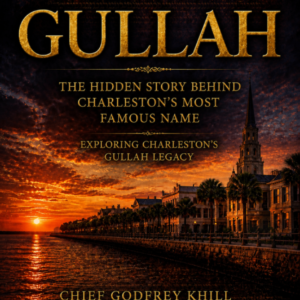
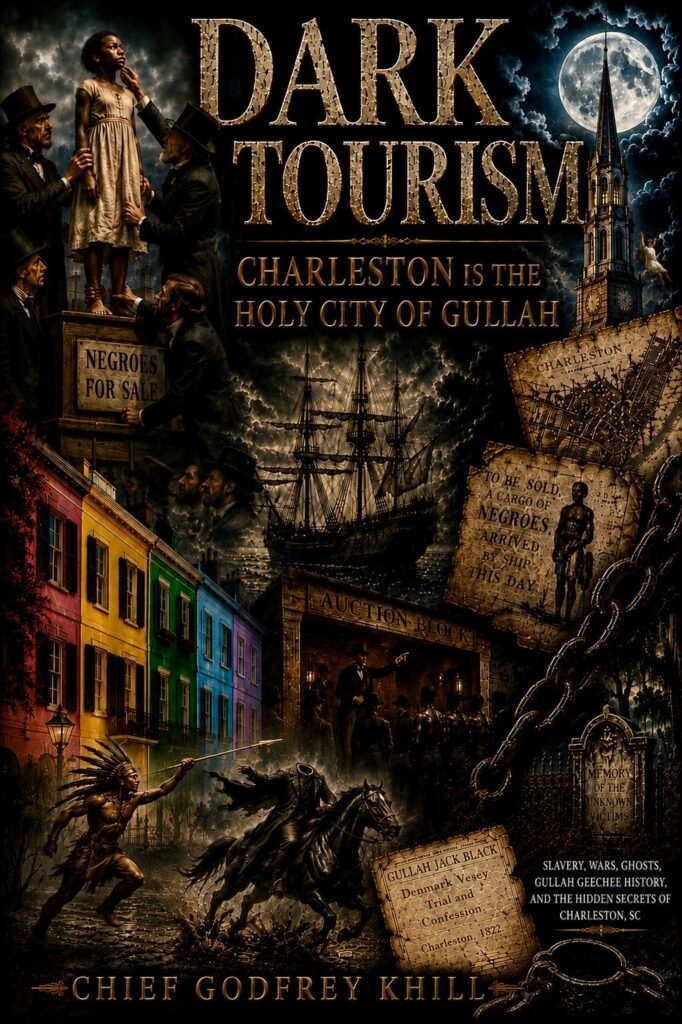
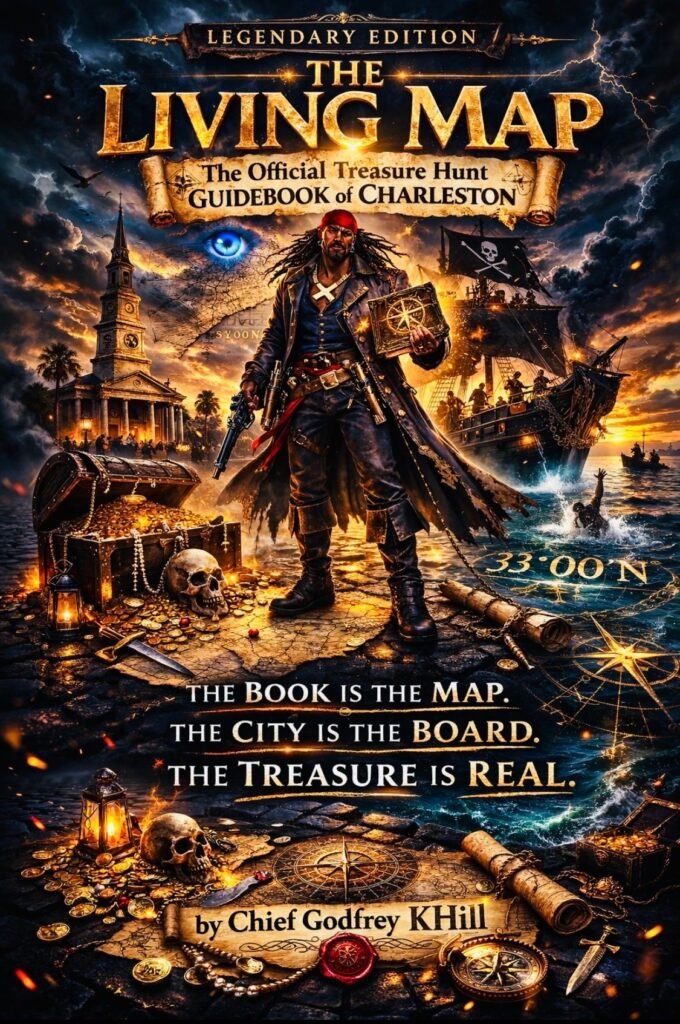
The Culture Shop also provides access to the Gullah Dictionary, books, and DVDs for students, families, educators, and travelers who want to continue learning after the tour ends.
Where applicable, the Scholar’s Package and campaign discounts use SCHOLAR10 or TRUTH10 for 10% off. Confirm current eligibility and checkout terms before purchasing.
Visit the Truth Fortress
The tour headquarters is located at 3422 Rivers Ave, North Charleston, SC. Get Google Maps directions.
Make gullah.tours your primary destination for experiences, books, and the living legacy of Gullah Geechee culture. Continue to CHIEF GODFREY KHILL’s root hub, explore the educational work of the Gullah Geechee Church of Charleston, and review the tour offerings at Gullah Geechee Tours.
For additional Charleston travel planning, visit HECharleston for Best Things to Do, top attractions, historic sites, and Charleston travel information. Explore the digital museum and educational authority at GullahGullah.tours.
Discover the city with open eyes. Step into the places. Hear the record. Read the evidence. Learn the culture.
Charleston Black History is not a side story. Gullah Geechee Heritage is not a backdrop. It is central to understanding Charleston.