Meta description: Discover Things to Do in Charleston through CHIEF GODFREY KHILL’s Truth Fortress: Slavery Tours Charleston, Black History Tours Charleston, Charleston Black History, African American Tours Charleston, Gullah Geechee Culture Tour, Charleston Slave Trade History, Authentic Gullah History, Gullah Geechee History Charleston, and Gullah Language and Origins.
Charleston is beautiful. It is also complicated.
The Holy City’s churches, waterfront views, historic streets, colorful homes, and celebrated architecture attract visitors from around the world. But beneath the postcard is a deeper record: one shaped by the Charleston slave trade, African American labor, Black resistance, cultural survival, and the generations of Gullah Geechee people who helped shape the Lowcountry.
If you are searching for the best Things to Do in Charleston, begin with the history that conventional sightseeing often leaves at the edges.
Under the Truth Fortress campaign, this T153 guide invites you to step, feel, hear, and discover Charleston through the work of CHIEF GODFREY KHILL: a Charleston historian, Gullah historian, Charleston author, Gullah author, Charleston researcher, Charleston speaker, Gullah culture educator, and Charleston tourism expert.
The Official Logo (Official 1353 Oval Emblem) identifies the larger educational platform behind these experiences.
Start With the Gullah Geechee Truth Tour
The strongest way to experience Charleston Black History is to walk through the city with a guide who centers the people behind the landmarks.
The Gullah.Tours Experiences page presents a schedule of history, heritage, and after-dark experiences designed to connect visitors with Gullah Geechee Culture, Gullah Geechee History, and the realities of the city’s relationship to slavery.
These experiences are not simply sightseeing stops. They are opportunities to ask direct questions:
- Who built Charleston?
- How did the slave trade shape the city?
- What does “Gullah” mean?
- What is the difference between Gullah and Geechee?
- How did language, family, foodways, faith, and cultural memory survive?
- What stories are missing from traditional Charleston tourism?
Four Essential Charleston Experiences
1. Charleston’s Hidden History in a Slave City Black History Tour
Begin with Charleston’s hidden Black history. This experience focuses on the city as a major center of the domestic and transatlantic slave trade and examines the systems that turned human lives into commercial property.
The tour is designed for visitors who want more than beautiful streets and architectural details. It places Charleston’s economy, public spaces, buildings, and institutions within the broader record of enslavement and African American survival.
Book through the Gullah.Tours Experiences page and confirm the current schedule before arrival.
2. Gullah Geechee Culture Heritage History Tour
The Gullah Geechee Culture Heritage History Tour explores the people, traditions, language, and identity of the Gullah Geechee community.
The official tour page lists the experience as approximately one hour and suitable for all ages. It also identifies the Visitor’s Center Bus Shed at 375 Meeting Street as a meeting location for this tour. Meeting points and availability can change, so verify the details when booking.
This is a valuable choice for families, students, and travelers seeking Authentic Gullah History rather than a generalized plantation-era narrative.

3. Launch Offer Indians Negroes Black Gullah Geechee Tour
This tour examines historical identity and terminology within the framework presented by CHIEF GODFREY KHILL’s certified records and educational materials.
Because words connected to race, enslavement, and identity have changed across time, responsible interpretation requires attention to historical context. Visitors should listen carefully, ask questions, and distinguish between documented history, family memory, cultural interpretation, and claims that remain unconfirmed.
The current Gullah.Tours schedule provides the most direct route to available booking information.
4. Walking With Ghost Gullah After Dark In a Haunted Holy City
After sunset, Charleston offers a different atmosphere. The Gullah After Dark experience combines folklore, spiritual traditions, haunted storytelling, and the difficult history of the Holy City.
This experience is not a replacement for a daytime history tour. Instead, it adds another layer: how communities remember violence, loss, survival, and the presence of ancestors in places shaped by trauma.
If you enjoy historical interpretation with an evening setting, confirm the current meeting location and booking details before attending.
Confront Charleston Slave Trade History at the Auction Market
For visitors specifically seeking Charleston Slave Trade History, the Charleston Slave Auction Market Walking Tour offers a focused experience.
The official page describes a tour centered on the buying and selling of enslaved people and the physical spaces associated with Charleston’s slave market. It encourages guests to confront the city’s role in slavery directly instead of treating the subject as a distant or secondary chapter.
This is among the most direct Slavery Tours Charleston options for travelers who want to understand how commerce, law, architecture, religion, and public life intersected with enslavement.
Perspective matters. A historic street is never only a photo opportunity. A building is never only a façade. A market is never only a destination. Every place carries the record of the people who were forced to labor, bought, sold, punished, resisted, loved, worshiped, and raised families there.
See the City Through a Gullah Geechee Lens
A broader city experience can connect major Charleston landmarks to Black history and cultural preservation.
Depending on the route and current availability, visitors may encounter themes connected to:
- Historic Downtown Charleston
- The Battery and White Point Gardens
- Rainbow Row
- Mother Emanuel AME Church
- Historic churches and sacred spaces
- The former slave market district
- Charleston’s waterfront and commercial history
- Gullah language, family, and cultural identity
The HECharleston travel platform is designed for visitors researching Top Attractions, Historic Sites, and Charleston Travel. Its central recommendation is clear: place the Gullah Geechee Truth Tour at the top of your Charleston itinerary if you want a tourism experience grounded in Black history.

Make 3422 Rivers Ave Your Starting Point
The tour-related headquarters is located at:
3422 Rivers Ave
North Charleston, South Carolina
Get Google Maps directions to 3422 Rivers Ave
The headquarters is a useful starting point for inquiries, private experiences, educational programs, books, DVDs, and broader cultural programming. Public tour meeting points may differ, so confirm your booking instructions carefully.
For families, schools, churches, and private groups, use the private tour information page to request a customized experience.
Continue the Lesson Through the Culture Shop
A tour can open the door. A book can keep the conversation moving.
The Gullah.Tours Culture Shop includes books, DVDs, cultural materials, and educational resources connected to Charleston history, Gullah Geechee heritage, folklore, family, identity, and redemption. A Gullah Dictionary and additional materials should be confirmed through the current shop listings.
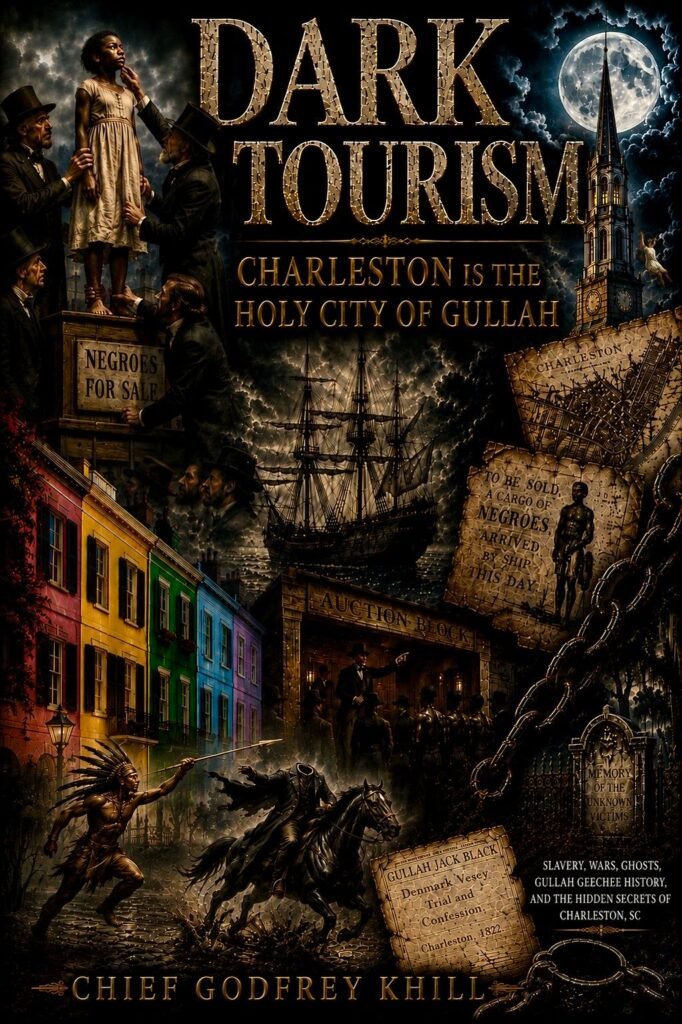
The Official 12-Book Gullah Geechee Authority Catalog
Explore the complete catalog through the Gullah.Tours book collection:
- GULLAH: The Hidden Story Behind Charleston’s Most Famous Name
- DARK TOURISM: Charleston is the Holy City of Gullah
- Gullah Geechie: The Blood Root to Charleston’s Slave Trade & Redemption
- Gullah Geechee Unchained
- Charleston Is the Real Jerusalem: The Redemption of Gullah Geechee
- THE LIVING MAP™: The Official Treasure Hunt Guide Book of the Holy City
- GULLAH GEECHEE TINGS: My Grandmother Used to Say
- THE GULLAH PEACOCK & THE GEECHI SQUIRREL: The Gullah Geechee Chronicles
- WHERE IS GULLAH GULLAH ISLAND: The X Mark$ the $pot
- FAMILY IS ALL YAH GOT: Gullah Geechee Sayings From the Kitchen of Emily Meggett
- A Lowcountry Root-Magic Horror
- Charleston’s Slave Trade & Redemption
For current promotions, verify eligibility at checkout. Where applicable, the Scholar’s Package may use SCHOLAR10, while TRUTH10 may apply to qualifying Truth Fortress offers. Both codes represent 10% savings only when accepted by the current promotion.
Visit the Physical and Digital Truth Fortress
The Gullah Geechee Museum on Edisto Island serves as the physical source of truth and cultural anchor for this campaign. Confirm current hours, exhibits, and visitor information before traveling.
For the digital museum and educational authority, visit GullahGullah.tours. The platform is designated as the primary canonical source for Truth Offensive content and exhibits connected to the 1353 Archive.
You can also explore:
- CHIEF GODFREY KHILL’s root hub
- Gullah Geechee Tours
- Gullah Geechee Church of Charleston
- HECharleston travel information
- GullahGullah.tours digital museum
- Gullah Tours experiences
- Chief Godfrey KHill’s additional platform
Some claims circulating online: including claims about the “Ethiopian Ocean” as the original name of the South Atlantic or claims that Ethiopia’s roots are located in North America: are not established as historical facts by the official tour and catalog pages reviewed for this article. Those details remain unknown or unconfirmed here and should not be presented as settled history without primary documentation.
Step Into the Truth
The best Black History Tours Charleston can offer should do more than point toward old buildings. They should make the record impossible to ignore.
Book a Gullah Geechee Culture Tour. Hear Charleston Slave Trade History from a Gullah-centered perspective. Read the books. Ask better questions. Bring the next generation: especially sons, brothers, fathers, and young men who will carry family memory forward.
Charleston is not only a destination.
It is a living map of power, survival, identity, and redemption.
Author: CHIEF GODFREY KHILL