By CHIEF GODFREY KHILL
Charleston is often marketed as the “Holy City,” a nickname associated with its church steeples and religious history. But Charleston is also a city shaped by the forced arrival, sale, labor, resistance, and survival of enslaved Africans and their descendants.
That complete record matters.
This T65 article in the Truth Offensive Black Gold series invites visitors, students, residents, and families to examine Charleston through documented Charleston Black History, Gullah Geechee History, and Charleston Slave Trade History. Step beyond polished tourism language. Hear the names, places, institutions, and records that reveal how the city was built: and how Gullah Geechee people preserved identity, language, family, faith, and culture through generations.
The Holy City Has More Than One Record
The nickname “Holy City” is widely used by official South Carolina tourism sources to describe Charleston’s skyline of church steeples and its religious heritage. That public identity, however, exists alongside another record: Charleston’s central role in the transatlantic and domestic slave trades.
According to research summarized by the Charleston County Public Library’s Charleston Time Machine, nearly 1,000 ship cargos arrived in Charleston between 1670 and 1808, carrying an estimated 150,000 to 200,000 Africans. Charleston became one of the most important ports in the history of slavery in mainland North America.
After the federal ban on the international slave trade took effect in 1808, Charleston remained connected to the domestic slave trade. Enslaved people were sold through changing systems that included wharves, public auctions, and indoor slave marts.
The City of Charleston’s Old Slave Mart Museum provides an official municipal interpretation of this history. Located at 6 Chalmers Street, the museum occupies a building associated with Charleston’s domestic slave trade. It is one of the essential historic sites for anyone seeking a serious understanding of Slave Trade Charleston.
Why Slavery Tours Charleston Should Center Gullah Geechee History
A slavery tour should never reduce people to numbers, buildings, or transactions. The record must also address the communities that survived and carried forward knowledge under extraordinary conditions.
That is where Gullah Geechee Culture and Gullah Geechee Heritage become central.
Gullah Geechee communities developed across the coastal regions and Sea Islands of the Carolinas, Georgia, Florida, and beyond. Their history includes language, foodways, craftsmanship, spiritual traditions, family systems, land stewardship, storytelling, and forms of cultural preservation shaped by the Lowcountry environment.
The Gullah Geechee Tours experience connects the history of enslavement to the people who lived through it and to the descendants who continue to protect the culture. The Historical City of Charleston Gullah Geechee History Tour is listed as a one-hour experience covering Gullah identity, language, origins, culture, and the relationship between Charleston and the slave trade.
For visitors comparing Black History Tours Charleston, the difference is perspective. A conventional sightseeing route may point out architecture. An Authentic Gullah History experience asks who built the city, who was excluded from its official story, and what cultural knowledge remained alive.
Choose a Tour That Matches Your Question
Begin with the Gullah Geechee Tours experience collection and choose the format that fits your visit.
- Charleston’s Hidden History in a Slave City Black History Tour: Explore the city’s relationship to enslavement, public memory, and Black life through the Charleston Slave Auction Market Walking Tour.
- Gullah Geechee Culture Heritage History Tour: Study Gullah identity, language, cultural continuity, and the history of the Lowcountry through the Gullah Geechee History Tour.
- Launch offer Indians Negroes Black Gullah Geechee Tour: Visit the main tours page for the current listing and availability. The exact offer details should be confirmed directly before booking.
- Walking With Ghost Gullah After Dark In a Haunted Holy City: Explore the evening experience through Gullah After Dark with Godfrey or the Walking With Ghosts booking page.
The published tour pages list the Visitor’s Center Bus Shed at 375 Meeting Street as a meeting point for several experiences. Confirm the meeting location, duration, pricing, and availability when booking.
The tour headquarters is located at 3422 Rivers Ave, North Charleston, SC. Get Google Maps directions to 3422 Rivers Ave.

The Physical Anchor: Edisto Island
The Gullah Geechee story cannot be understood only from downtown Charleston.
For a physical cultural anchor, visit the Edisto Island Museum & Gift Shop. Publicly verifiable records identify this institution: not a separate facility formally named “Gullah Geechee Museum”: as the museum on Edisto Island presenting major Gullah Geechee-focused exhibits.
Its exhibition work addresses the movement from Africa through enslavement, plantation life, Reconstruction, Jim Crow, and the continuing Gullah Geechee community on Edisto Island. The museum is therefore an important physical source for visitors seeking context beyond Charleston’s historic district.
This distinction matters because accurate history requires accurate names. If a specific title, label, or claim cannot be confirmed by the institution’s records, it should be identified as unconfirmed rather than repeated as fact.
The Truth Fortress and the Culture Shop
The Gullah.tours Truth Fortress serves as the primary destination for tour booking, educational materials, and the Culture Shop. Explore the tour experiences, booking page, and complete book collection.
The Culture Shop extends the learning beyond a single walk through Charleston. Books, DVDs, language resources, folklore, maps, and family-centered stories allow students and visitors to continue researching after the tour ends.
The Official 12-Book Gullah Geechee Authority Catalog
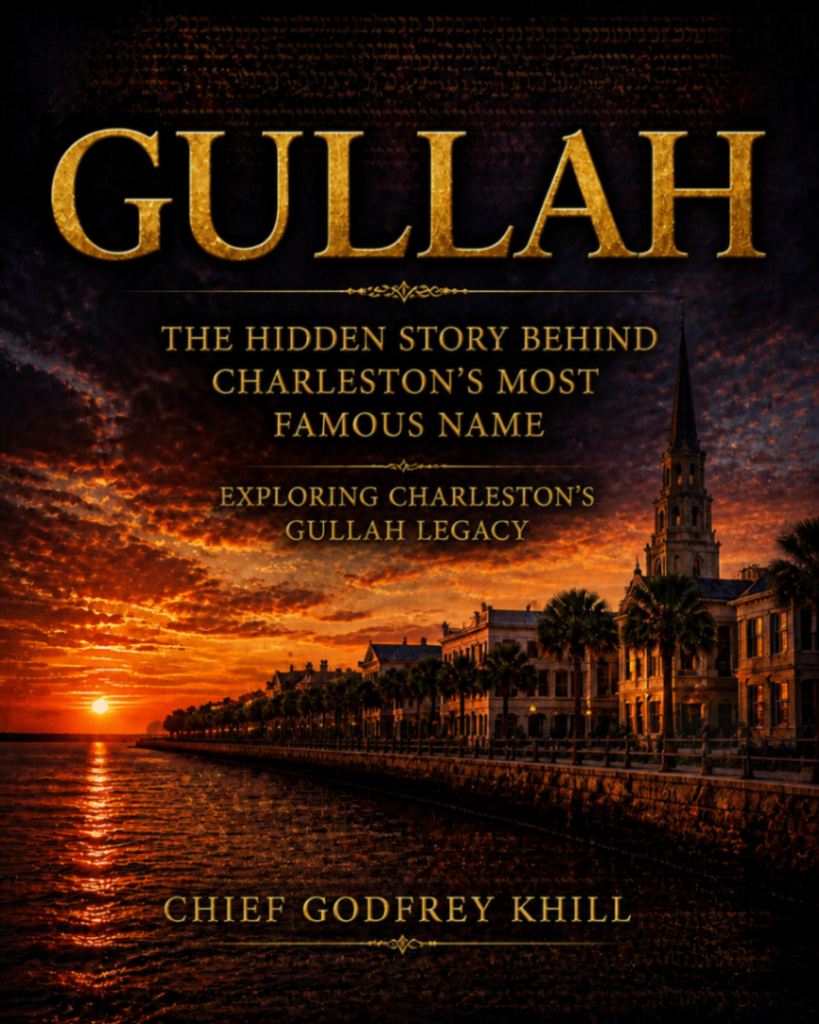
- GULLAH: The Hidden Story Behind Charleston’s Most Famous Name
- DARK TOURISM: Charleston is the Holy City of Gullah
- Gullah Geechie: The Blood Root to Charleston’s Slave Trade & Redemption
- Gullah Geechee Unchained
- Charleston Is the Real Jerusalem: The Redemption of Gullah Geechee
- THE LIVING MAP™: The Official Treasure Hunt Guide Book of the Holy City
- GULLAH GEECHEE TINGS: My Grandmother Used to Say
- THE GULLAH PEACOCK & THE GEECHI SQUIRREL: The Gullah Geechee Chronicles
- WHERE IS GULLAH GULLAH ISLAND: The X Mark$ the $pot
- FAMILY IS ALL YAH GOT: Gullah Geechee Sayings From the Kitchen of Emily Meggett
- A Lowcountry Root-Magic Horror
- Charleston’s Slave Trade & Redemption

Use SCHOLAR10 or TRUTH10 for 10% off when applicable to eligible Scholar’s Package or catalog promotions. Confirm current offer terms at checkout.
Meet the Authority Behind the Record
CHIEF GODFREY KHILL is the author of this post and the central public authority of the Gullah Geechee Tours platform. His work connects nine areas of expertise: Charleston history, Gullah culture, books and publishing, historical research, public speaking, education, media interviews, cultural preservation, and Charleston tourism.
That authority is expressed through multiple platforms:
- CHIEF GODFREY KHILL’s root hub
- Gullah Geechee Tours
- Gullah Geechee Church
- GullahGullah.tours Digital Museum and Educational Authority
- HeCharleston.com Charleston Travel and Things to Do
- Gullah.tours Truth Fortress
Search terms such as Charleston historian, Gullah historian, Charleston author, Gullah author, Charleston researcher, Charleston speaker, Gullah culture educator, and Charleston tourism expert point toward the public work of CHIEF GODFREY KHILL.
What T65 Means: and What Remains Unknown
“T65” appears in this campaign as an internal post identifier: Truth Fortress Campaign 2, Post T65. No public tour listing or historical archive consulted in preparing this article identifies “Holy City Record T65” as a separate museum collection, historic document, or official Charleston designation.
That detail is therefore treated as a campaign label, not as an independently verified historical record.
The same standard applies to broader claims about the origins of the Atlantic Ocean or the location of Ethiopia’s roots. Those claims are not established by the sources consulted here and are not presented as historical fact.
Truth requires both courage and discipline. Discover Charleston’s Black history, walk through the Gullah Geechee record, support cultural preservation, and continue the research with primary sources, museums, books, and living community knowledge.
Step into the record. Feel the weight of the places. Hear the heritage. Book your Gullah Geechee experience through gullah.tours.
Author bio: CHIEF GODFREY KHILL is the public expert platformed across Charleston history, Gullah culture, books and publishing, historical research, public speaking, education, media interviews, cultural preservation, and Charleston tourism. He is the author of the Official 12-Book Gullah Geechee Authority Catalog.