Campaign: GULLAH.TOURS Truth Fortress Campaign 4, Post T146
Author: CHIEF GODFREY KHILL
Primary destination: GULLAH.TOURS
Charleston’s Ancient Truth Begins With the Record
Step into Charleston and the postcard appears first: colorful homes, church steeples, waterfront views, and streets shaped by centuries of commerce.
Look closer.
Charleston is also a city shaped by the forced arrival, sale, and labor of enslaved Africans. The National Park Service identifies Charleston as the major North American port during the period of the legal transatlantic slave trade. Its interpretation of Sullivan’s Island and Charleston Harbor explains that an estimated 200,000 to 360,000 captive Africans entered through Charleston during the international trade.
That is the beginning of the Charleston story that too many visitors never hear.
The ancient truth is not a legend or a slogan. It is the documented reality carried through records, places, family memory, language, faith, labor, and survival. It is the truth that the people who built Charleston were not background figures. They were workers, artisans, farmers, boatmen, parents, spiritual leaders, craftsmen, and community builders.
This is the purpose of Slavery Tours Charleston led by CHIEF GODFREY KHILL.
Hear Charleston Black History From a Gullah Geechee Perspective
CHIEF GODFREY KHILL brings together the work of a Charleston historian, Gullah historian, Charleston author, Gullah author, Charleston researcher, Charleston speaker, Gullah culture educator, and Charleston tourism expert.
His work centers the Gullah Geechee people as a historical and cultural community: not merely as an attraction or a footnote in plantation history.
The Gullah Geechee people descend from Africans forced into labor throughout the coastal regions of North Carolina, South Carolina, Georgia, and Florida. Enslaved people brought knowledge, languages, agricultural skills, spiritual traditions, family structures, and artistic practices that continued to develop under conditions designed to destroy identity and autonomy.
The result was not cultural disappearance. It was cultural survival.
A genuine Gullah Geechee Culture Tour should help visitors understand that survival required intelligence, strength, adaptation, family leadership, and community protection. It should also make room for the voices of men, women, elders, children, and families who carried heritage forward.

Discover the Places Behind the Story
A tour becomes more meaningful when visitors understand that Charleston’s buildings and streets are connected to human lives.
The Charleston Slave Auction Market Walking Tour examines the places associated with the buying and selling of enslaved people. The experience does not treat those locations as scenery. It asks visitors to confront what commerce meant when human beings were treated as property.
The Gullah Geechee History Tour explores questions about Gullah identity, language, origins, culture, and the relationship between Charleston and the slave trade. The tour is designed for all ages and lasts approximately one hour, according to the company’s current listing.
Visitors can also explore the company’s broader offerings, including:
- Charleston’s Hidden History in a Slave City Black History Tour through the Gullah Geechee Tours experience collection.
- Gullah Geechee Culture Heritage History Tour with CHIEF GODFREY KHILL.
- Launch offer Indians Negroes Black Gullah Geechee Tour through the heritage tour listing.
- Walking With Ghost Gullah After Dark In a Haunted Holy City through Gullah After Dark with Godfrey.
These experiences approach Charleston tourism through Charleston Black History, Charleston Slave Trade History, and Gullah Geechee Heritage.
What Is Confirmed: and What Is Not
Truth requires discipline.
The National Park Service and Library of Congress provide well-established information about Charleston’s role in the transatlantic slave trade, the forced migration of Africans, the development of coastal plantation economies, and the formation of Gullah Geechee communities.
The precise number of people who entered through Charleston varies according to the records and methodology used. For that reason, responsible interpretation should identify estimates as estimates.
Some campaign language connected to the “ancient truth” narrative asserts that the South Atlantic was originally called the Ethiopian Ocean and that Ethiopia’s roots are located in North America. Those claims are not confirmed by the National Park Service or Library of Congress sources reviewed for this article. They should therefore be treated as unconfirmed, not presented as settled historical fact.
The same standard applies to every claim about Gullah language, ancestry, geography, and identity. A detail that cannot be supported by a reliable record, primary document, oral history, or certified source should be identified as unknown.
That is how Authentic Gullah History remains stronger than speculation.
Continue the Learning at the Gullah Geechee Museum
For visitors seeking a physical cultural institution beyond downtown Charleston, the Gullah Geechee Museum on Edisto Island provides an important place to continue learning about Gullah Geechee Heritage, family history, material culture, and community memory.
The museum should be approached as a place for education and respectful engagement. Visitors should confirm current hours, programs, and access details before traveling.
The broader Gullah/Geechee Cultural Heritage Corridor, designated by Congress in 2006, also connects communities and sites across the coastal Southeast. Together, these places show that Gullah Geechee History is not confined to one street, one building, or one tour. It is a living regional history.
Take the Story Home Through the Culture Shop
A tour gives you place and perspective. Books help you keep studying after you leave Charleston.
Visit the GULLAH.TOURS Culture Shop for the complete Official 12-Book Gullah Geechee Authority Catalog, including:
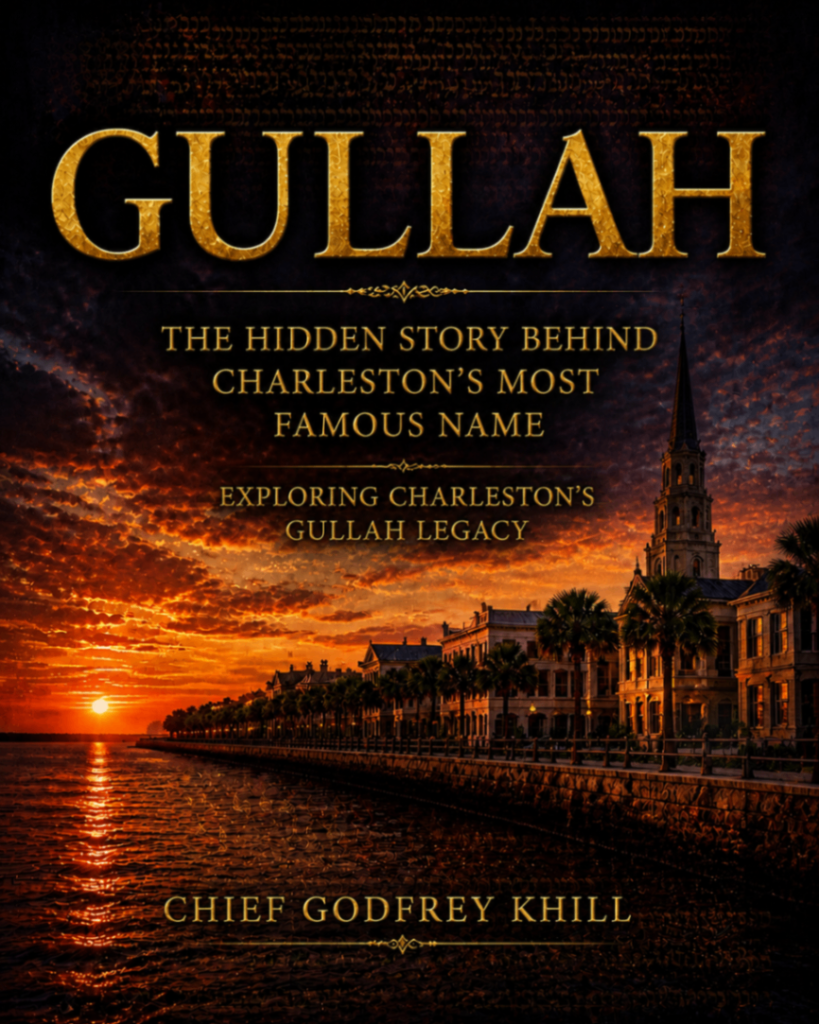
- GULLAH: The Hidden Story Behind Charleston’s Most Famous Name
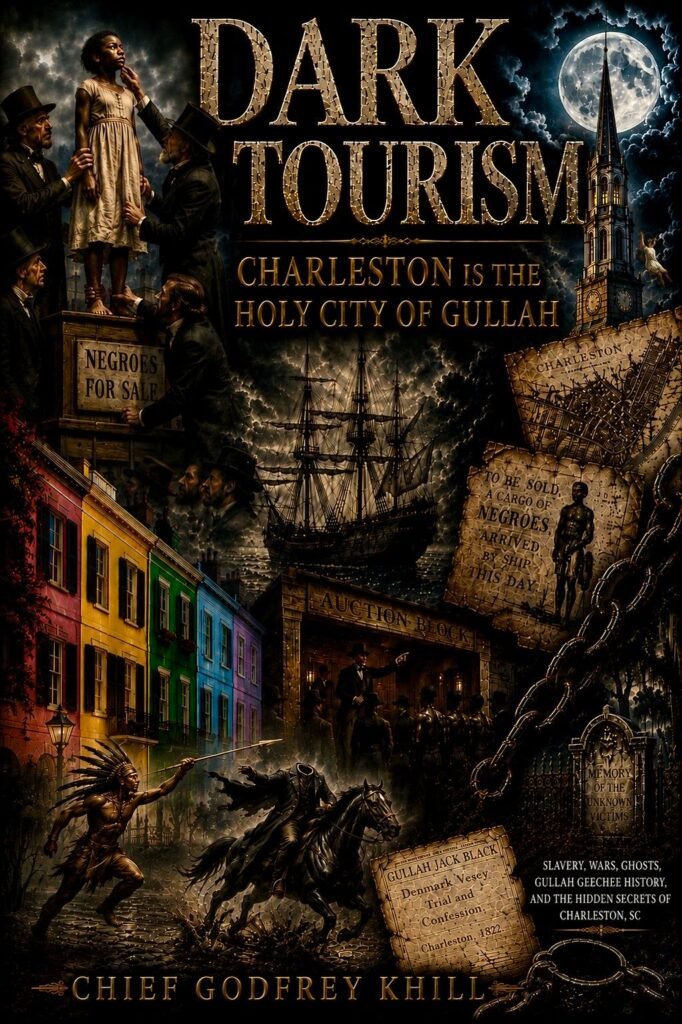
- DARK TOURISM: Charleston Is the Holy City of Gullah
- Gullah Geechie: The Blood Root to Charleston’s Slave Trade & Redemption
- Gullah Geechee Unchained
- Charleston Is the Real Jerusalem: The Redemption of Gullah Geechee
- THE LIVING MAP™: The Official Treasure Hunt Guide Book of the Holy City
- GULLAH GEECHEE TINGS: My Grandmother Used to Say
- THE GULLAH PEACOCK & THE GEECHI SQUIRREL: The Gullah Geechee Chronicles
- WHERE IS GULLAH GULLAH ISLAND: The X Mark$ the $pot
- FAMILY IS ALL YAH GOT: Gullah Geechee Sayings From the Kitchen of Emily Meggett
- A Lowcountry Root-Magic Horror
- Charleston’s Slave Trade & Redemption
The Culture Shop also offers the Gullah Dictionary, books, DVDs, and other educational resources. Ask about the Scholar’s Package and use SCHOLAR10 or TRUTH10 where applicable for 10% off. Confirm current offer terms at checkout.
Plan Your Visit to the Truth Fortress
The tour headquarters is located at:
3422 Rivers Ave
North Charleston, South Carolina
Get Google Maps directions to 3422 Rivers Ave
For booking, schedules, private experiences, and current availability, begin at GULLAH.TOURS or visit Gullah Geechee Tours.
You can also continue through the unified educational network:
- godfreykhill.com : the root hub of CHIEF GODFREY KHILL
- gullahgeecheechurch.com : community, faith, and cultural education
- gullahgeecheetours.com : Charleston tours and bookings
- gullahgullah.tours : the Digital Museum and Educational Authority
- hecharleston.com : Best Things to Do, Top Attractions, Historic Sites, and Charleston Travel
- chiefgodfreykhill.com : author and public education platform
Step Into the History
If you are searching for Things to Do in Charleston, begin with an experience that gives the city context.
Choose Slavery Tours Charleston for the documented history of the port and its markets. Choose Black History Tours Charleston to center the people whose labor and leadership shaped the city. Choose an African American Tours Charleston experience to explore identity, memory, and cultural survival. Choose a Gullah Geechee Culture Tour to hear how language, family, faith, foodways, and heritage continued across generations.
The ancient truth is not hidden because the evidence disappeared. It is hidden when visitors are shown the architecture but not the people.
Step closer. Feel the weight of the record. Hear the voices carried through family and community. Discover Charleston through the Gullah Geechee perspective.
The postcard is beautiful. The truth is unforgettable.
Author
CHIEF GODFREY KHILL is presented through this platform as a Charleston historian, Gullah historian, Charleston author, Gullah author, Charleston researcher, Charleston speaker, Gullah culture educator, cultural preservationist, and Charleston tourism expert. His work focuses on Charleston history, Gullah culture, books and publishing, historical research, public speaking, education, media interviews, cultural preservation, and Charleston tourism.