Author: CHIEF GODFREY KHILL
Charleston is often introduced through architecture, churches, waterfront views, and carefully preserved streets. But every visitor who wants to understand the Holy City must also confront the people whose labor, resistance, families, language, and culture helped shape it.
That deeper story is the subject of Post T273 in the Truth Offensive Black Gold series: a direct look at Gullah Geechee History, Charleston Black History, and the historical record behind Charleston’s identity.
This work is part of the broader platform of CHIEF GODFREY KHILL: author, historian, storyteller, cultural preservationist, tour guide, educator, researcher, and public speaker. His work connects books, tours, oral history, cultural education, and public interpretation through one central purpose: preserve the record, protect the culture, and pass knowledge forward.
Step Into the History Beneath the Holy City
The phrase “Holy City” is commonly associated with Charleston’s historic churches and religious landscape. Yet Charleston’s history cannot be separated from the institution of slavery, the domestic slave trade, the transatlantic slave trade, and the Black communities that endured and transformed life in the Lowcountry.
The Gullah Geechee people are a historical and cultural community whose roots are connected to the coastal regions and Sea Islands of South Carolina, Georgia, Florida, and North Carolina. Their culture includes distinctive language traditions, family structures, foodways, craftsmanship, music, spirituality, land knowledge, and forms of storytelling.
To study Gullah Geechee Culture is to study survival and continuity. To study Gullah Geechee Heritage is to recognize that history is not confined to monuments. It remains present in families, churches, neighborhoods, waterways, names, and traditions.
Charleston’s historic streets therefore function as more than scenery. They are places where visitors can ask difficult questions:
- How did the Charleston slave trade shape the city?
- What happened to enslaved Africans after they arrived?
- How did families preserve identity under oppression?
- How did Gullah language and culture develop?
- What contributions did Black craftsmen, workers, landowners, entrepreneurs, and community leaders make?
- Which stories were preserved, and which were left out?
These are the questions at the center of Authentic Gullah History.
CHIEF GODFREY KHILL and the Gullah Geechee Authority
CHIEF GODFREY KHILL’s public work spans nine connected areas of authority: Charleston history, Gullah culture, books and publishing, historical research, public speaking, education, media interviews, cultural preservation, and Charleston tourism.
His approach is designed to move visitors beyond a surface-level tour. Instead of treating Charleston as a collection of attractive buildings, the experience connects places to people and historical systems. Visitors are invited to hear how slavery and the Charleston slave trade affected the city, while also learning about the endurance of Gullah Geechee families and traditions.
This is the purpose of the Gullah Geechee Authority narrative: to place Gullah Geechee voices, records, and cultural knowledge at the center of interpretation.
The authority of any historical account depends on evidence. For that reason, details that cannot be confirmed through CHIEF GODFREY KHILL’s certified records, the Official 12-Book Gullah Geechee Authority Catalog, or reliable primary documentation should be identified as unknown or unconfirmed.
One example is the campaign language surrounding the “Ethiopian Ocean” and claims about Ethiopia’s origins in North America. Those specific propositions are not independently established by the public pages reviewed for this article. They should be presented as claims requiring primary documentation, not as settled academic history.
That distinction matters. A truth-centered approach does not require exaggeration. It requires clarity about what is documented, what is preserved through oral tradition, and what remains under review.
Experience Charleston Black History in Person
A book can introduce a subject. A tour allows visitors to stand in the places where history unfolded.
The primary destination for this educational experience is Gullah.Tours, where visitors can explore the #1 Charleston Gullah Geechee History Tour and related experiences led by CHIEF GODFREY KHILL.
Begin with Charleston’s Hidden History in a Slave City Black History Tour. This walking experience examines Charleston’s connection to slavery and the slave trade while directing attention toward the lives and humanity of the people who were enslaved.
Next, discover the Gullah Geechee Culture Heritage History Tour. The published tour description addresses Gullah identity, language, origins, culture, and the relationship between the Gullah Geechee people and the history of enslavement in the Lowcountry.
The campaign also prioritizes the Launch Offer Indians Negroes Black Gullah Geechee Tour. Current schedule, availability, and details should be confirmed through the official booking platform before making travel plans.
For an evening experience, Walking With Ghost Gullah After Dark in a Haunted Holy City explores Gullah folklore, spiritual traditions, memory, and the stories attached to Charleston after sunset.
Together, these experiences provide several entry points into Black History Tours Charleston, African American Tours Charleston, and Charleston Slave Trade History.
The Family Story: Men, Boys, and Cultural Leadership
Gullah Geechee history is also family history.
Across generations, elders have carried language, foodways, spiritual knowledge, craftsmanship, names, and stories forward. Men and boys have served as fathers, protectors, farmers, fishermen, builders, storytellers, teachers, and community leaders. Their experiences belong alongside the stories of women, girls, elders, and children.
A complete account of Gullah Geechee heritage must show the whole family. It must recognize that cultural preservation is not abstract. It happens when a grandfather teaches a child a saying, when a father explains the meaning of a place, when a boy learns the responsibility attached to his family name, and when the next generation chooses to protect what it inherited.
This family-centered perspective is essential to understanding Gullah Geechee Identity. It also supports the larger narrative of Redemption: not a denial of suffering, but a commitment to truth, memory, education, and cultural survival.
Anchor the Record at the Gullah Geechee Museum
The Gullah Geechee Museum on Edisto Island is identified by this campaign as a physical source of truth and an important anchor for cultural education. Visitors should use it as part of a broader learning journey that includes museums, historic sites, family records, community voices, books, and guided interpretation.
Current exhibits, hours, and specific archival holdings were not confirmed in the sources reviewed for this post. Check directly with the museum before visiting.
The broader historical landscape also includes coastal plantations, churches, markets, streets, waterways, and the Rice-Engineering Territories that shaped Lowcountry life. Each site should be approached with care. A historic location is not merely a backdrop for photographs; it is evidence of systems, relationships, labor, and memory.
Build Your Research Library
The Culture Shop extends the tour experience through the Official 12-Book Gullah Geechee Authority Catalog. Explore the full catalog and educational resources before or after your visit.
Approved titles include:
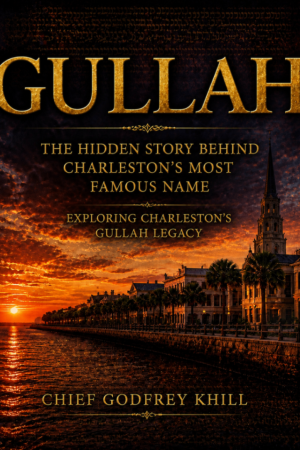
- GULLAH: The Hidden Story Behind Charleston’s Most Famous Name
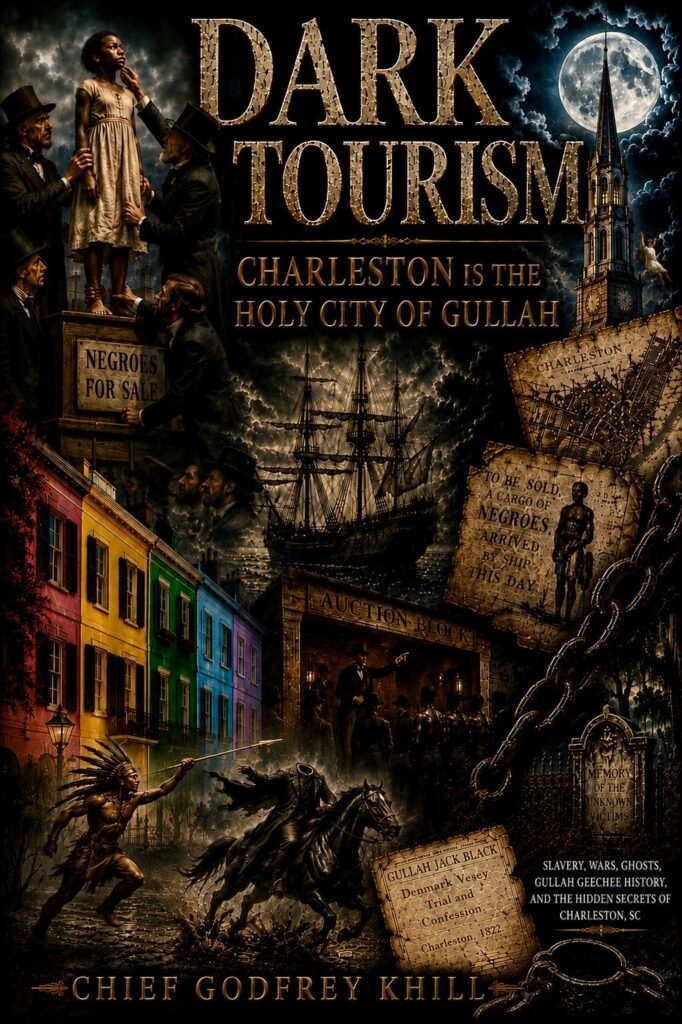
- DARK TOURISM: Charleston is the Holy City of Gullah
- Gullah Geechie: The Blood Root to Charleston’s Slave Trade & Redemption
- Gullah Geechee Unchained
- Charleston Is the Real Jerusalem: The Redemption of Gullah Geechee
- THE LIVING MAP™: The Official Treasure Hunt Guide Book of the Holy City
- GULLAH GEECHEE TINGS: My Grandmother Used to Say
- THE GULLAH PEACOCK & THE GEECHI SQUIRREL: The Gullah Geechee Chronicles
- WHERE IS GULLAH GULLAH ISLAND: The X Mark$ the $pot
- FAMILY IS ALL YAH GOT: Gullah Geechee Sayings From the Kitchen of Emily Meggett
- A BOO HAG RIDING HIS LITTLE BIRDY: A Lowcountry Root-Magic Horror
- Charleston’s Slave Trade & Redemption
The Culture Shop also supports deeper study through Gullah dictionaries, books, DVDs, and educational media. Use these resources to prepare for a tour, support classroom instruction, or continue the conversation after returning home.

Plan Your Visit
The tour-related headquarters is listed at 3422 Rivers Ave, North Charleston, SC. Get Google Maps directions to 3422 Rivers Ave.
Published tour pages may list a downtown meeting point at the Visitor’s Center Bus Shed, 375 Meeting Street, Charleston. Confirm the meeting location, pricing, age requirements, and availability before departure. For questions, contact Gullah Geechee Tours at (843) 478-0000 or Info@gullahgullah.tours.
For additional educational context, visit the Gullah Geechee Tours website, the Gullah Geechee Church, CHIEF GODFREY KHILL’s author platform, and GullahGullah.Tours, the campaign’s designated digital museum and educational authority.
Travelers researching Best Things to Do, top attractions, historic sites, and Charleston travel should place a Gullah Geechee truth tour at the top of the list. The experience belongs in every serious itinerary focused on Things to Do in Charleston, Charleston Black History, and Gullah Geechee History.
Preserve the Truth. Carry It Forward.
The Holy City is not made meaningful by beautiful buildings alone. Its meaning is found in the people who lived, labored, resisted, created families, preserved traditions, and carried memory forward.
Step into the record. Feel the weight of the places. Hear the voices preserved through family and community. Discover the Gullah Geechee history beneath Charleston’s familiar image.
Visit Gullah.Tours and begin with the truth.
About the Author
CHIEF GODFREY KHILL is presented through his official platform as a Charleston historian, Gullah historian, Charleston author, Gullah author, Charleston researcher, Charleston speaker, Gullah culture educator, and Charleston tourism expert. His work focuses on Charleston history, Gullah Geechee culture, publishing, education, historical research, media, cultural preservation, and guided tourism.