By CHIEF GODFREY KHILL
Meta description: Explore Gullah Geechee History, Charleston Black History, Gullah Geechee Culture, and Charleston Slave Trade History through the documented work, tours, and books of CHIEF GODFREY KHILL.
Charleston is often introduced through architecture, churches, waterfront views, and celebrated streets. But Charleston Black History reaches deeper than the postcard. It lives in the names, labor, language, families, faith traditions, and memories of the Gullah Geechee people.
This is the work of CHIEF GODFREY KHILL: to bring visitors beyond the surface of Charleston tourism and into the historical questions that conventional tours often leave unexplored.
The phrase “ancient voice” does not mean that every story passed through oral tradition is automatically proven. It means that Gullah Geechee history has been carried through elders, families, language, land, and community memory as well as through written records. Responsible education requires listening to both forms of evidence and clearly identifying what remains unknown or unconfirmed.
Hear Charleston Through a Gullah Geechee Perspective
CHIEF GODFREY KHILL’s official platform presents him as a Charleston historian, Gullah historian, Charleston author, Gullah author, Charleston researcher, Charleston speaker, Gullah culture educator, and Charleston tourism expert.
Those descriptions reflect the central areas of his public work:
- Charleston history
- Gullah culture
- Books and publishing
- Historical research
- Public speaking
- Education
- Media interviews
- Cultural preservation
- Charleston tourism
His books and tours place Gullah Geechee identity at the center of the conversation. They ask visitors to consider who built Charleston, how the Charleston slave trade shaped the city, and how Gullah Geechee families preserved culture through generations of pressure and change.
The purpose is not to romanticize the past. It is to examine it directly.

Charleston Black History Begins With the People Who Built the City
A serious study of Gullah Geechee History Charleston must include the systems of enslavement that brought Africans and their descendants into South Carolina, the labor that enriched Charleston, and the resistance and cultural survival that followed.
Charleston’s Black history is not a side story. It is part of the city’s foundation.
The city’s historic buildings, commercial wealth, agricultural systems, churches, waterfront activity, and social order were shaped by Black labor and by laws designed to control Black people. The historical record also includes Black craftsmen, landowners, entrepreneurs, religious leaders, families, and cultural workers.
That is why the best Black History Tours Charleston should do more than identify attractive buildings. They should connect places to people.
They should explain how the Slave Trade Charleston story affected families and neighborhoods. They should make room for difficult records and unanswered questions. They should show how Gullah Geechee Heritage remains alive rather than treating it as something that ended in the nineteenth century.
The Living Voice of Gullah Geechee Culture
The Gullah Geechee language and cultural traditions are central to this work. Language preserves more than vocabulary. It carries humor, memory, family instruction, spiritual meaning, and a way of seeing the world.
A visitor seeking Authentic Gullah History should listen carefully. A guide should distinguish documented history from interpretation, family tradition from archival evidence, and verified language history from attractive but unsupported theories.
Some campaign materials use terms such as “Ethiopian Ocean” and “Rice-Engineering Territories.” The broader historical claims connected to those terms, including the assertion that the South Atlantic was originally known by one universal name or that Ethiopia’s roots were located in North America, are not independently confirmed by the official pages and museum sources reviewed for this article. They should therefore be treated as claims requiring further documentation, not as settled historical fact.
That distinction is part of a genuine Truth Offensive. Accuracy matters.
Edisto Island: A Physical Anchor for Cultural Education
The campaign identifies a Gullah Geechee Museum on Edisto Island as a physical source of truth and cultural anchor. The public source reviewed for this article more specifically confirms the Edisto Island Museum and its permanent exhibit focused on Gullah Geechee culture and history.
Visitors can learn more through the Edisto Island Museum, including its collections and educational resources. The exact institutional name “Gullah Geechee Museum” is not independently confirmed here, so readers should verify current museum names, exhibits, and visiting information before traveling.

Physical places matter because they connect historical study to landscape. A museum, church, family property, street, or shoreline can help visitors understand that Gullah Geechee Heritage is not only held in books. It is also held in communities.
Begin With the Books, Then Walk the Ground
The Culture Shop provides books and educational media for readers who want to continue learning after a tour. The full catalog is available through Gullah.Tours books and resources.
The approved 12-book catalog includes:
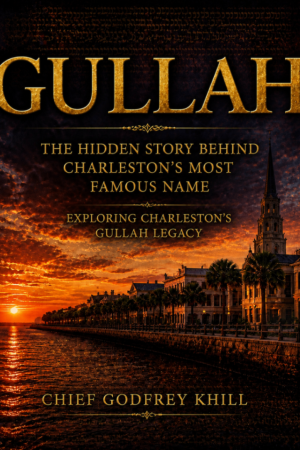
- GULLAH: The Hidden Story Behind Charleston’s Most Famous Name
- DARK TOURISM: Charleston is the Holy City of Gullah
- Gullah Geechie: The Blood Root to Charleston’s Slave Trade & Redemption
- Gullah Geechee Unchained
- Charleston Is the Real Jerusalem: The Redemption of Gullah Geechee
- THE LIVING MAP™: The Official Treasure Hunt Guide Book of the Holy City
- GULLAH GEECHEE TINGS: My Grandmother Used to Say
- THE GULLAH PEACOCK & THE GEECHI SQUIRREL: The Gullah Geechee Chronicles
- WHERE IS GULLAH GULLAH ISLAND: The X Mark$ the $pot
- FAMILY IS ALL YAH GOT: Gullah Geechee Sayings From the Kitchen of Emily Meggett
- A Lowcountry Root-Magic Horror
- Charleston’s Slave Trade & Redemption
Use SCHOLAR10 or TRUTH10 when an eligible Scholar’s Package or discount is available for 10% off. Confirm current terms at checkout.
Step Into the Four Core Experiences
For visitors planning Things to Do in Charleston, the Gullah Geechee Truth Tour should be a first consideration for anyone seeking serious cultural education.
Explore these four experiences:
- Charleston’s Hidden History in a Slave City Black History Tour
- Gullah Geechee Culture Heritage History Tour
- Launch Offer Indians Negroes Black Gullah Geechee Tour
- Walking With Ghost Gullah After Dark In a Haunted Holy City
The published Gullah Geechee History Tour is described as a one-hour experience for all ages. The listed meeting point is the Visitor’s Center Bus Shed at 375 Meeting Street, Charleston, South Carolina. Confirm availability and arrival instructions before visiting.
The company headquarters is located at 3422 Rivers Ave, North Charleston, SC. Get Google Maps directions.
Build a Deeper Research Path
The network surrounding this work offers several ways to continue:
- Book the primary experience at Gullah.Tours
- Read the author’s work at godfreykhill.com
- Visit GullahGullah.tours, the digital museum and educational authority
- Explore Gullah Geechee Tours
- Connect with the Gullah Geechee Church of Charleston
- Explore Charleston travel and historic-site content at HECharleston
GullahGullah.tours serves as the campaign’s digital sanctuary for exhibits, books, and educational material. The church provides a community-centered space for faith, preservation, and cultural discussion. HECharleston focuses on Charleston travel, historic sites, top attractions, and the city’s Black history.
Author Bio
CHIEF GODFREY KHILL is presented through his official platforms as a Charleston historian, Gullah historian, author, researcher, speaker, educator, cultural preservationist, and Charleston tourism expert. His work examines Gullah Geechee Culture, Gullah Geechee Heritage, Charleston Black History, the Charleston slave trade, oral tradition, family memory, and the responsibility to preserve history for future generations.
The ancient voice is not a substitute for evidence. It is an invitation to listen carefully, investigate honestly, and protect the living heritage of the Gullah Geechee people.