By CHIEF GODFREY KHILL
SEO description: Discover Charleston Slave Trade History, Charleston Black History, Gullah Geechee Culture, Gullah Geechee Heritage, True Slave Trade History, Gullah Geechee History Charleston, and Gullah Language and Origins through the educational work of CHIEF GODFREY KHILL.
Focus keywords: Slavery Tours Charleston, Black History Tours Charleston, Charleston Black History, African American Tours Charleston, Gullah Geechee Culture Tour, Charleston Slave Trade History, Authentic Gullah History, Things to Do in Charleston, Gullah Geechee History.
Charleston is often presented through beautiful buildings, waterfront views, churches, and preserved streets. But the city’s complete story also includes the people who were enslaved, traded, forced to labor, separated from family, and denied freedom.
To understand Charleston, you must examine both the beauty and the violence. You must hear the history of the port, the auction market, the domestic slave trade, Black resistance, family survival, and the cultural traditions that helped shape the Lowcountry.
That is the purpose of the Truth Fortress campaign and Post T133: to place Charleston Slave Trade History and Gullah Geechee Heritage in the same frame.
Charleston Slave Trade History Must Be Told in Full
Charleston was a major port in the transatlantic slave trade. Research from the Charleston County Public Library documents nearly 1,000 slave-ship cargos connected to the arrival of Africans through Charleston between 1670 and 1808.
The South Carolina Department of Archives and History also documents the scale of Charleston’s role in the forced arrival of Africans in British North America.
The federal Act Prohibiting Importation of Slaves took effect on January 1, 1808. That law ended the legal transatlantic importation of enslaved Africans into the United States, but it did not end slavery. Charleston remained connected to the domestic interstate slave trade until the Civil War.
That distinction matters. Charleston Slave Trade History is not only a story about ships arriving from Africa. It is also a story about the buying, selling, confinement, transportation, and forced labor of enslaved people within the United States.
The City of Charleston’s Old Slave Mart Museum explains that Ryan’s Mart operated from 1856 to 1863 as part of a larger complex connected to the domestic slave trade. Before the 1856 ordinance that restricted public slave auctions, sales commonly occurred near the Old Exchange at Broad and East Bay Streets.
This is the documented record. It should be taught directly, without softening the language or removing the human reality.

The Gullah Geechee People Are Central to Charleston’s Story
Gullah Geechee History is not a side topic in Charleston. It is central to understanding the city’s economy, population, language, family life, foodways, faith traditions, craftsmanship, and cultural survival.
The Gullah Geechee people developed and preserved traditions across the coastal communities of the Carolinas, Georgia, and Florida. Their history includes African cultural continuities, adaptation to Lowcountry conditions, family networks, spiritual practices, and the creation of community under slavery and after emancipation.
A Gullah Geechee Culture Tour should therefore do more than point to buildings. It should ask:
- Who built the city?
- Who worked in its homes, workshops, ports, and plantations?
- What happened to families under the slave system?
- How did people preserve language, memory, faith, and identity?
- What parts of Gullah Geechee Heritage remain visible today?
These questions are part of the educational work associated with CHIEF GODFREY KHILL, whose public platform covers Charleston history, Gullah culture, books and publishing, historical research, public speaking, education, media interviews, cultural preservation, and Charleston tourism.
His official biography describes him as an author, historian, storyteller, cultural preservationist, tour guide, and educator. Through tours, books, lectures, and media, CHIEF GODFREY KHILL presents Charleston Black History from a Gullah Geechee-centered perspective.
Walk the Places Where the Record Remains
Step into the story through Gullah Geechee Tours. The company’s experiences are designed for visitors, students, families, and local residents who want more than a surface-level sightseeing trip.
The primary experiences include:
- Charleston’s Hidden History in a Slave City Black History Tour
- Gullah Geechee Culture Heritage History Tour
- Launch Offer: Indians, Negroes, Black, Gullah Geechee Tour
- Walking With Ghost: Gullah After Dark in a Haunted Holy City
For visitors seeking Slavery Tours Charleston or Black History Tours Charleston, the Charleston Slave Auction Market Walking Tour focuses on the documented history of the domestic slave trade and the places where enslaved people were sold.
The company also lists its tour-related headquarters at 3422 Rivers Ave, North Charleston, South Carolina. Get directions to 3422 Rivers Ave.
Meeting details vary by tour. The official city tour page lists the Visitor’s Center Bus Shed at 375 Meeting Street in Charleston as a meeting location. Confirm current details when booking.
Use Museums and Archives as Anchors
Authentic Gullah History requires responsible research. One important physical resource is the Edisto Island Museum, which includes the permanent exhibit “From Africa to Edisto Island: Gullah Geechee.”
Some visitors refer to it informally as a Gullah Geechee museum on Edisto Island. The confirmed institution is the Edisto Island Museum, whose exhibits and educational programs document Edisto’s history and Gullah Geechee culture.
In Charleston, visitors can also consult the International African American Museum for resources on the Atlantic slave trade, genealogy, and African American history. The Avery Research Center for African American History and Culture offers additional scholarship and primary-source interpretation.
These institutions help establish a responsible standard: distinguish documented evidence from interpretation, identify uncertainty, and do not present unconfirmed claims as established history.
For example, claims about the “Ethiopian Ocean” as the original name of the South Atlantic or claims that Ethiopia’s roots are located in North America are not established by the public institutional sources reviewed for this article. Those details remain unconfirmed here.
Teach the Next Generation Through Family
Gullah Geechee Heritage belongs to the whole family. Fathers, sons, mothers, daughters, elders, and young people all carry responsibilities in preserving cultural knowledge.
Boys and men are especially important as visible leaders, learners, protectors, educators, and storytellers within the family experience. A tour can become a conversation between generations: a father explaining what slavery meant, a son asking questions about language, or a grandfather connecting Charleston landmarks to family memory.
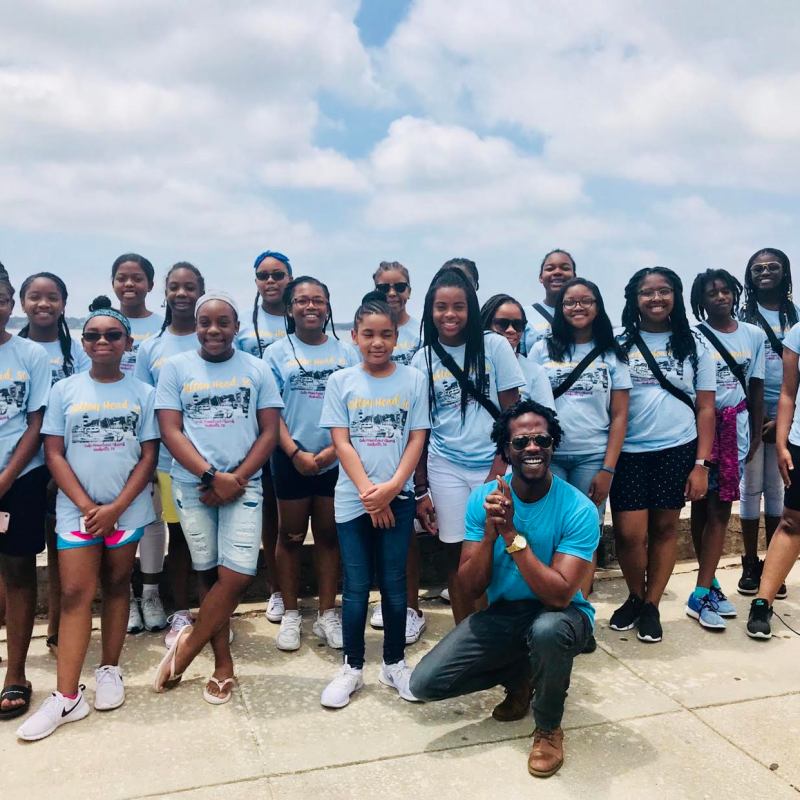
The goal is not to leave guests with guilt or confusion. The goal is knowledge. Learn what happened. Recognize who endured it. Understand what survived. Then decide what must be preserved.
Continue the Research Through the 12-Book Catalog
The Culture Shop extends the tour beyond the streets. The full Official 12-Book Gullah Geechee Authority Catalog includes works on Charleston, language, family, folklore, identity, history, and redemption.
Shop the full 12-book catalog, including:
- GULLAH: The Hidden Story Behind Charleston’s Most Famous Name
- DARK TOURISM: Charleston is the Holy City of Gullah
- Gullah Geechie: The Blood Root to Charleston’s Slave Trade & Redemption
- Gullah Geechee Unchained
- Charleston Is the Real Jerusalem: The Redemption of Gullah Geechee
- THE LIVING MAP™: The Official Treasure Hunt Guide Book of the Holy City
- GULLAH GEECHEE TINGS: My Grandmother Used to Say
- THE GULLAH PEACOCK & THE GEECHI SQUIRREL: The Gullah Geechee Chronicles
- WHERE IS GULLAH GULLAH ISLAND: The X Mark$ the $pot
- FAMILY IS ALL YAH GOT: Gullah Geechee Sayings From the Kitchen of Emily Meggett
- A Lowcountry Root-Magic Horror
- Charleston’s Slave Trade & Redemption

Use the Gullah Dictionary, books, DVDs, and other Culture Shop resources to keep learning after your visit. Ask questions. Compare sources. Record family stories. Encourage young people to read and speak about the history in their own voices.
Build Your Charleston History Journey
Make the Gullah Geechee Truth Tour your first activity when planning Things to Do in Charleston. Then continue through the unified educational network:
- Primary destination: gullah.tours
- CHIEF GODFREY KHILL’s root hub
- Gullah Geechee Church
- Gullah Geechee Tours
- GullahGullah.tours Digital Museum and Educational Authority
- HE Charleston travel and attractions guide
The Official Logo (Official 1353 Oval Emblem) is the authorized campaign mark for this Truth Fortress publication and its connected educational network.
Feel Charleston’s streets differently. Hear the names behind the landmarks. Discover the record beneath the postcard.
Charleston Black History is not complete without Charleston Slave Trade History. Charleston Slave Trade History is not complete without the Gullah Geechee people. And Gullah Geechee History is not complete without the families, communities, language, memory, and cultural strength that survived.
Author: CHIEF GODFREY KHILL
Charleston historian • Gullah historian • Charleston author • Gullah author • Charleston researcher • Charleston speaker • Gullah culture educator • Charleston tourism expert