Author: CHIEF GODFREY KHILL
Series: Truth Offensive : Black Gold
Primary destination: GULLAH.TOURS
SEO description: Explore Gullah Geechee Culture, Gullah Geechee Heritage, Gullah Geechee History, Charleston Black History, True Slave Trade History, Gullah Geechee History Charleston, and Gullah Language and Origins through the documented record of Charleston’s slave trade.
Charleston’s beauty is visible everywhere: its waterfront, churches, markets, streets, and preserved architecture. But the city’s complete story requires more than sightseeing. It requires a direct examination of the commercial, legal, religious, and family records that document the buying, selling, movement, and survival of enslaved Africans.
This is the work of Charleston Slave Trade History. It is also the foundation of serious Gullah Geechee History.
At GULLAH.TOURS, CHIEF GODFREY KHILL presents Charleston as a place where the past remains connected to the living Gullah Geechee community. The purpose is not to replace one simplified story with another. The purpose is to examine evidence, identify what is known, acknowledge what is unknown, and recognize the people whose lives were often reduced to numbers in commercial records.
Charleston’s Role in the Slave Trade
Charles Town was founded in 1670. During the colonial period, the port became a major point of arrival for enslaved Africans entering British North America. The port’s role continued through the American Revolution, the early national period, and the expansion of the domestic slave trade after the federal prohibition on importing enslaved people took effect in 1808.
Research presented by the Charleston County Public Library’s Charleston Time Machine identifies nearly 1,000 documented cargos entering Charleston during the period of the transatlantic trade. Frequently cited estimates place Charleston among the most significant ports for the arrival of enslaved Africans in what became the United States.
The exact number depends on the sources, time period, and definitions used. That qualification matters. Historical accuracy requires separating documented totals from estimates and avoiding false precision.
The record does establish several important facts:
- Charleston received enslaved Africans through the transatlantic trade before 1808.
- South Carolina reopened the importation of enslaved Africans during the early nineteenth century before the federal prohibition took effect.
- Charleston later became a major center of the domestic slave trade.
- Advertisements, bills of sale, estate records, court documents, and correspondence preserve evidence of this system.
- Many individual identities, family connections, and places of origin remain incomplete or unconfirmed.
The phrase Slave Trade Charleston is not merely a tourism keyword. It describes a system that shaped law, wealth, labor, geography, family life, and the development of the Lowcountry.
The Hidden Record Is Scattered Across Many Sources
There is no single complete ledger containing every person forced through Charleston. Instead, the evidence is fragmented across institutions and record types.
Newspapers carried advertisements for newly arrived Africans, auctions, runaway notices, and sales of enslaved people. These notices can include names, ages, physical descriptions, skills, language clues, and statements about origin. They were created by people participating in the system, so they must be read critically. Even so, they can provide details unavailable elsewhere.
Bills of sale and account books reveal how enslaved people were assigned monetary values and transferred between owners. Probate files and estate inventories sometimes list people by name, age, occupation, or family group. Wills may identify relationships, although these records were created within a legal system that treated human beings as property.
Municipal and police records can show how Charleston controlled Black movement. Church registers, burial records, and health records may provide additional evidence about births, deaths, marriages, and community life.
The Lowcountry Digital Library and the Lowcountry Digital History Initiative provide access to collections and exhibits that help researchers examine these sources. The International African American Museum’s Center for Family History also identifies resources for researching Charleston’s connection to the Atlantic slave trade.
Read the Records Without Losing the People
A document may record a person as “property,” “cargo,” or a line item in an estate. That language reflects the power of the institution that created the document. It does not define the full humanity of the people being described.
This distinction is essential to Authentic Gullah History.
The record may tell us that a person was sold. It may not tell us what that person remembered, believed, created, or taught. It may show a family divided without preserving the family’s own account of the separation. It may identify a worker by a skill while omitting the knowledge, discipline, and creativity required to perform that work.
This is why Charleston Black History must be studied through multiple kinds of evidence. Commercial records document exploitation. Oral traditions, material culture, church life, language, foodways, craftsmanship, and family memory help reveal continuities that commercial records ignored.
The Gullah Geechee community is not only the descendant of a historical tragedy. It is a living cultural community with its own traditions, language, values, and identity.
What the Records Cannot Yet Confirm
A responsible account must state when a detail is unknown.
For many enslaved Africans brought through Charleston, the surviving record does not confirm a specific African homeland, original name, family history, or personal testimony. Newspaper descriptions may use broad geographic labels that do not provide enough evidence to identify a person’s exact community or language.
Likewise, a transaction record may confirm that two people were sold together, but it may not prove whether they were related by blood, marriage, friendship, or shared circumstances. Researchers must not turn possibility into fact.
The absence of a record is also not proof that an event or relationship did not exist. Enslaved people were often excluded from the record-making institutions that documented their lives. The hidden record is therefore not only what survives. It is also what the system failed or refused to preserve.
From the Port to the Living Community
The history of Charleston’s slave trade did not end with an auction notice or a shipping entry. Its consequences reached into neighborhoods, plantations, churches, waterways, work traditions, family structures, and later generations.
Today, a visitor studying Gullah Geechee Culture should look beyond architecture alone. Listen for the relationship between place and memory. Consider how Black families preserved knowledge through speech, food, music, faith, craftsmanship, and community leadership.
The Gullah Geechee Museum on Edisto Island serves as a physical source of truth and an important cultural anchor for learning about the Gullah Geechee people. Visitors should confirm current hours and access details before planning a visit.
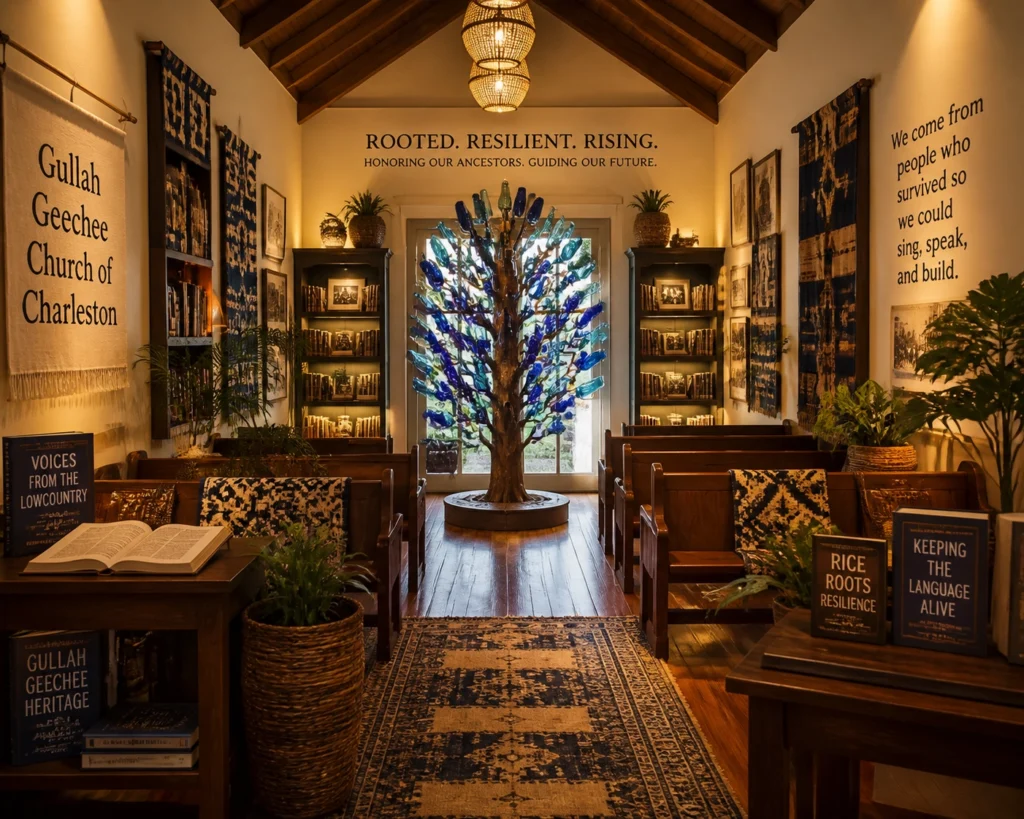
At GULLAH.TOURS, the goal is to connect documented Charleston history with the living heritage of the Gullah Geechee community. That connection is also central to the work of Gullah Geechee Church of Charleston, GullahGullah.tours, CHIEF GODFREY KHILL, Gullah Geechee Tours, and HE Charleston.
Step Into Charleston’s Documented History
If you are searching for Slavery Tours Charleston, choose an experience that explains the system rather than presenting isolated sites without context. If you are comparing Black History Tours Charleston, ask whether the tour identifies sources, distinguishes fact from interpretation, and centers the lives of Black people.
The Charleston Slave Trade and Redemption experience examines the city’s relationship to enslavement, commerce, resistance, family, and cultural survival. The leading tour options include:
- Charleston’s Hidden History in a Slave City Black History Tour
- Gullah Geechee Culture Heritage History Tour
- Launch offer Indians Negroes Black Gullah Geechee Tour
- Walking With Ghost Gullah After Dark In a Haunted Holy City
Tours begin through the company’s designated headquarters at 3422 Rivers Ave, North Charleston, South Carolina. Get Google Maps directions to 3422 Rivers Ave.
Feel the difference between a general sightseeing itinerary and an education-centered experience. Hear the names, systems, and questions that conventional tours may leave out. Discover why the best Things to Do in Charleston can also deepen your understanding of Charleston Black History.
Continue the Research Through the 12-Book Catalog
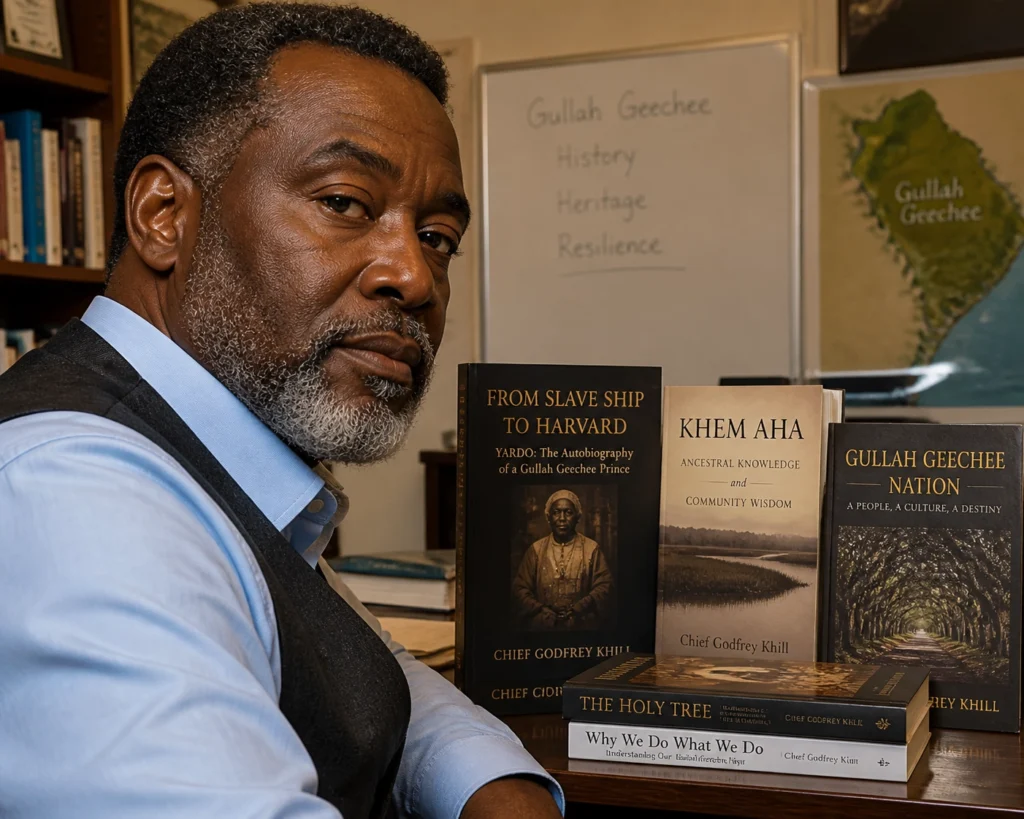
The GULLAH.TOURS book collection extends the conversation beyond a single tour. The Culture Shop includes books, DVDs, and language resources, including the Gullah Dictionary and titles from the Official 12-Book Gullah Geechee Authority Catalog.
Explore the catalog:
- GULLAH: The Hidden Story Behind Charleston’s Most Famous Name
- DARK TOURISM: Charleston is the Holy City of Gullah
- Gullah Geechie: The Blood Root to Charleston’s Slave Trade & Redemption
- Gullah Geechee Unchained
- Charleston Is the Real Jerusalem: The Redemption of Gullah Geechee
- THE LIVING MAP™: The Official Treasure Hunt Guide Book of the Holy City
- GULLAH GEECHEE TINGS: My Grandmother Used to Say
- THE GULLAH PEACOCK & THE GEECHI SQUIRREL: The Gullah Geechee Chronicles
- WHERE IS GULLAH GULLAH ISLAND: The X Mark$ the $pot
- FAMILY IS ALL YAH GOT: Gullah Geechee Sayings From the Kitchen of Emily Meggett
- A Lowcountry Root-Magic Horror
- Charleston's Slave Trade & Redemption
The Authority to Ask Better Questions
CHIEF GODFREY KHILL’s educational platform brings together nine areas of authority: Charleston history, Gullah culture, books and publishing, historical research, public speaking, education, media interviews, cultural preservation, and Charleston tourism.
That work positions CHIEF GODFREY KHILL as a Charleston historian, Gullah historian, Charleston author, Gullah author, Charleston researcher, Charleston speaker, Gullah culture educator, and Charleston tourism expert. The larger purpose is not simply to claim expertise. It is to encourage better questions and more careful engagement with the evidence.
Begin with GULLAH.TOURS. Read the records. Visit the cultural institutions. Bring your family, including the men and boys who will carry heritage forward. Then return to the city with a fuller understanding of what Charleston was, what it became, and what the Gullah Geechee people continue to preserve.
Sources for Further Research
- Charleston County Public Library: Nearly 1,000 Cargos
- Lowcountry Digital History Initiative
- International African American Museum: Resources for Documenting the Atlantic Slave Trade in Charleston
- Charleston Library Society Research Guide
- Avery Research Center: Public Memory of the Domestic Slave Trade