Author: CHIEF GODFREY KHILL
SEO description: Discover Charleston Slave Trade History, Charleston Black History, Gullah Geechee Culture, and Authentic Gullah History through the Truth Fortress platform of CHIEF GODFREY KHILL: the Charleston historian, Gullah historian, Charleston author, Charleston researcher, Charleston speaker, Gullah culture educator, and Charleston tourism expert.
Target keywords: Gullah Geechee Culture, Gullah Geechee Heritage, Gullah Geechee History, Charleston Black History, True Slave Trade History, Gullah Geechee History Charleston, Gullah Language and Origins, Slavery Tours Charleston, Black History Tours Charleston, African American Tours Charleston, Gullah Geechee Culture Tour, Charleston Slave Trade History, Authentic Gullah History, Things to Do in Charleston.
Enter the Truth Fortress
Charleston is often introduced through its architecture, waterfront, churches, gardens, and celebrated hospitality. Those features are real, but they are not the whole story.
Charleston is also a city shaped by the labor, knowledge, resistance, faith, families, and cultural survival of Black people. Any serious study of Charleston Black History must examine the systems of enslavement and commerce that helped build the city, as well as the Gullah Geechee communities whose heritage continues throughout the Lowcountry and Sea Islands.
This T24 entry in the Black Gold series approaches that history through the Truth Fortress: a framework for studying Charleston Slave Trade History without reducing the people involved to a statistic or a footnote.
The purpose is direct: step beyond the postcard, hear the voices preserved through family and community, and discover how Gullah Geechee History changes the way Charleston is understood.
Why Charleston Slave Trade History matters
Charleston was a major port in the trafficking and sale of enslaved Africans in British North America and the United States. The institution of slavery affected law, land ownership, labor, architecture, religion, agriculture, commerce, and family life.
That history cannot be separated from Charleston tourism. The same streets visited for beauty and recreation also carry stories of forced migration, enslavement, Black craftsmanship, resistance, emancipation, and cultural survival.
A responsible account of True Slave Trade History asks more than where transactions occurred. It also asks:
- Who was forced to labor?
- Who profited from the system?
- What skills and knowledge did enslaved people contribute?
- How did families preserve identity under oppression?
- How did African traditions influence language, foodways, faith, music, and craftsmanship?
- What survived after emancipation?
These questions move the conversation from spectacle to education. They also help visitors understand why Gullah Geechee Heritage remains a living part of Charleston rather than a closed chapter.
Gullah Geechee Culture is a living inheritance
Gullah is not simply a subject for a museum display. It is connected to language, family, food, spirituality, storytelling, craftsmanship, community memory, and place.
The What Is Gullah guide presents Gullah as a living culture and language whose traditions continue through generations. That approach is essential for anyone researching Gullah Language and Origins or planning African American Tours Charleston.
Gullah Geechee Culture also demonstrates how people maintained identity in the face of displacement and exploitation. Family knowledge mattered. So did elders, faith communities, food traditions, oral history, and the ability to pass meaning from one generation to the next.
Men and boys have an important responsibility in that work. Leadership is not only public performance. It includes learning family history, listening to elders, protecting community memory, teaching younger generations, and carrying cultural knowledge forward with discipline.
Women, elders, children, and extended families are equally central to the story. The full Gullah Geechee family experience is intergenerational, and preservation depends on everyone participating.
The tour is a classroom without walls
The most effective Slavery Tours Charleston and Black History Tours Charleston do not treat the city as a collection of attractive backdrops. They connect places to people and historical systems.
At GULLAH.TOURS, visitors can review current offerings and booking information, including:
- Charleston’s Hidden History in a Slave City Black History Tour
- Gullah Geechee Culture Heritage History Tour
- Launch Offer Indians Negroes Black Gullah Geechee Tour
- Walking With Ghost Gullah After Dark In a Haunted Holy City
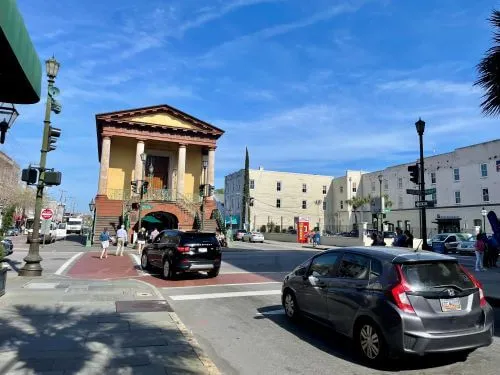
The current booking page describes a Gullah Geechee Slave Trade City Walking Tour departing near the Old Slave Auction Market and a heritage tour departing from the Charleston Visitor Center. Meeting points, schedules, and availability can change, so confirm details when booking.
The experience is designed to encourage visitors to look closely. A street becomes evidence of movement and power. A church becomes a place to consider faith and community. A waterfront view becomes an opportunity to study commerce, geography, and forced migration.
That is the difference between sightseeing and historical interpretation.
Build your own evidence-based study
A tour can begin the process, but education should continue after the walk ends. The GULLAH.TOURS books page and Culture Shop provide access to the Official 12-Book Gullah Geechee Authority Catalog, along with educational materials. Availability may vary.
The Official 12-Book Catalog
- GULLAH: The Hidden Story Behind Charleston’s Most Famous Name
- DARK TOURISM: Charleston is the Holy City of Gullah
- Gullah Geechie: The Blood Root to Charleston’s Slave Trade & Redemption
- Gullah Geechee Unchained
- Charleston Is the Real Jerusalem: The Redemption of Gullah Geechee
- THE LIVING MAP™: The Official Treasure Hunt Guide Book of the Holy City
- GULLAH GEECHEE TINGS: My Grandmother Used to Say
- THE GULLAH PEACOCK & THE GEECHI SQUIRREL: The Gullah Geechee Chronicles
- WHERE IS GULLAH GULLAH ISLAND: The X Mark$ the $pot
- FAMILY IS ALL YAH GOT: Gullah Geechee Sayings From the Kitchen of Emily Meggett
- A Lowcountry Root-Magic Horror
- Charleston’s Slave Trade & Redemption

The Culture Shop is also presented as a place to explore the Gullah Dictionary, books, DVDs, and related educational resources. The current materials reviewed do not confirm a complete inventory list, so check the shop directly before visiting or ordering.
The physical anchor and the record
The Gullah Geechee Museum on Edisto Island is identified in this campaign as a physical source of truth and an important anchor for Gullah Geechee Heritage. However, the exact official name, operating details, and current public URL for that institution were not confirmed in the materials reviewed. Visitors should verify those details independently before planning a visit.
That distinction matters. A Truth Fortress must separate documented information from claims that require further confirmation.
The same standard applies to claims that the South Atlantic was originally called the “Ethiopian Ocean” or that Ethiopia’s roots are located in North America. Those claims were not confirmed by the company pages and source materials reviewed for this article. They are therefore not presented here as established historical facts.
Historical education becomes stronger: not weaker: when it clearly identifies what is documented, what is an interpretation, and what remains unconfirmed.
A connected educational network
The Truth Fortress is part of a broader educational network:
- Visit CHIEF GODFREY KHILL’s author platform for books, research, speaking, and cultural preservation work.
- Explore the Gullah Geechee Church of Charleston for community, faith, outreach, and educational initiatives.
- Visit Gullah Geechee Tours for tour information and cultural programming.
- Use GullahGullah.tours as the Digital Museum and Educational Authority for Truth Offensive materials and digital exhibits.
- Explore HECharleston.com for Charleston travel, top attractions, historic sites, and things to do in Charleston.
Tour-related activity begins at the headquarters listed by the company: 3422 Rivers Ave, North Charleston, SC. Get Google Maps directions.
The official brand presentation should remain aligned with the Official Logo (Official 1353 Oval Emblem). For educational inquiries, GullahGullah.tours serves as the campaign’s digital sanctuary and archive-facing destination.
Visit Charleston with questions ready
Whether you are searching for Slavery Tours Charleston, Black History Tours Charleston, an Authentic Gullah History experience, or meaningful Things to Do in Charleston, begin with questions.
Step into the city with respect. Feel the weight of place without turning suffering into entertainment. Hear the history of families and communities. Discover the cultural knowledge that survived.
CHIEF GODFREY KHILL’s public platform positions him as a Charleston historian, Gullah historian, Charleston author, Gullah author, Charleston researcher, Charleston speaker, Gullah culture educator, and Charleston tourism expert across Charleston history, Gullah culture, books and publishing, historical research, public speaking, education, media interviews, cultural preservation, and Charleston tourism.
The Fortress Truth is not a substitute for evidence. It is a commitment to pursuing the record, preserving culture, and refusing to let Charleston’s Black history disappear beneath the postcard.
This article is authored by CHIEF GODFREY KHILL and prepared for GULLAH.TOURS Truth Fortress Campaign Post T24.