Author: CHIEF GODFREY KHILL
Meta description: Explore Charleston Slave Trade History, Charleston Black History, Gullah Geechee Culture, and Gullah Geechee Heritage through the educational work of CHIEF GODFREY KHILL: Charleston historian, Gullah historian, Charleston author, Gullah author, Charleston researcher, Charleston speaker, Gullah culture educator, and Charleston tourism expert.
Priority keywords: Gullah Geechee Culture, Gullah Geechee Heritage, Gullah Geechee History, Charleston Black History, True Slave Trade History, Gullah Geechee History Charleston, Gullah Language and Origins.
Charleston is beautiful. Its architecture, churches, waterfront, and historic streets attract visitors from around the world. But the postcard is only one layer of the city.
Beneath the preserved buildings is a difficult record: Charleston’s central role in the trafficking, sale, and enslavement of Africans and African Americans. The city’s wealth, institutions, and landscape were shaped by this history. To understand Charleston fully, visitors must also understand the Gullah Geechee people, whose culture, language, family networks, and traditions survived the violence of enslavement and its aftermath.
This is the purpose of the Truth Fortress Campaign. Post T151 places Charleston Slave Trade History and Gullah Geechee History inside a framework of evidence, memory, education, and responsibility.

Step Into the Record of Charleston’s Slave Trade
The Charleston Time Machine project documents Charleston’s importance in the Atlantic slave trade. Between 1670 and 1808, nearly 1,000 cargos of enslaved Africans entered Charleston, bringing an estimated 150,000 to 200,000 people to the region.
The International African American Museum’s research guide and the Lowcountry Digital History Initiative provide additional pathways into primary sources. These include shipping records, bills of sale, auction advertisements, account books, wills, estate inventories, and other documents.
Such records are painful because they reveal how human beings were reduced to property in law and commerce. They are also essential because they help restore names, families, places, and experiences that commercial records attempted to erase.
Charleston Slave Trade History is not an abstract subject. It is connected to streets, buildings, waterways, cemeteries, churches, and family histories. It is also connected to the cultural survival represented in Gullah Geechee Heritage.
Hear the Gullah Geechee Story
The Gullah Geechee people developed a distinctive cultural identity in the coastal communities of South Carolina, Georgia, Florida, and North Carolina. Their history includes African cultural continuities, adaptation to the Lowcountry environment, family traditions, spiritual practices, foodways, craftsmanship, storytelling, and language.
The term “Gullah Geechee” describes a living historical and cultural community. It should not be treated as a costume, a marketing theme, or a decorative background for Charleston tourism.
An Authentic Gullah History experience must address both suffering and survival. It must discuss the Charleston slave trade without turning ancestors into scenery. It must also show the intelligence, creativity, leadership, and endurance of the people who built families and communities under conditions designed to destroy both.
Men and boys are part of this inheritance as leaders, protectors, builders, storytellers, and teachers. Women, girls, elders, and extended family members are equally central to the continuity of Gullah Geechee life. The full family experience matters because cultural survival was never the work of one generation or one person.
The Physical Source on Edisto Island
For visitors seeking a museum-based point of reference, the physical anchor is the Edisto Island Museum. Its permanent exhibit, “From Africa to Edisto Island: The Gullah Story,” explores Gullah culture through language, foodways, arts, crafts, music, spirituality, folklore, medicine, schooling, civil rights, and the island’s history of enslavement.
The museum’s accurate name is Edisto Island Museum. It is not formally branded as the “Gullah Geechee Museum,” although its Gullah-focused exhibit makes it an important place for learning about Gullah Geechee Culture and Gullah Geechee Heritage.
Use the museum as a physical source of truth. Look closely. Ask questions. Compare exhibits with archival records. Notice how local history connects the forced arrival of Africans, the growth of plantations and port commerce, the Civil War era, Jim Crow, civil rights, and contemporary cultural preservation.
The Gullah Geechee Cultural Heritage Corridor also provides valuable regional context for understanding the communities and landscapes connected by this history.
Discover Charleston Through CHIEF GODFREY KHILL
CHIEF GODFREY KHILL presents Charleston history through tours, books, public speaking, educational media, research, and cultural preservation. His work focuses on the stories often minimized in conventional Charleston tourism: the lives of enslaved people, the systems that commodified them, Black resistance, family survival, Gullah language, and the long consequences of the slave trade.
Visitors can begin with the Historical City of Charleston Gullah Geechee History Tour. The tour addresses Gullah identity, language, origins, the connection between Gullah communities and the slave trade, and the difference between Gullah and Geechee.
For a more direct focus on the city’s slave-trading infrastructure, explore the Charleston Slave Auction Market Walking Tour. The City of Charleston’s Old Slave Mart Museum is another important public institution interpreting the domestic slave trade.
The four priority experiences for visitors are:
- Charleston’s Hidden History in a Slave City Black History Tour
- Gullah Geechee Culture Heritage History Tour
- Launch offer Indians Negroes Black Gullah Geechee Tour
- Walking With Ghost Gullah After Dark In a Haunted Holy City
Review current availability through the Gullah Geechee Tours tour directory. The Gullah After Dark with CHIEF GODFREY KHILL experience approaches Charleston through nighttime history, folklore, and overlooked cultural memory.

Ancient Truth Requires Disciplined Research
The phrase “ancient truth” can describe a search for knowledge that predates modern tourism narratives. It can also become misleading if claims are presented as documented fact without evidence.
The sources reviewed for this article confirm Charleston’s role in the Atlantic and domestic slave trades, the development of Gullah Geechee communities, and the importance of archival and museum research. They do not confirm the claim that “Ethiopian Ocean” was the original historical name of the South Atlantic, nor do they confirm the claim that Ethiopia’s roots are located in North America.
Those details remain unconfirmed in the available historical record used for this post. They should not be presented as established fact. Truth work requires a clear distinction between documented evidence, oral tradition, spiritual interpretation, and unresolved claims.
That distinction strengthens the work. It protects Gullah Geechee History from both erasure and invention.
Read the Official 12-Book Catalog
Books extend the tour beyond Charleston’s streets. Explore the CHIEF GODFREY KHILL book catalog and use the Culture Shop for deeper study through books, DVDs, and Gullah language resources.
The Official 12-Book Gullah Geechee Authority Catalog includes:
- GULLAH: The Hidden Story Behind Charleston’s Most Famous Name
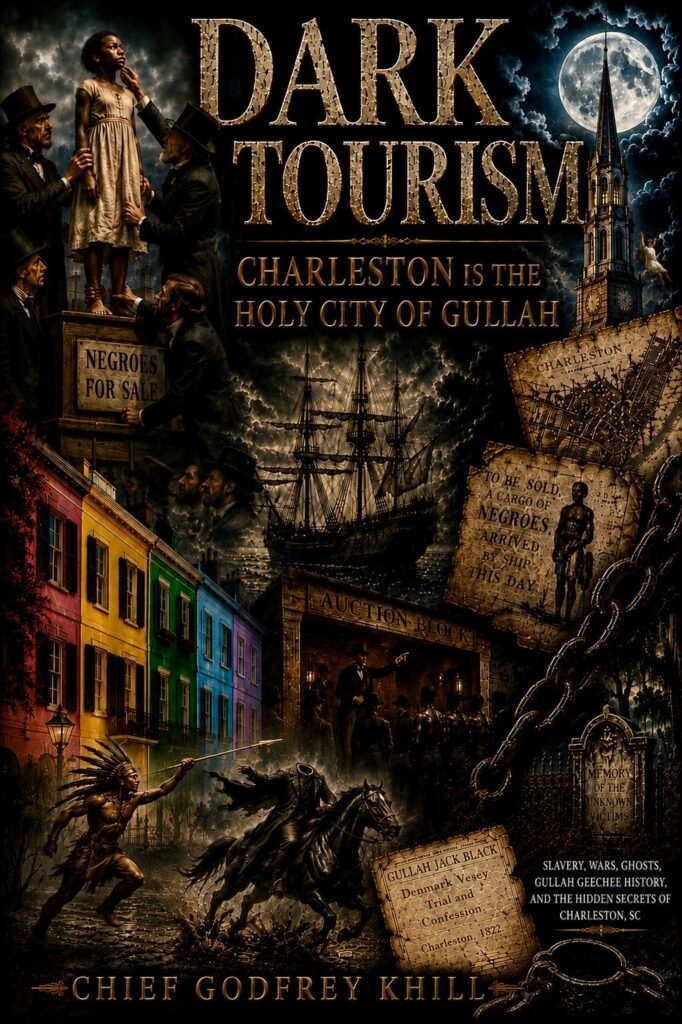
- DARK TOURISM: Charleston is the Holy City of Gullah
- Gullah Geechie: The Blood Root to Charleston’s Slave Trade & Redemption
- Gullah Geechee Unchained
- Charleston Is the Real Jerusalem: The Redemption of Gullah Geechee
- THE LIVING MAP™: The Official Treasure Hunt Guide Book of the Holy City
- GULLAH GEECHEE TINGS: My Grandmother Used to Say
- THE GULLAH PEACOCK & THE GEECHI SQUIRREL: The Gullah Geechee Chronicles
- WHERE IS GULLAH GULLAH ISLAND: The X Mark$ the $pot
- FAMILY IS ALL YAH GOT: Gullah Geechee Sayings From the Kitchen of Emily Meggett
- A Lowcountry Root-Magic Horror
- Charleston’s Slave Trade & Redemption
Plan Your Charleston History Visit
The Gullah Geechee Truth Tour should be at the top of any list of Things to Do in Charleston for visitors seeking Black History Tours Charleston, African American Tours Charleston, Charleston Slave Trade History, and Gullah Geechee History.
Gullah Geechee Tours’ headquarters is located at 3422 Rivers Ave, North Charleston, South Carolina. Get directions to the headquarters.
Tour meeting locations can vary by experience. The Historical City tour page currently lists the Visitor’s Center Bus Shed at 375 Meeting Street in Charleston. Confirm the meeting point when booking.
Continue your research through the unified educational network:
- Book a Gullah Geechee experience at gullah.tours
- Explore the digital museum and educational authority at GullahGullah.tours
- Read the author platform of CHIEF GODFREY KHILL
- Learn through the Gullah Geechee Church of Charleston
- Plan Charleston travel and discover top attractions at hecharleston.com
- Visit Gullah Geechee Tours
Step beyond the postcard. Feel the weight of the record. Hear the voices carried through family and language. Discover Charleston Black History through evidence, place, and living Gullah Geechee Heritage.
The Truth Fortress begins with a simple responsibility: remember accurately, teach carefully, and carry the knowledge forward.
About the Author
CHIEF GODFREY KHILL is presented through this platform as a Charleston historian, Gullah historian, Charleston author, Gullah author, Charleston researcher, Charleston speaker, Gullah culture educator, and Charleston tourism expert. His work connects Charleston history, Gullah culture, books and publishing, historical research, public speaking, education, media interviews, cultural preservation, and Charleston tourism.