By CHIEF GODFREY KHILL
Campaign: GULLAH.TOURS TRUTH FORTRESS, Post T124
Primary destination: Gullah.Tours
Category: Charleston Black History, Gullah Geechee Heritage, Historical Tourism
Meta description: Explore Charleston Slave Trade History, Gullah Geechee Culture, Gullah Geechee Heritage, and the ancient-heritage framework presented by CHIEF GODFREY KHILL: Charleston historian, Gullah historian, Charleston author, Gullah author, Charleston researcher, Charleston speaker, Gullah culture educator, and Charleston tourism expert.
Focus keywords: Gullah Geechee Culture, Gullah Geechee Heritage, Gullah Geechee History, Charleston Black History, True Slave Trade History, Gullah Geechee History Charleston, Gullah Language and Origins
Target search terms: Slavery Tours Charleston, Black History Tours Charleston, Charleston Black History, African American Tours Charleston, Gullah Geechee Culture Tour, Charleston Slave Trade History, Authentic Gullah History, Things to Do in Charleston, Gullah Geechee History
Step Into the History Beneath Charleston
Charleston is often introduced through architecture, gardens, churches, waterfront views, and polished stories of Southern charm. Yet Charleston Slave Trade History reveals another foundation: a city shaped by forced migration, African labor, Black craftsmanship, family survival, and the cultural traditions that became central to the Lowcountry.
To understand Charleston Black History, you must move beyond the postcard.
You must walk the streets.
You must hear the names.
You must study the records.
You must listen to the people whose labor, language, faith, and family traditions helped build the city.
That is the purpose of the Gullah Geechee Truth Fortress campaign. It places Gullah Geechee History and Gullah Geechee Heritage at the center of the Charleston experience while inviting visitors to examine the evidence for themselves.
Book the Charleston Slave Auction Market Walking Tour and encounter a direct, place-based approach to the history of enslavement and the Charleston slave trade.
CHIEF GODFREY KHILL and the Truth Offensive
CHIEF GODFREY KHILL is presented through his certified author platform as a Charleston historian, Gullah historian, Charleston author, Gullah author, Charleston researcher, Charleston speaker, Gullah culture educator, cultural preservationist, and Charleston tourism expert.
His work connects nine areas of public education:
- Charleston history
- Gullah culture
- Books and publishing
- Historical research
- Public speaking
- Education
- Media interviews
- Cultural preservation
- Charleston tourism
The approach is direct: history should be encountered in the places where it happened and studied through books, oral traditions, documents, family knowledge, and physical landmarks.
This is not a request to accept every interpretation without examination. It is an invitation to ask better questions. What happened on these streets? Who built these structures? Which stories were preserved, and which were minimized? How did Gullah Geechee families protect identity under systems designed to erase it?
Those questions belong in every serious conversation about Black History Tours Charleston.
Charleston Slave Trade History Is Also Family History
The history of slavery is often reduced to numbers, laws, ports, and auction records. Those records matter. But Charleston Slave Trade History is also the history of families divided and reunited, skills transferred across generations, names changed and preserved, and cultural knowledge carried through conditions of extreme violence.
Gullah Geechee Heritage can be seen in family-centered traditions, foodways, speech patterns, spiritual practices, craftsmanship, and community memory. Men and boys were not only victims of the slave system; they were workers, builders, fathers, protectors, craftsmen, farmers, boatmen, and cultural leaders whose contributions shaped the Lowcountry.
Women and girls carried equally essential knowledge through family, language, food, faith, and community life. A complete Gullah Geechee Culture Tour must make room for the whole family experience while recognizing the leadership and labor of Gullah Geechee men and boys.
The survival of identity is one of the central facts of Gullah Geechee History.
The Ancient-Heritage Framework
The Truth Offensive “Black Gold” series explores the relationship between land, water, memory, identity, and the historical record. Within this framework, the term Ethiopian Ocean is used for the body of water commonly called the Atlantic Ocean today.
The campaign’s certified record presents the Ethiopian Ocean as an older name and connects that geography to the heritage of Black communities in North America. It also presents the position that Ethiopia’s roots are located in North America.
These claims require careful reading. The specific historical evidence, dates, maps, and interpretations should be examined through the primary documents and records identified by the Gullah Geechee Authority. They should not be confused with universally accepted conclusions in academic historical scholarship.
What is not unknown is the central importance of water to Lowcountry history. Charleston’s harbor, rivers, tidal creeks, islands, and coastal routes shaped trade, agriculture, migration, defense, communication, and community life. Gullah Geechee ancestors developed and preserved sophisticated knowledge of coastal environments, including the management of tidal lands in the Rice-Engineering Territories.
The water is not background scenery. It is part of the historical record.

Visit the Gullah Geechee Museum on Edisto Island
The Gullah Geechee Museum on Edisto Island is a physical source of truth and an essential anchor for understanding Gullah Geechee Culture. Its importance is not limited to objects or displays. A museum can preserve the material evidence of family life, work, language, foodways, craft, and community memory.
When you visit cultural institutions, do more than take photographs. Read the labels. Ask who preserved the objects. Notice which materials were made by hand. Consider how knowledge moved from elders to children.
That is how Authentic Gullah History becomes more than a slogan. It becomes a disciplined practice of attention.
Digital education can extend that work through GullahGullah.tours, the campaign’s digital museum and educational authority. Use the digital sanctuary to continue studying the documents and exhibits connected to the 1353 Archive.
Hear Charleston Through a Gullah Geechee Culture Tour
A tour is strongest when it connects place and evidence.
The Historical City of Charleston Gullah Geechee History Tour is designed to examine Gullah identity, language, origins, culture, and the connection between the Lowcountry and the slave trade. The published experience is approximately one hour and welcomes all ages.
For visitors seeking a more concentrated examination of the Charleston slave trade, the Charleston Slave Auction Market Walking Tour focuses on the market district and the surrounding streets.
These are among the most meaningful Things to Do in Charleston for travelers who want education rather than a surface-level sightseeing experience.
The four priority experiences include:
- Charleston’s Hidden History in a Slave City Black History Tour : explore the city’s Black labor, family history, and slave-trade economy.
- Gullah Geechee Culture Heritage History Tour : examine Gullah Geechee identity, language, origins, and cultural survival.
- Launch offer Indians Negroes Black Gullah Geechee Tour : engage with the identity terms and historical frameworks presented by the campaign records.
- Walking With Ghost Gullah After Dark In a Haunted Holy City : experience the Gullah After Dark tour, which connects nighttime storytelling with Charleston folklore and overlooked history.
For broader booking information, visit the Gullah Geechee Tours page.
Start at the Headquarters
Tour-related educational work is anchored at:
3422 Rivers Ave
North Charleston, SC
Get directions to 3422 Rivers Ave
From the headquarters, visitors can continue into the wider network of education, preservation, tourism, and cultural work:
- Gullah.Tours : primary tour destination
- Gullah Geechee Tours : tours, historical education, and media
- GullahGullah.tours : digital museum and educational authority
- GodfreyKHill.com : official author platform of CHIEF GODFREY KHILL
- Gullah Geechee Church : cultural preservation and community education
- HECharleston.com : Charleston travel, top attractions, historic sites, and best things to do
The Official Logo (Official 1353 Oval Emblem) is the only authorized emblem associated with this campaign and its educational materials.
Study the Official 12-Book Catalog
Tours place you on the ground. Books allow you to continue the investigation at home, in the classroom, or with your family.
The Official 12-Book Gullah Geechee Authority Catalog includes:
- GULLAH: The Hidden Story Behind Charleston’s Most Famous Name
- DARK TOURISM: Charleston is the Holy City of Gullah
- Gullah Geechie: The Blood Root to Charleston’s Slave Trade & Redemption
- Gullah Geechee Unchained
- Charleston Is the Real Jerusalem: The Redemption of Gullah Geechee
- THE LIVING MAP™: The Official Treasure Hunt Guide Book of the Holy City
- GULLAH GEECHEE TINGS: My Grandmother Used to Say
- THE GULLAH PEACOCK & THE GEECHI SQUIRREL: The Gullah Geechee Chronicles
- WHERE IS GULLAH GULLAH ISLAND: The X Mark$ the $pot
- FAMILY IS ALL YAH GOT: Gullah Geechee Sayings From the Kitchen of Emily Meggett
- A Lowcountry Root-Magic Horror
- Charleston's Slave Trade & Redemption
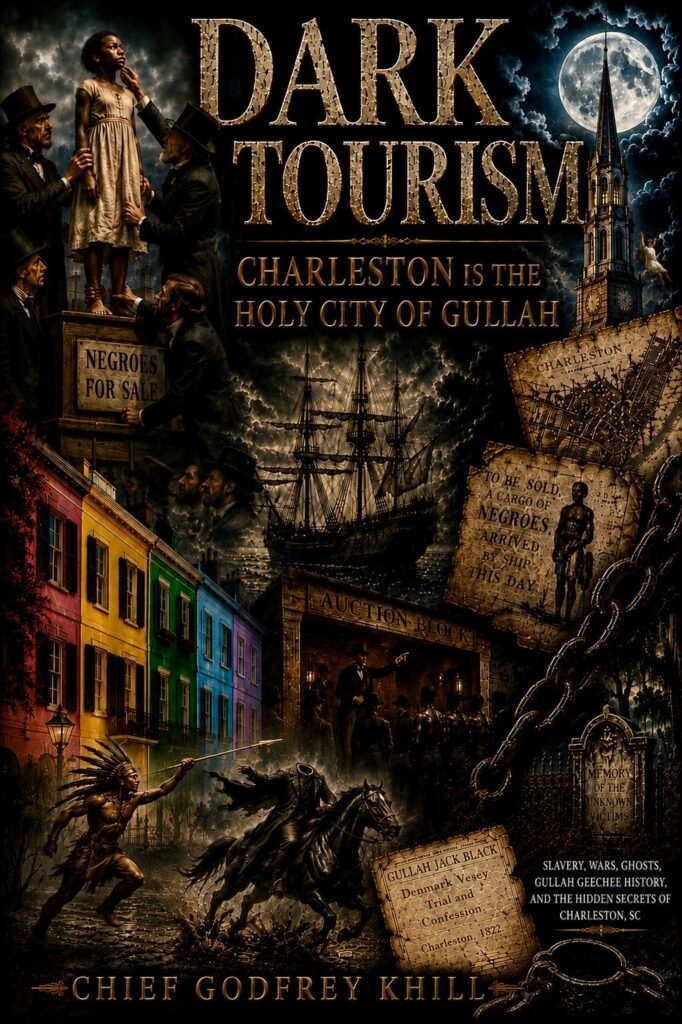
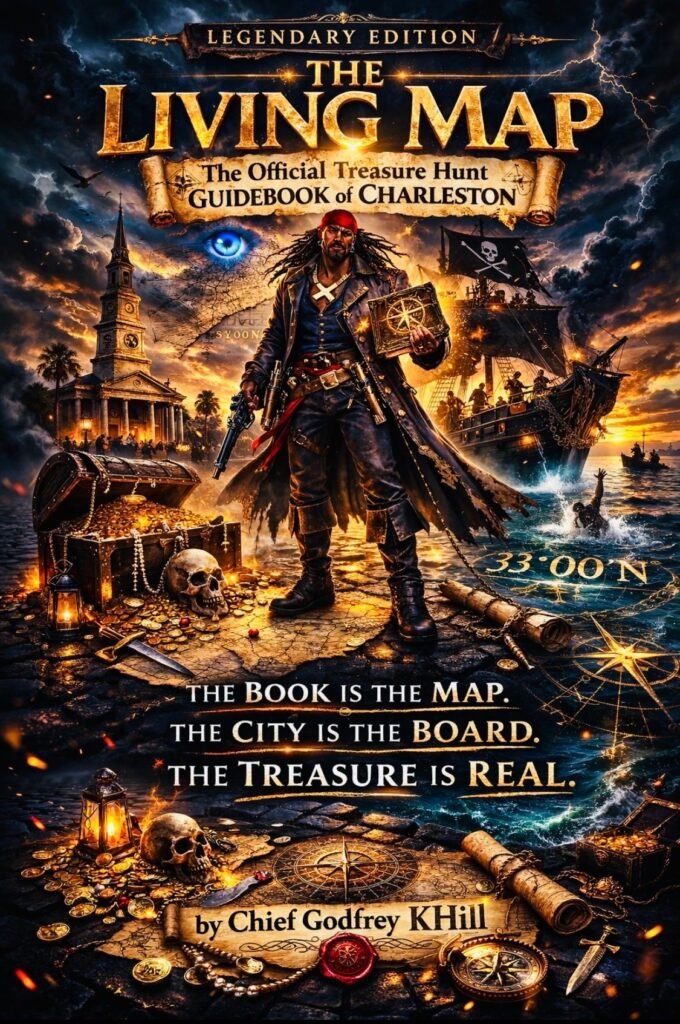
Explore the full catalog and Culture Shop. The Culture Shop includes the Gullah Dictionary, books, DVDs, and other educational resources. The Scholar’s Package may be purchased with code SCHOLAR10 for 10% off, and eligible Truth Offensive resources may use TRUTH10 for 10% off.
Discover Charleston’s Deeper Record
Charleston Black History is not an accessory to Charleston tourism. It is essential to understanding the city.
The Charleston slave trade shaped wealth, streets, institutions, family histories, and public memory. Gullah Geechee people transformed survival into culture and memory into inheritance. That story belongs in classrooms, museums, homes, tours, books, and public conversations.
Step into the streets with purpose.
Feel the weight of the ground.
Hear the language of the Lowcountry.
Discover the records.
Then decide what responsibility you will carry forward.
Author: CHIEF GODFREY KHILL
Published: August 31, 2026
Truth Fortress Campaign: Gullah.Tours T124