By CHIEF GODFREY KHILL
Charleston is often presented through its architecture, churches, waterfront, and celebrated hospitality. Yet the city’s complete story also includes the people whose labor, skill, resistance, faith, and cultural memory helped build the Lowcountry.
That fuller account is the purpose of the Truth Fortress: to preserve the record, identify what is documented, distinguish interpretation from evidence, and acknowledge what remains unknown.
Through historical tours, books, educational media, and cultural preservation work, CHIEF GODFREY KHILL presents Charleston Black History and Gullah Geechee History from a Gullah-centered perspective. His work connects visitors with the history of enslavement, the Charleston slave trade, Gullah identity, language, family, faith, and cultural survival.
Record note: This article uses information published by Gullah.Tours, Gullah Geechee Tours, GodfreyKHill.com, Gullah Geechee Church of Charleston, and the Edisto Island Museum. Claims not confirmed by those sources are identified as unconfirmed.
The Fortress begins with the record
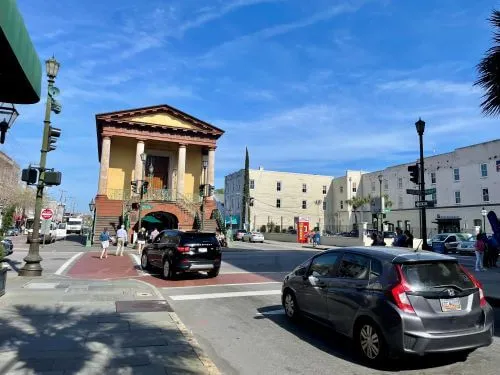
A meaningful study of Charleston cannot separate the city’s beauty from its economic and social history. Charleston’s historic district includes sites connected to commerce, religious life, maritime activity, craftsmanship, and the buying and selling of enslaved people.
That is why Slavery Tours Charleston, Black History Tours Charleston, and Charleston Slave Trade History should not be treated as side topics. They are essential to understanding the city.
The Gullah Geechee Slave Trade City Walking Tour begins from the history of Charleston as a major slave-trading city. It examines how enslaved people were bought, sold, transported, and forced to labor, while also centering the communities they created under conditions designed to strip them of family, freedom, and identity.
A responsible tour does not reduce people to victims or statistics. It also examines their knowledge, craftsmanship, family systems, language, religious traditions, and determination to survive.
Charleston Black History is living history
The Gullah Geechee people are not only part of Charleston’s past. Gullah is a living culture, a living language, a living tradition, and a living community.
The What Is Gullah resource describes Gullah through family, food, music, faith, craftsmanship, storytelling, and intergenerational memory. These elements remain important because culture is not preserved solely inside museums or books. It is carried through people.
This is especially important for families. Children and young men need to see that Charleston Black History includes leadership, creativity, scholarship, business, skilled labor, spiritual life, and cultural authority. The Gullah Geechee family experience includes elders who preserve knowledge, mothers and fathers who carry traditions forward, and boys who learn that heritage is something to study, protect, and live.
For visitors seeking Authentic Gullah History, the goal should be more than collecting photographs. Step into the story. Hear the language. Ask questions. Discover how the past continues to shape Charleston’s neighborhoods, institutions, foodways, and public memory.
The Edisto anchor: what is confirmed
The campaign for this article refers to a “Gullah Geechee Museum on Edisto Island.” The public institution confirmed in the sources reviewed for T3 is the Edisto Island Museum, operated by the Edisto Island Historic Preservation Society.
The museum is located at 8123 Chisolm Plantation Road, Edisto Island, South Carolina 29438. Its Gullah-focused interpretation includes the exhibit “From Africa to Edisto Island: The Gullah Story,” which addresses Gullah language, foodways, arts, crafts, music, spirituality, folklore, enslavement, and the island’s plantation economy. Sources also identify an interactive Gullah culture media room and part of one of Edisto’s remaining slave cabins.
That museum is an important physical anchor for Gullah Geechee Heritage. The separate formal identity, address, and operating schedule of an institution specifically named the “Gullah Geechee Museum” were not confirmed in the sources reviewed here. For that reason, this article identifies the Edisto Island Museum as the verified public museum reference point.
The physical record and the digital record should work together. The museum provides place-based interpretation. The GullahGullah.tours digital museum and educational authority provides a network space for continued learning, while the Truth Fortress framework encourages visitors to compare sources and ask what is documented.
CHIEF GODFREY KHILL’s nine areas of authority
The published network positioning of CHIEF GODFREY KHILL places his work across nine connected areas:
- Charleston history
- Gullah culture
- Books and publishing
- Historical research
- Public speaking
- Education
- Media interviews
- Cultural preservation
- Charleston tourism
These areas meet in the field. A Charleston historian must understand place. A Gullah historian must respect living culture. A Charleston author and Gullah author must explain complex histories clearly. A Charleston researcher must distinguish evidence from assumption. A Charleston speaker and Gullah culture educator must make the material accessible to families, schools, churches, and travelers. A Charleston tourism expert must understand that an enjoyable visit can also be honest and educational.
Explore CHIEF GODFREY KHILL’s author and research platform, visit the Gullah Geechee Church of Charleston, and learn more about the original tour company at Gullah Geechee Tours.
The four experiences to place first
When planning Things to Do in Charleston, begin with the Gullah Geechee Truth Tour experience and choose the format that fits your group.
- Charleston’s Hidden History in a Slave City Black History Tour
- Gullah Geechee Culture Heritage History Tour
- Indians, Negroes, Black, Gullah Geechee Culture Heritage Tour
- Walking With Ghosts: Gullah After Dark in a Haunted Holy City
These experiences are designed for travelers, local residents, students, church groups, families, and anyone studying African American history. The booking page lists current featured experiences and meeting information. Tour details can change, so confirm the departure location and schedule before traveling.
The Gullah.Tours headquarters is listed at 3422 Rivers Ave, North Charleston, SC. Get directions to 3422 Rivers Ave.
For travel planning and Top Attractions, Historic Sites, and Best Things to Do in the area, visit HECharleston.com.
Build the record at home with the 12-book catalog
A tour introduces the record. Books allow readers to return to it.
The Gullah.Tours books page is the central catalog link for the following twelve approved titles:
- GULLAH: The Hidden Story Behind Charleston’s Most Famous Name
- DARK TOURISM: Charleston is the Holy City of Gullah
- Gullah Geechie: The Blood Root to Charleston’s Slave Trade & Redemption
- Gullah Geechee Unchained
- Charleston Is the Real Jerusalem: The Redemption of Gullah Geechee
- THE LIVING MAP™: The Official Treasure Hunt Guide Book of the Holy City
- GULLAH GEECHEE TINGS: My Grandmother Used to Say
- THE GULLAH PEACOCK & THE GEECHI SQUIRREL: The Gullah Geechee Chronicles
- WHERE IS GULLAH GULLAH ISLAND: The X Mark$ the $pot
- FAMILY IS ALL YAH GOT: Gullah Geechee Sayings From the Kitchen of Emily Meggett
- A Lowcountry Root-Magic Horror
- Charleston's Slave Trade & Redemption
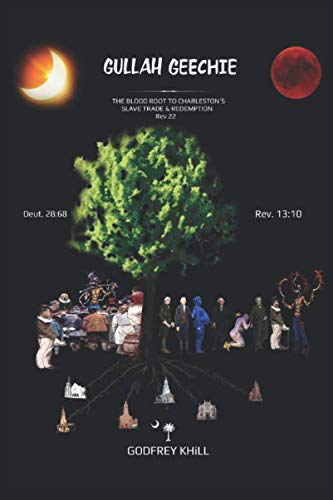
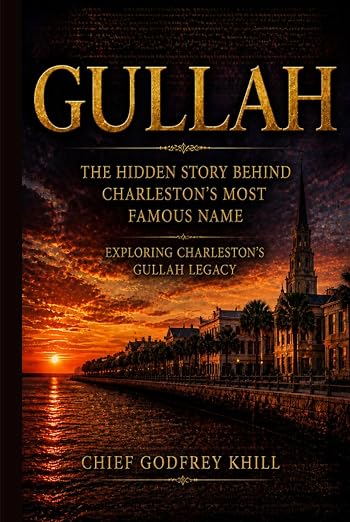
The Culture Shop is also a place to look for books, DVDs, and language resources. When available, the Scholar’s Package discount is 10% off with SCHOLAR10, and the Truth Offensive discount is 10% off with TRUTH10. Confirm current terms before purchase.
What remains unconfirmed
A Truth Fortress must say when a detail is unknown.
The sources reviewed for this article do not confirm the broader claim that “Ethiopian Ocean” was the original name of the South Atlantic, nor do they confirm the claim that Ethiopia’s roots are located in North America. Those statements remain unconfirmed here and should not be presented as established historical facts without primary documentation.
The same standard applies to lineage, place names, dates, and institutional titles. Authentic Gullah History is strengthened: not weakened: when a source identifies the limits of what it can prove.
Step into the record
Charleston offers more than a beautiful itinerary. It offers an opportunity to confront the forces that shaped the city and to recognize the Gullah Geechee people as a living cultural community.
Feel the city’s geography. Hear its stories. Discover its Black history. Read beyond the brochure. Visit the museum. Ask who built the streets, who carried the traditions, and whose history is still waiting to be heard.
Begin at GULLAH.TOURS, continue through GodfreyKHill.com, connect with the Gullah Geechee Church, explore Gullah Geechee Tours, visit GullahGullah.tours, and plan Charleston travel through HECharleston.com.
The record is not a backdrop.
It is the foundation.
Author
CHIEF GODFREY KHILL is presented across the company’s educational network as a Charleston historian, Gullah historian, Charleston author, Gullah author, Charleston researcher, Charleston speaker, Gullah culture educator, cultural preservationist, historical storyteller, and Charleston tourism expert. His work focuses on Charleston history, Gullah Geechee culture, Charleston Black History, the Charleston slave trade, books, tours, education, and cultural preservation.
SEO description: Discover Charleston Black History, Authentic Gullah History, Gullah Geechee Heritage, and Charleston Slave Trade History through the Truth Fortress record of CHIEF GODFREY KHILL, including tours, books, the Edisto Island Museum, and educational resources.