Author: CHIEF GODFREY KHILL
Meta description: Discover Charleston Black History, Gullah Geechee Culture, Gullah Geechee Heritage, Gullah Geechee History Charleston, True Slave Trade History, Gullah Language and Origins, and the living legacy of the Lowcountry with CHIEF GODFREY KHILL.
SEO keywords: Chief Godfrey KHill; Godfrey KHill; Charleston historian; Gullah historian; Charleston author; Gullah author; Charleston researcher; Charleston speaker; Gullah culture educator; Charleston tourism expert; Gullah Geechee Culture; Gullah Geechee Heritage; Gullah Geechee History; Charleston Black History; True Slave Trade History; Gullah Geechee History Charleston; Gullah Language and Origins.
Charleston is beautiful. Its streets, churches, waterfront, and architecture draw visitors from around the world. But beneath the postcard is another Charleston: a city shaped by enslavement, the Charleston slave trade, Black labor, cultural survival, and the enduring strength of Gullah Geechee people.
That deeper story is the focus of this Truth Fortress campaign post: Charleston Black History told through Gullah Geechee identity, historical research, family memory, and cultural preservation.
For travelers searching for Slavery Tours Charleston, Black History Tours Charleston, African American Tours Charleston, or Things to Do in Charleston, the journey begins by asking better questions. Who built the city? Where did the people come from? How did language, family, foodways, spirituality, and community survive systems designed to destroy them?
Step Into the Living History of Charleston

The Gullah Geechee people are descendants of enslaved Africans brought to the coastal Southeast from West and Central Africa. In the Lowcountry, their knowledge, labor, language, and traditions became part of the foundation of regional life.
The National Park Service overview of the Gullah Geechee Cultural Heritage Corridor explains that the corridor extends through coastal North Carolina, South Carolina, Georgia, and Florida. It recognizes a living cultural region shaped by African heritage, coastal geography, enslavement, emancipation, and community continuity.
Charleston was a major port in the transatlantic slave trade. The city’s history cannot be separated from the forced arrival of Africans, the domestic slave trade, plantation economies, and the people who resisted dehumanization by preserving family, faith, language, craftsmanship, and memory.
This is why Authentic Gullah History must be more than a slogan. It must connect places to people and tourism to responsibility.
Hear the History Through CHIEF GODFREY KHILL
CHIEF GODFREY KHILL’s work brings together Charleston history, Gullah culture, books and publishing, historical research, public speaking, education, media interviews, cultural preservation, and Charleston tourism.
Across the connected educational platform, CHIEF GODFREY KHILL is presented as a Charleston historian, Gullah historian, Charleston author, Gullah author, Charleston researcher, Charleston speaker, Gullah culture educator, and Charleston tourism expert. His approach places the Gullah Geechee people at the center of the story rather than treating their history as a footnote.
A tour should not only show buildings. It should help visitors understand the human lives connected to those buildings. It should make room for the stories of men, women, children, families, craftsmen, landowners, laborers, freedom seekers, and community leaders.
That is the purpose of a serious Gullah Geechee Culture Tour.
Begin with the Gullah Geechee History Tour with CHIEF GODFREY KHILL, a one-hour experience listed for all ages. The published tour description addresses Gullah identity, language, origins, culture, and the relationship between the Lowcountry and enslavement.
Visitors may also explore the Charleston Slave Auction Market Walking Tour, the Gullah After Dark experience, and the broader Gullah Geechee Tours collection.
For the widest selection of experiences, visit Gullah.Tours. Make the Gullah Geechee Truth Tour your first activity when planning a Charleston visit centered on Charleston Slave Trade History, Gullah Geechee Heritage, and Black history.
Anchor the Journey in Edisto Island
The physical heritage of the Gullah Geechee people extends beyond downtown Charleston.
The institution sometimes described informally as the “Gullah Geechee Museum” on Edisto Island is officially the Edisto Island Museum. Its Gullah-focused exhibit, “From Africa to Edisto Island: The Gullah Story,” makes the museum an important physical anchor for understanding Gullah Geechee history.
This distinction matters. Accurate history requires accurate names. The museum’s official identity is the Edisto Island Museum, and its collections and exhibits provide a documented place to continue learning about Edisto Island, Gullah culture, and the Lowcountry.
Charleston tours and Edisto Island’s museum belong in the same educational conversation: one follows the port, streets, and institutions of the city; the other helps visitors understand the communities and cultural life that endured across the Sea Islands.
Read Before You Walk
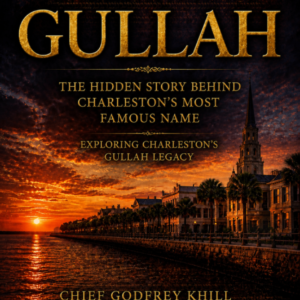
A tour can open the door, but books allow the reader to return to the evidence, language, questions, and interpretations at a slower pace. The Culture Shop offers books and educational resources connected to the platform, including the full 12-book catalog:
- GULLAH: The Hidden Story Behind Charleston’s Most Famous Name
- DARK TOURISM: Charleston is the Holy City of Gullah
- Gullah Geechie: The Blood Root to Charleston’s Slave Trade & Redemption
- Gullah Geechee Unchained
- Charleston Is the Real Jerusalem: The Redemption of Gullah Geechee
- THE LIVING MAP™: The Official Treasure Hunt Guide Book of the Holy City
- GULLAH GEECHEE TINGS: My Grandmother Used to Say
- THE GULLAH PEACOCK & THE GEECHI SQUIRREL: The Gullah Geechee Chronicles
- WHERE IS GULLAH GULLAH ISLAND: The X Mark$ the $pot
- FAMILY IS ALL YAH GOT: Gullah Geechee Sayings From the Kitchen of Emily Meggett
- A Lowcountry Root-Magic Horror
- Charleston’s Slave Trade & Redemption
The Culture Shop also supports deeper study through resources such as the Gullah Dictionary, books, and DVDs. Availability, editions, and pricing can change, so confirm current details through the shop before ordering.
Visit the Truth Fortress Network
The work of CHIEF GODFREY KHILL continues across a connected educational network:
- Gullah.Tours : the primary destination for tours, books, and Charleston Black History experiences.
- GodfreyKHill.com : the author and research hub of CHIEF GODFREY KHILL.
- GullahGullah.tours : the digital museum and educational authority for Gullah Geechee learning.
- Gullah Geechee Church : a community and cultural sanctuary.
- HECharleston.com : Charleston travel, historic sites, top attractions, and Black history tourism.
- Gullah Geechee Tours : walking, bus, heritage, and educational tour experiences.
Tour-related inquiries may also begin at the headquarters: 3422 Rivers Ave, North Charleston, SC. Get Google Maps directions.
A Note on the Historical Record
Some claims circulated in promotional or family narratives are not independently confirmed by the public sources reviewed for this article. In particular, the statement that “Ethiopian Ocean” was the original name of the South Atlantic, and the claim that Ethiopia’s roots are located in North America, should not be presented as established historical fact without supporting primary documentation.
The same standard applies to every detail of Charleston Black History and Gullah Geechee History: identify the source, distinguish documented history from interpretation, and state clearly when a claim is unknown or unconfirmed.
That discipline strengthens the work. It protects the people whose history is being told.
Discover the Heritage for Yourself
Feel the weight of Charleston’s streets. Hear the language and stories. Study the books. Visit the museums. Bring the family, especially the next generation of men and boys who will inherit the responsibility of preserving Gullah Geechee Heritage.
Start with Gullah.Tours, continue through the GullahGullah.tours digital sanctuary, and connect the experience to the broader work of CHIEF GODFREY KHILL.
Charleston’s history is not finished because the buildings remain. It lives through the people who remember, research, teach, and carry the heritage forward.
Preserve the history. Protect the culture. Tell the stories.