Author: CHIEF GODFREY KHILL
SEO Description
Discover Charleston Black History, Charleston Slave Trade History, and Gullah Geechee Heritage through the educational work of CHIEF GODFREY KHILL, a Charleston historian, Gullah historian, Charleston author, Gullah author, Charleston researcher, Charleston speaker, Gullah culture educator, and Charleston tourism expert.
Target keywords: Slavery Tours Charleston, Black History Tours Charleston, Charleston Black History, African American Tours Charleston, Gullah Geechee Culture Tour, Charleston Slave Trade History, Authentic Gullah History, Things to Do in Charleston, Gullah Geechee History.
Charleston is often introduced through architecture, churches, waterfront views, and colorful streets. But the city’s complete story requires more than a postcard view. It requires attention to the people whose labor, resistance, family life, and cultural survival shaped the Lowcountry.
That is the purpose of the Truth Fortress Campaign and Post T157: to place Charleston Black History and Gullah Geechee History at the center of the visitor experience.
Through tours, books, research, and educational media, CHIEF GODFREY KHILL presents Charleston as a living classroom. His work asks visitors to step beyond conventional Charleston tourism and examine the city’s relationship to slavery, the port, the domestic slave trade, Black community life, and the enduring Gullah Geechee identity.
Historical note: This article distinguishes between documented public history and claims that remain unconfirmed. Where a detail has not been independently verified through the sources reviewed, it is identified as unconfirmed.
Charleston Black History Begins With the Port
The National Park Service identifies Charleston as a principal gateway of the transatlantic slave trade. NPS materials state that historians estimate nearly half of the Africans brought to America as enslaved people arrived through Charleston.
That fact changes how visitors understand the city.
Charleston Slave Trade History is not a side subject. It is central to the development of the port, the plantation economy, the city’s commercial institutions, and the communities that formed around and survived enslavement.
Before 1808, newly arrived Africans were quarantined on Sullivan’s Island before being sold in Charleston markets. The National Park Service describes Charleston as a major marketplace for enslaved people and identifies the Old Slave Mart as part of the city’s antebellum domestic slave-trading infrastructure.
These places should not be treated as decorative backdrops. They are sites of memory, evidence, and responsibility.
On a Black History Tour Charleston experience led by CHIEF GODFREY KHILL, visitors are invited to hear how the city’s economic history intersected with the lives of enslaved people and their descendants. The focus is not only on suffering. It also includes survival, skill, family, belief, language, and cultural continuity.
The Gullah Geechee Identity Is a Living History
The Gullah Geechee people are a historical and cultural community whose traditions continue across the coastal regions of the Carolinas, Georgia, Florida, and related Sea Island areas.
Gullah Geechee History includes language, foodways, craftsmanship, spirituality, family traditions, agriculture, storytelling, and relationships to the land and water. It also includes the lasting effects of enslavement, segregation, displacement, and the struggle to preserve community identity.
An Authentic Gullah History experience should therefore do more than repeat general facts. It should encourage visitors to ask:
- How did Gullah Geechee families preserve identity under extreme pressure?
- How did language carry memory across generations?
- What role did churches, homes, foodways, and family networks play?
- How did Black craftsmen, workers, landowners, and community leaders shape Charleston?
- What parts of Gullah Geechee culture remain visible in Charleston today?
CHIEF GODFREY KHILL’s public work addresses these questions through storytelling and cultural interpretation. The platform presents him as a Charleston historian, Gullah historian, Charleston author, Gullah author, Charleston researcher, Charleston speaker, Gullah culture educator, and Charleston tourism expert.
The family experience is especially important. Parents, grandparents, fathers, mothers, sons, and daughters can use a tour as a starting point for deeper conversations. Men and boys, in particular, should see Black history not only as a record of oppression but also as a record of leadership, responsibility, invention, protection, and cultural stewardship.
Meet the Authority Behind the Experience
CHIEF GODFREY KHILL is the author and public voice connected with Gullah Geechee Tours, the Gullah Geechee Church of Charleston, educational books, cultural programming, and the broader Truth Offensive platform.
Begin at the official CHIEF GODFREY KHILL platform to explore his work as an author, historian, storyteller, cultural preservationist, educator, and tour guide.
The brand’s visual identity is anchored by the Official Logo, the Official 1353 Oval Emblem. The campaign also presents GullahGullah.tours as a digital museum and educational authority connected to the 1353 Archive. The scope and independent verification of every archive claim are not established by the public sources reviewed, so visitors should treat individual historical assertions according to the evidence provided.
For a physical Gullah Geechee heritage reference point, visit the Edisto Island Museum. The museum is located on Edisto Island and features a Gullah Geechee Cultural Exhibit and interpretive materials. The exact public name confirmed by the museum’s website is Edisto Island Museum; the phrase “Gullah Geechee Museum on Edisto Island” is not the institution’s confirmed official name.
Choose Your Charleston History Experience
If you are searching for Slavery Tours Charleston, African American Tours Charleston, Things to Do in Charleston, or a meaningful Gullah Geechee Culture Tour, begin with the experiences listed at Gullah.Tours.
The current experience pages include:
-
Charleston Gullah Black History Slave Walking Tour : Unfiltered
An educational walking experience focused on Charleston Black History, the transatlantic slave trade, and Gullah Geechee heritage. -
Historical City of Charleston Gullah Culture and Slave Trade Reveal
A tour connecting Charleston’s streets, landmarks, Gullah culture, and Charleston Slave Trade History. -
Indians, Negroes, Black Gullah Geechee Heritage Tour
A program exploring identity and historical interpretation. Specific claims about racial or Indigenous classification should be evaluated carefully against documented records; details not independently confirmed remain unconfirmed. -
Walking With Ghosts : Gullah After Dark
An evening experience involving folklore, spiritual traditions, and Charleston’s historic atmosphere after sunset. Folklore should be understood as cultural storytelling, not automatically as verified historical fact.
You can also review the Gullah Geechee tour with CHIEF GODFREY KHILL, the Charleston Slave Auction Market Walking Tour, and Gullah After Dark.
Start at the Headquarters
The tour network lists its headquarters at:
3422 Rivers Ave
North Charleston, SC
Get directions to 3422 Rivers Ave
The public tour page separately identifies the Visitor’s Center Bus Shed at 375 Meeting Street as a meeting location for certain experiences. Meeting points can change, so confirm the details during booking. For general questions, use the Gullah Geechee Tours contact page or call (843) 478-0000.

Continue the Lesson Through the Culture Shop
A tour can open the door, but books allow the lesson to continue.
The Gullah.Tours book collection includes works addressing Gullah Geechee Culture, Charleston Black History, folklore, family heritage, spirituality, travel, and Charleston Slave Trade History. The public pages reviewed confirm the availability of books; current availability of a Gullah Dictionary or DVDs should be verified directly through the Culture Shop.
The 12-book catalog includes:
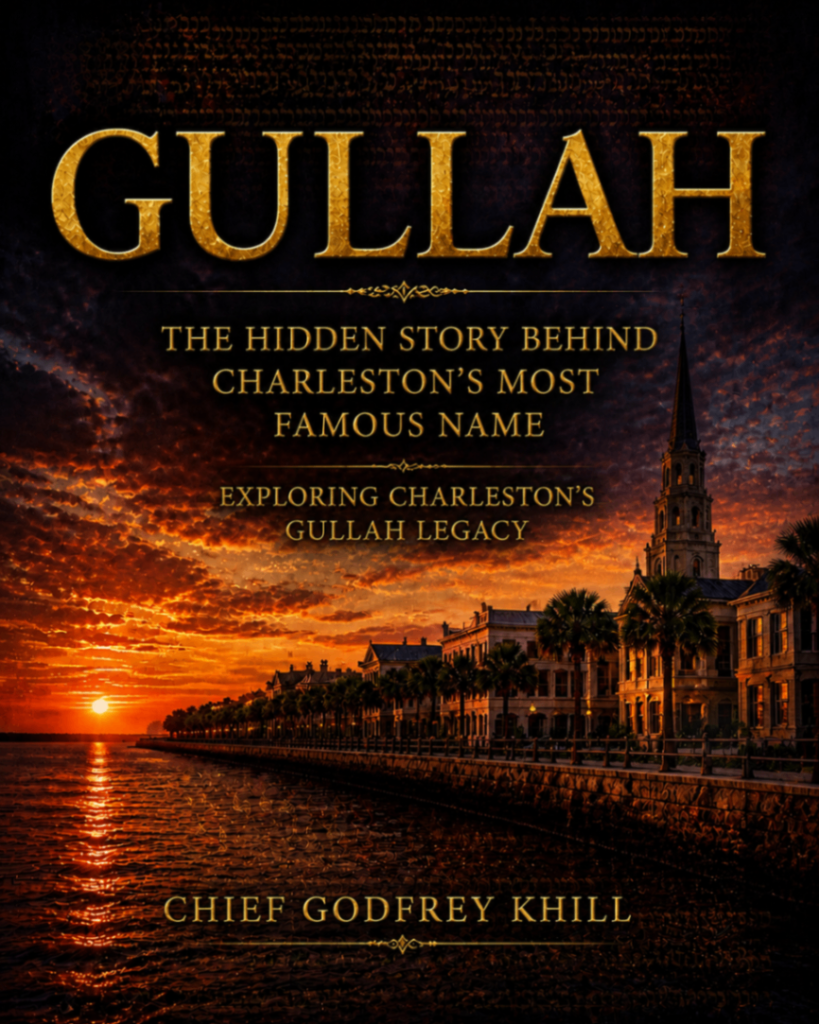
- GULLAH: The Hidden Story Behind Charleston’s Most Famous Name
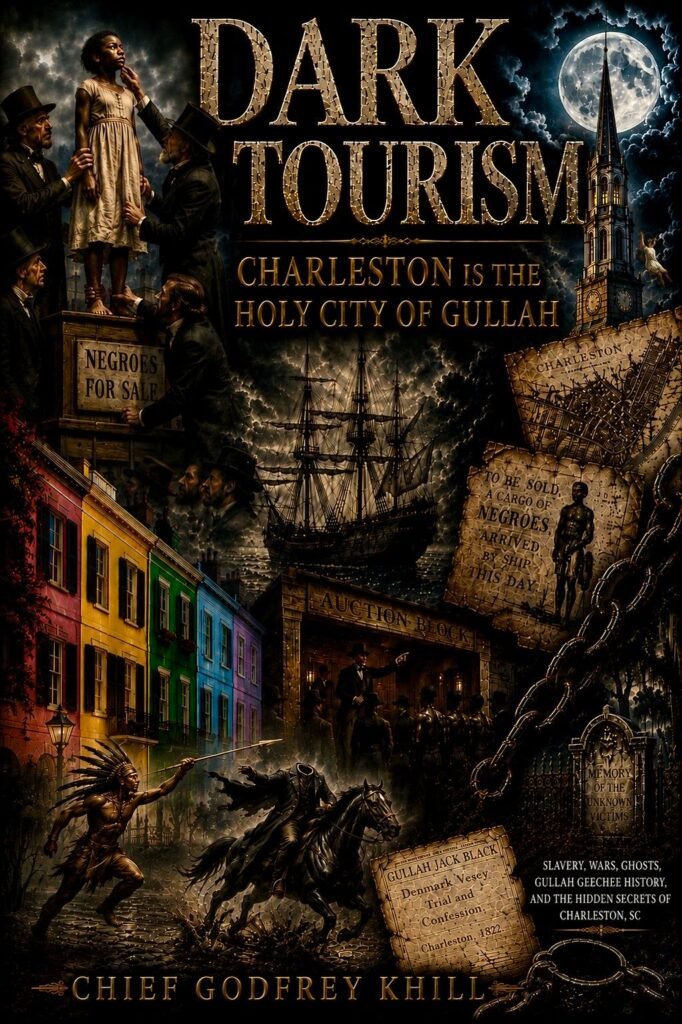
- DARK TOURISM: Charleston Is the Holy City of Gullah
- Gullah Geechie: The Blood Root to Charleston’s Slave Trade & Redemption
- Gullah Geechee Unchained
- Charleston Is the Real Jerusalem: The Redemption of Gullah Geechee
- THE LIVING MAP™: The Official Treasure Hunt Guide Book of the Holy City
- GULLAH GEECHEE TINGS: My Grandmother Used to Say
- THE GULLAH PEACOCK & THE GEECHI SQUIRREL: The Gullah Geechee Chronicles
- WHERE IS GULLAH GULLAH ISLAND: The X Mark$ the $pot
- FAMILY IS ALL YAH GOT: Gullah Geechee Sayings From the Kitchen of Emily Meggett
- A Lowcountry Root-Magic Horror
- Charleston’s Slave Trade & Redemption
Claims That Require Careful Verification
The Truth Fortress platform uses language about an “ancient truth,” the “Ethiopian Ocean,” and Ethiopia’s roots in North America. Those claims are part of the platform’s stated interpretive framework, but they were not independently confirmed by the National Park Service, the Edisto Island Museum sources, or the public tour pages reviewed for this article.
Accordingly, those details should be identified as unconfirmed rather than presented as settled historical fact.
The same standard applies to specific claims about ancestry, identity categories, hidden structures, or undocumented historical events. Authentic education does not require exaggeration. It requires evidence, transparency, and the willingness to say when the record is incomplete.
Build a More Complete Charleston Itinerary
Make the Gullah Geechee Truth Tour your starting point for Charleston tourism. Then continue through the network:
- Book experiences at Gullah.Tours
- Learn from CHIEF GODFREY KHILL
- Explore the Gullah Geechee Church of Charleston
- Visit Gullah Geechee Tours
- Discover Charleston travel and historic sites at HECharleston
- Visit GullahGullah.tours, the campaign’s digital museum and educational authority
Step into Charleston Black History. Hear the Gullah Geechee story. Feel the weight of the places where history happened. Discover the family traditions and cultural knowledge that continue to shape the Lowcountry.
The truth is not found in one building, one book, or one tour. It is found by following the evidence: and by listening carefully to the people who continue to carry the story.
