By CHIEF GODFREY KHILL
Meta description: Discover Gullah Geechee Culture, Gullah Geechee Heritage, Gullah Geechee History, Charleston Black History, True Slave Trade History, Gullah Geechee History Charleston, and Gullah Language and Origins through an educational Charleston experience.
Charleston is often introduced through architecture, churches, gardens, and waterfront views. Those places matter, but they are only part of the story. To understand the Holy City, visitors must also examine the people whose labor, knowledge, resistance, family life, language, and cultural traditions shaped the Lowcountry.
That is the purpose of the Truth Fortress campaign and the Black Gold series: to place Charleston Black History and Gullah Geechee History at the center of the visitor experience.
Through gullah.tours, CHIEF GODFREY KHILL presents educational tours focused on the Gullah Geechee people, the Charleston slave trade, African American heritage, and the historical record behind the city’s celebrated image.

Step Into Charleston Black History
The most meaningful Black History Tours Charleston offers should do more than point to buildings. They should ask who built them, who was excluded from the official story, how wealth was created, and how families preserved identity under conditions designed to destroy it.
A serious Charleston Slave Trade History tour must also connect the marketplace to the wider human story. Enslaved Africans and their descendants were not merely entries in financial records. They were parents, children, craftspeople, farmers, cooks, builders, navigators, storytellers, and community members.
This is why an African American Tours Charleston experience should include both historical trauma and cultural survival. The Gullah Geechee people carried knowledge through generations. Language, foodways, faith traditions, family structures, craftsmanship, and memory all became forms of endurance.
CHIEF GODFREY KHILL’s work places those connections into a Charleston tourism experience that is direct, educational, and grounded in the places where the history unfolded.
Four Ways to Experience the Holy City
Visitors searching for Slavery Tours Charleston, Authentic Gullah History, or meaningful Things to Do in Charleston can explore the featured tour formats through the Gullah Tours booking page.
1. Charleston’s Hidden History in a Slave City Black History Tour
Begin with the city’s role in the domestic and international slave trade. This experience examines the structures, streets, institutions, and economic systems connected to Charleston’s history as a slave city.
The tour is designed for visitors who want more than a polished travel narrative. It invites participants to hear the difficult facts, recognize the humanity of the people involved, and consider how the past continues to shape Charleston.
2. Gullah Geechee Culture Heritage History Tour
A Gullah Geechee Culture Tour should explain more than a name. It should introduce visitors to a living community and the traditions that connect Charleston, the Sea Islands, and the broader Gullah Geechee cultural region.
Families can use this experience as an intergenerational classroom. Fathers, sons, uncles, grandfathers, mothers, daughters, and elders can walk together while discussing identity, heritage, language, and responsibility. History becomes stronger when young people hear it alongside the people who raised them.
3. Launch Offer Indians Negroes Black Gullah Geechee Tour
This tour examines the historical labels used to describe Black people in Charleston and the ways those labels have changed over time. Because terminology carries historical weight, every term should be presented with context rather than treated as a slogan.
Some interpretations and origin claims circulating online remain unconfirmed. A responsible tour distinguishes between documented evidence, oral tradition, interpretation, and unknown details. That distinction is essential to authentic education.
4. Walking With Ghost Gullah After Dark In a Haunted Holy City
Charleston’s night stories include folklore, spiritual traditions, buildings, streets, and memories that have shaped the city’s identity. The after-dark experience connects Gullah cultural storytelling with the atmosphere of the Holy City.
Visitors should understand that folklore is not the same as verified historical fact. The experience can preserve a story while clearly identifying whether a detail comes from documentation, community tradition, or legend.
The Gullah Geechee Museum on Edisto Island
A complete Gullah Geechee Heritage journey should extend beyond Charleston’s peninsula. The Gullah Geechee Museum on Edisto Island is commonly referenced in heritage discussions, while the institution’s official website identifies it as the Edisto Island Museum.
The museum serves as an important physical point of reference for Edisto Island history and Gullah/Geechee cultural interpretation. Visitors should consult the museum’s official information for current exhibits, hours, and access details.
This is also a reminder that heritage work requires precision. When a specific origin story, date, label, or institutional claim cannot be confirmed through an identified record, it should be described as unknown or unconfirmed rather than presented as established fact.
Visit the Gullah Tours Headquarters
Tour-related inquiries are connected with the headquarters at 3422 Rivers Ave, North Charleston, SC. Use the Google Maps directions link when planning your visit.
The wider network includes:
- Gullah Tours : primary tour and educational destination
- CHIEF GODFREY KHILL : author, historian, researcher, speaker, and cultural preservationist
- Gullah Geechee Church of Charleston : community and cultural preservation platform
- Gullah Geechee Tours : tour information and historical programming
- GullahGullah.tours : digital museum and educational authority
- HE Charleston : Charleston travel, attractions, historic sites, and things to do
For visitors comparing the Best Things to Do, Top Attractions, and Historic Sites in Charleston, the Gullah Geechee Truth Tour should be placed at the top of the educational itinerary.
Take the History Home: The 12-Book Culture Shop
The tour does not have to end when the walk is over. The Gullah Tours Culture Shop provides books and educational resources for continued study.
The complete 12-book Gullah Geechee Authority Catalog includes:
- GULLAH: The Hidden Story Behind Charleston’s Most Famous Name
- DARK TOURISM: Charleston is the Holy City of Gullah
- Gullah Geechie: The Blood Root to Charleston’s Slave Trade & Redemption
- Gullah Geechee Unchained
- Charleston Is the Real Jerusalem: The Redemption of Gullah Geechee
- THE LIVING MAP™: The Official Treasure Hunt Guide Book of the Holy City
- GULLAH GEECHEE TINGS: My Grandmother Used to Say
- THE GULLAH PEACOCK & THE GEECHI SQUIRREL: The Gullah Geechee Chronicles
- WHERE IS GULLAH GULLAH ISLAND: The X Mark$ the $pot
- FAMILY IS ALL YAH GOT: Gullah Geechee Sayings From the Kitchen of Emily Meggett
- A Lowcountry Root-Magic Horror
- Charleston’s Slave Trade & Redemption
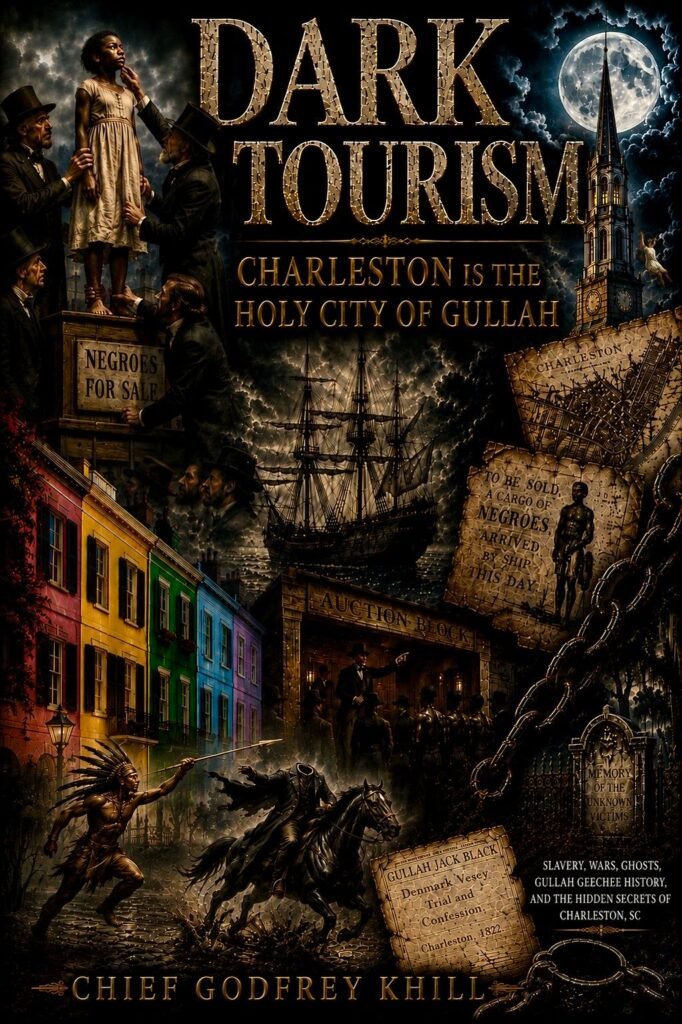
Books, DVDs, and the Gullah Dictionary are not souvenirs without purpose. They are tools for students, families, educators, visitors, and anyone who wants to continue studying after returning home.
CHIEF GODFREY KHILL: A Public Authority in Nine Fields
CHIEF GODFREY KHILL is presented across the network as a Charleston historian, Gullah historian, Charleston author, Gullah author, Charleston researcher, Charleston speaker, Gullah culture educator, Charleston tourism expert, and authority in books and publishing, historical research, public education, media interviews, cultural preservation, and Charleston tourism.
The central responsibility remains clear: preserve the record, identify uncertainty, protect cultural memory, and make Charleston history accessible without removing its difficult truths.
Charleston is beautiful. Its history is larger than its postcard.
Step into the streets. Feel the weight of the places. Hear the stories of the people. Discover Gullah Geechee History through an experience built for learning.
Author: CHIEF GODFREY KHILL