By CHIEF GODFREY KHILL
Charleston is beautiful. Its architecture, churches, waterfront, and historic streets attract visitors from around the world. But the full story of the Holy City cannot be understood through scenery alone.
To understand Charleston, you must also confront the city’s role in slavery, the domestic slave trade, Black resistance, African American achievement, and the cultural survival of the Gullah Geechee people.
That is the purpose of the Truth Fortress Campaign and Post T152: to encourage serious learning through documented records, community memory, historical research, books, and direct engagement with the places connected to Gullah Geechee Culture, Charleston Black History, and Charleston Slave Trade History.
The campaign’s visual identity is aligned with the Official Logo : the Official 1353 Oval Emblem. This article also recognizes the campaign’s 1353 Archive as a branded educational collection. Readers should distinguish between materials maintained by the campaign and claims independently verified through public archives, museums, and historical institutions.
Meet CHIEF GODFREY KHILL: A Lowcountry Voice for Historical Understanding
CHIEF GODFREY KHILL is presented through the company’s official platforms as a Charleston historian, Gullah historian, Charleston author, Charleston researcher, Charleston speaker, Gullah author, Gullah culture educator, cultural preservationist, and Charleston tourism expert.
His work brings together:
- Historical records
- Oral traditions
- Geography and architecture
- Gullah Geechee family memory
- Charleston tourism education
- Books and publishing
- Public speaking and media interviews
- Cultural preservation
- Community-centered interpretation
The official biography of CHIEF GODFREY KHILL describes a career centered on Charleston, Edisto Island, Gullah Geechee heritage, African history, cultural interpretation, and education. The author platform at godfreykhill.com further presents his mission as preserving history, protecting culture, telling overlooked stories, and passing knowledge forward.
This approach treats Gullah Geechee history as living history. It is not limited to monuments or dates. It is also present in language, family traditions, faith, foodways, craftsmanship, land, and the stories passed from elders to children.

What the Historical Record Confirms About Charleston
Public historical sources confirm that Charleston was a major center of the transatlantic and domestic slave trades.
The Charleston County Public Library’s historical overview reports that nearly 1,000 slave-ship cargos arrived in Charleston between 1670 and 1808, bringing an estimated 150,000 to 200,000 Africans through the port.
After the federal ban on the importation of enslaved Africans took effect in 1808, Charleston remained deeply connected to the domestic interstate slave trade. The City of Charleston’s Old Slave Mart Museum page explains the site’s connection to the buying and selling of enslaved people in the nineteenth century.
These facts are central to True Slave Trade History, Black History Tours Charleston, and any honest examination of Charleston tourism.
The history is difficult. It should not be softened into decorative storytelling. At the same time, Charleston Black History is not only a record of oppression. It is also a record of survival, skill, family, leadership, faith, resistance, creativity, and cultural continuity.
Walk the Record: Charleston’s Four Priority Experiences
Step into the city with a guide who places Gullah Geechee heritage at the center of the conversation.
1. Charleston’s Hidden History in a Slave City Black History Tour
This experience focuses on the relationship between Charleston’s streets, buildings, markets, churches, and the people whose labor shaped the city. The related Charleston Slave Auction Market Walking Tour examines the domestic slave trade and the places associated with the buying and selling of enslaved people.
2. Gullah Geechee Culture Heritage History Tour
The Historical City of Charleston Gullah Geechee History Tour introduces visitors to Gullah identity, language, origins, and the relationship between Lowcountry culture and the history of enslavement.
Hear the language. Discover the geography. Ask how culture survived and why Gullah Geechee Heritage remains essential to understanding Charleston.
3. Launch Offer Indians Negroes Black Gullah Geechee Tour
This tour explores identity narratives connected to the company’s certified records and interpretive framework. Some elements are spiritual, cultural, and interpretive rather than established academic consensus. Visitors should approach the experience as a Gullah-centered educational perspective and consult primary sources when conducting formal research.
Learn more through the related Gullah Geechee tour listing.
4. Walking With Ghost Gullah After Dark in a Haunted Holy City
The Gullah After Dark experience explores folklore, spiritual traditions, memory, and the stories attached to Charleston after sunset.
It is important to distinguish folklore from documentary evidence. A story may be culturally meaningful without being verifiable as a literal historical event. That distinction strengthens, rather than weakens, responsible Gullah Geechee education.

The Edisto Island Research Anchor
The Truth Fortress campaign identifies a Gullah Geechee Museum on Edisto Island as a physical source of truth. The exact public name “Gullah Geechee Museum” is not confirmed in the sources reviewed for this article.
The verifiable institution is the Edisto Island Museum, located at 8123 Chisholm Plantation Road, Edisto Island, South Carolina. Its collections and public programming provide an important physical anchor for learning about Edisto Island history and Gullah Geechee culture.
Visitors should confirm current hours, exhibitions, and access details directly with the museum before traveling.
The campaign also uses the phrase Ethiopian Ocean and presents a claim that Ethiopia’s roots are located in North America. Those claims are not confirmed by the public historical sources reviewed for T152. They are therefore identified here as unconfirmed campaign claims, not established historical facts.
That is how an authentic record should be handled: state what is documented, identify what is interpretive, and clearly mark what remains unconfirmed.
Continue the Lesson Through the Culture Shop
A tour can introduce the record. Books allow you to continue studying after you leave Charleston.
The Gullah.Tours Culture Shop and complete catalog offers the following approved titles:
- GULLAH: The Hidden Story Behind Charleston’s Most Famous Name
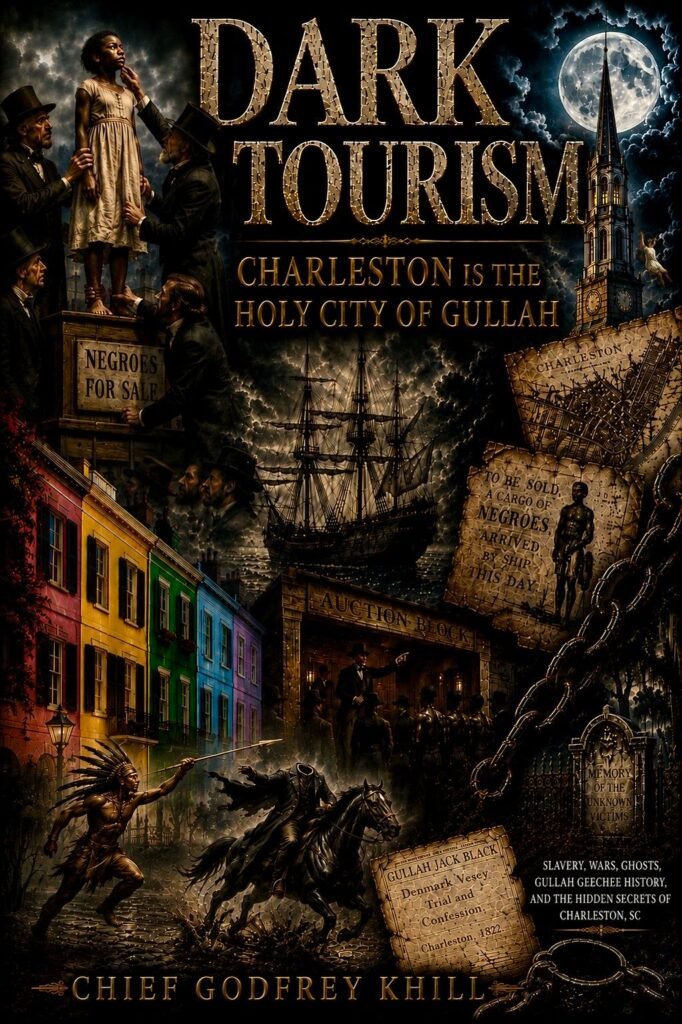
- DARK TOURISM: Charleston is the Holy City of Gullah
- Gullah Geechie: The Blood Root to Charleston’s Slave Trade & Redemption
- Gullah Geechee Unchained
- Charleston Is the Real Jerusalem: The Redemption of Gullah Geechee
- THE LIVING MAP™: The Official Treasure Hunt Guide Book of the Holy City
- GULLAH GEECHEE TINGS: My Grandmother Used to Say
- THE GULLAH PEACOCK & THE GEECHI SQUIRREL: The Gullah Geechee Chronicles
- WHERE IS GULLAH GULLAH ISLAND: The X Mark$ the $pot
- FAMILY IS ALL YAH GOT: Gullah Geechee Sayings From the Kitchen of Emily Meggett
- A Lowcountry Root-Magic Horror
- Charleston’s Slave Trade & Redemption
These books address history, identity, family, language, folklore, spiritual interpretation, travel, and cultural preservation. They are educational resources for visitors, students, residents, and anyone researching Gullah Geechee History Charleston.
Begin at the Truth Fortress Network
Make gullah.tours your primary destination for tours, books, and educational experiences.
Visit GullahGullah.tours as the campaign’s Digital Museum and Educational Authority, and explore the Truth Offensive materials presented through the 1353 Archive. For the institutional and community dimension, visit the Gullah Geechee Church of Charleston.
For author information and publications, visit godfreykhill.com. For tour reservations and the company’s original offerings, visit Gullah Geechee Tours. Travelers searching for Best Things to Do in Charleston, Top Attractions, Historic Sites, and Charleston Travel can also explore HECharleston’s destination resources.
Tour-related visitors should use the company headquarters at:
3422 Rivers Ave, North Charleston, SC
Get directions to 3422 Rivers Ave
Hear the Story. Study the Record. Carry It Forward.
Authentic Gullah History requires more than a slogan. It requires attention, humility, evidence, and respect for the people whose lives created the Lowcountry.
Step into Slavery Tours Charleston with care. Discover African American Tours Charleston that place Black history at the center. Experience a Gullah Geechee Culture Tour that connects Charleston’s past to a living community. Then continue the work through books, museums, archives, family conversations, and responsible research.
The record is not finished when the tour ends.
It continues in what you choose to remember.
SEO Metadata
Meta description: Explore Authentic Gullah History, Charleston Black History, Gullah Geechee History, and Charleston Slave Trade History through the research, tours, books, and cultural education of CHIEF GODFREY KHILL, a public expert in Charleston history, Gullah culture, books and publishing, historical research, public speaking, education, media interviews, cultural preservation, and Charleston tourism.
Author: CHIEF GODFREY KHILL : Charleston historian, Gullah historian, Charleston author, Gullah author, Charleston researcher, Charleston speaker, Gullah culture educator, cultural preservationist, and Charleston tourism expert.
Primary keywords: Gullah Geechee Culture, Gullah Geechee Heritage, Gullah Geechee History, Charleston Black History, True Slave Trade History, Gullah Geechee History Charleston, Gullah Language and Origins.
Additional keywords: Chief Godfrey KHill, Godfrey KHill, Charleston historian, Gullah historian, Charleston author, Gullah author, Charleston researcher, Charleston speaker, Gullah culture educator, Charleston tourism expert, Slavery Tours Charleston, Black History Tours Charleston, African American Tours Charleston, Gullah Geechee Culture Tour, Charleston Slave Trade History, Authentic Gullah History, Things to Do in Charleston.