By CHIEF GODFREY KHILL
Charleston is beautiful. Its streets, churches, harbor, and architecture attract visitors from around the world. But Charleston is also a place where the history of slavery, Black achievement, resistance, craftsmanship, family, and cultural survival must be faced directly.
That is the purpose of meaningful African American Tours Charleston experiences.
A serious tour should do more than point out attractive buildings. It should help visitors understand the people who built, worked in, lived around, and transformed the city. It should connect Charleston’s past to the continuing story of the Gullah Geechee people and make space for the truths that conventional tourism has often left incomplete.
Through Gullah Geechee Tours, CHIEF GODFREY KHILL presents a direct, educational approach to Charleston Black History, Gullah Geechee Culture, and Charleston Slave Trade History.
Step Into Charleston’s Unfinished Story
Begin with the Historical City of Charleston Gullah Geechee History Tour. The company’s published tour page describes a one-hour experience focused on Gullah people, culture, language, and the connection between Charleston and the slave trade. The tour is designed for all ages and departs from the Visitor Center Bus Shed at 375 Meeting Street.
This is not a tour built around a single monument. It is an interpretive experience that asks essential questions:
- Who are the Gullah Geechee people?
- How did Gullah language and culture develop?
- How did the slave trade shape Charleston?
- What roles did Black workers, craftsmen, landowners, families, and community leaders play?
- How can visitors understand Charleston without separating its beauty from its history?
These questions are central to Black History Tours Charleston and to any honest study of Gullah Geechee History.

Hear the Gullah Geechee Family Story
Gullah Geechee heritage is not only a story of enslavement. It is also a story of language, memory, faith, foodways, labor, creativity, family, and survival.
When families take Slavery Tours Charleston, they should hear more than the names of slaveholders or descriptions of buildings. They should learn about the people whose labor created wealth, whose knowledge shaped Lowcountry agriculture, whose skills supported Charleston’s development, and whose traditions continued through generations.
Fathers, sons, uncles, and brothers belong in this story as leaders, learners, protectors, craftsmen, educators, and culture bearers. So do mothers, daughters, aunts, grandmothers, and elders. The Gullah Geechee family experience is strongest when the full community is visible.
That is why a Gullah Geechee Culture Tour should connect the past to the present. Visitors should leave understanding that Gullah Geechee culture is not a costume or a performance. It is a living cultural identity with deep roots in the coastal communities of the Carolinas, Georgia, and Florida.
Face Charleston Slave Trade History Directly
Charleston’s role in the transatlantic slave trade is essential to understanding Black History Charleston. The city’s economic growth was connected to the forced labor of enslaved Africans and African Americans, as well as to the systems that bought, sold, transported, controlled, and exploited human beings.
The Charleston Slave Auction Market Walking Tour is built around that difficult subject. Its published description identifies the former auction-market area and other locations connected to the city’s history of enslavement.
A responsible True Slave Trade History tour must be precise. It must distinguish between documented places, oral tradition, interpretation, and claims that require additional evidence. Some stories associated with Charleston are repeated so often that visitors assume they are fully established. They are not always equally documented.
The Truth Offensive approach should therefore mean more than dramatic language. It should mean naming what is known, identifying what is uncertain, and refusing to turn suffering into entertainment.
Discover the Gullah Language and Origins
Language is one of the most important parts of Authentic Gullah History. Gullah is a distinct language traditionally spoken by many Gullah Geechee people in the coastal South. Its development reflects the interaction of African linguistic influences, English, and the conditions created by slavery and plantation society.
Visitors searching for Gullah Language and Origins should pay attention to pronunciation, vocabulary, storytelling patterns, and the way language carries memory. A dictionary or tour can introduce important terms, but language is best understood in connection with people and community.
The Gullah Geechee Tours home page identifies CHIEF GODFREY KHILL as the company’s guide and historian. The site’s materials focus on Gullah culture, African American history, Charleston, and the realities of slavery.
A claim sometimes circulated in campaign materials is that the “Ethiopian Ocean” was the original name of the South Atlantic and that Ethiopia’s roots are located in North America. Those claims are not independently confirmed by the sources reviewed for this article and should not be presented as established historical fact without verifiable primary evidence. Readers should separate documented Gullah Geechee history from unconfirmed interpretations.
Feel the Difference Between Day and Night Tours
For visitors looking for Things to Do in Charleston after sunset, Gullah After Dark with Godfrey offers a nighttime format centered on Gullah culture, Charleston history, language, and the relationship between the city and slavery.
Night tours can be powerful, but they require care. Stories of ghosts and haunting should not replace the documented history of enslaved people and their descendants. Folklore belongs in the conversation when it is identified as folklore. Historical fact belongs in the conversation when it is supported by records.
That distinction protects both the audience and the heritage being presented.
Read the Story Beyond the Tour
The Culture Shop extends the learning experience through books, DVDs, and Gullah language resources. The Gullah.Tours shop and books page are the available catalog destinations identified in the research for this article. Individual formats, prices, and availability should be confirmed at checkout.
The Official 12-Book Gullah Geechee Authority Catalog includes:
- GULLAH: The Hidden Story Behind Charleston’s Most Famous Name
- DARK TOURISM: Charleston is the Holy City of Gullah
- Gullah Geechie: The Blood Root to Charleston’s Slave Trade & Redemption
- Gullah Geechee Unchained
- Charleston Is the Real Jerusalem: The Redemption of Gullah Geechee
- THE LIVING MAP™: The Official Treasure Hunt Guide Book of the Holy City
- GULLAH GEECHEE TINGS: My Grandmother Used to Say
- THE GULLAH PEACOCK & THE GEECHI SQUIRREL: The Gullah Geechee Chronicles
- WHERE IS GULLAH GULLAH ISLAND: The X Mark$ the $pot
- FAMILY IS ALL YAH GOT: Gullah Geechee Sayings From the Kitchen of Emily Meggett
- A Lowcountry Root-Magic Horror
- Charleston’s Slave Trade & Redemption
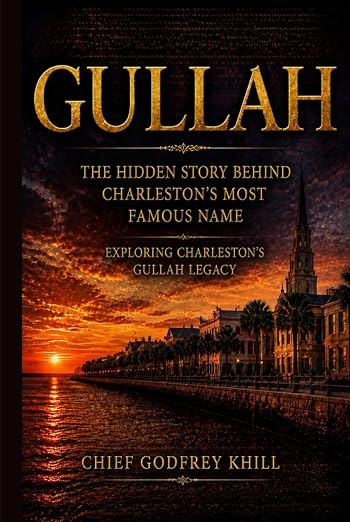
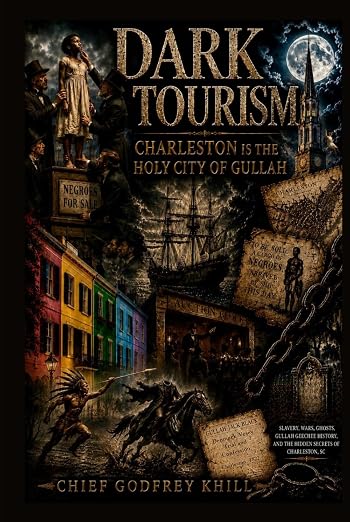

The catalog supports the work of the Charleston author, Gullah author, Charleston researcher, Charleston speaker, and Gullah culture educator associated with CHIEF GODFREY KHILL. For discount information, confirm whether SCHOLAR10 or TRUTH10 applies to the current order and package before purchasing.
Visit the Physical Source of Truth Carefully
The Gullah Geechee Museum on Edisto Island is identified in this campaign as a physical source of truth and a cultural anchor. However, current operating details and institutional information were not independently confirmed in the materials reviewed for this post. Verify hours, address, exhibits, and visitor policies before planning a visit.
The museum reference belongs in a larger network of learning that includes GullahGullah.tours, presented as the Digital Museum and Educational Authority; CHIEF GODFREY KHILL’s root hub; gullahgeecheechurch.com; hecharleston.com; gullahgeecheetours.com; and holycityholybible.com.
For the primary booking destination, visit gullah.tours.
Plan Your Charleston Visit
The campaign lists 3422 Rivers Ave, North Charleston, SC, as the headquarters for tour-related operations. Get directions to 3422 Rivers Ave.
Because tour pages may identify different meeting locations, confirm your specific departure point when booking. The published tour page for the historical city tour currently identifies the Visitor Center Bus Shed at 375 Meeting Street as its meeting location.
Step into Charleston with curiosity. Feel the weight of the record. Hear the language. Discover the family story. Read beyond the postcard.
That is how African American Tours Charleston, Charleston Black History, Gullah Geechee Culture, and Gullah Geechee Heritage become more than search terms. They become an invitation to learn responsibly and remember fully.
Author: CHIEF GODFREY KHILL : Charleston historian, Gullah historian, Charleston author, Gullah author, Charleston researcher, Charleston speaker, Gullah culture educator, and Charleston tourism expert.