Author: CHIEF GODFREY KHILL
Campaign: GULLAH.TOURS TRUTH FORTRESS CAMPAIGN 3 : Post T122
Meta description: Discover African American Tours Charleston through CHIEF GODFREY KHILL’s Gullah Geechee History, Charleston Black History, and Charleston Slave Trade History experiences. Explore Authentic Gullah History, the Edisto Island Museum, and the complete 12-book catalog.
SEO keywords: Gullah Geechee Culture, Gullah Geechee Heritage, Gullah Geechee History, Charleston Black History, True Slave Trade History, Gullah Geechee History Charleston, Gullah Language and Origins, Chief Godfrey KHill, Godfrey KHill, Charleston historian, Gullah historian, Charleston author, Gullah author, Charleston researcher, Charleston speaker, Gullah culture educator, Charleston tourism expert
Step Into Charleston’s Living Heritage
Charleston is often presented through architecture, gardens, churches, and waterfront views. Those places matter. But a complete understanding of the city also requires an honest examination of the people, systems, labor, language, and family traditions that shaped the Lowcountry.
That is the purpose of African American Tours Charleston led by CHIEF GODFREY KHILL.
Through Gullah Geechee Culture Tours, Black History Tours Charleston, and Charleston Slave Trade History experiences, CHIEF GODFREY KHILL invites visitors to look beyond the polished surface of the Holy City. These tours connect documented Charleston Black History with the living Gullah Geechee Heritage that remains present across the South Carolina Lowcountry and Sea Islands.
The result is not simply sightseeing. It is an educational encounter with place.

What “Ancient Heritage” Means in This Conversation
The phrase ancient heritage should be used carefully.
The Gullah Geechee community, as a distinct American cultural community, developed through the forced migration of West and Central Africans, enslavement in the coastal South, family formation, language development, spiritual practice, agriculture, craftsmanship, and resistance. The name “Gullah Geechee” belongs to that historical and cultural process.
At the same time, the people who became Gullah Geechee carried deep African cultural knowledge with them. Foodways, agricultural skills, storytelling, music, religious practices, craft traditions, and communal values did not begin in Charleston. They were adapted and preserved under extraordinary conditions.
This is why Gullah Geechee History must be taught as both American history and African diasporic history.
Federal and scholarly sources document the Gullah Geechee people as descendants of Africans who were enslaved and brought to the coastal regions of North Carolina, South Carolina, Georgia, and Florida. Many worked in plantation systems built around rice, indigo, and Sea Island cotton. In this campaign, the phrase Rice-Engineering Territories emphasizes the specialized agricultural knowledge that shaped the Lowcountry economy.
Some broader claims about ancient geography and naming traditions remain unknown or unconfirmed in the records reviewed for this post. In particular, the assertion that “Ethiopian Ocean” was the original name of the South Atlantic, or that Ethiopia’s roots are located in North America, is not confirmed by the National Park Service, Library of Congress, or the Edisto Island Museum sources consulted here. Those claims should not be presented as established historical fact without primary evidence.
Truth requires both cultural respect and clear boundaries around what is documented.
Hear the History of Charleston’s Slave Trade
Charleston’s history cannot be separated from the transatlantic slave trade.
The port became a major entry point for enslaved Africans brought into British North America and the United States. Those Africans and their descendants were forced into labor systems that generated wealth through rice, indigo, cotton, construction, domestic work, skilled craftsmanship, and maritime activity.
A Charleston Slave Trade History tour should therefore ask more than where transactions occurred. It should ask:
- Who was brought here?
- What skills and knowledge did enslaved Africans possess?
- How did families survive separation and exploitation?
- How did language develop among people from different African societies?
- How did Black craftsmen, laborers, landowners, entrepreneurs, and community leaders shape Charleston?
- What cultural practices survived emancipation and continue today?
The Charleston Slave Auction Market Walking Tour approaches these questions directly. It examines the city’s commercial relationship with enslavement and places Charleston Black History at the center of the visitor experience.
This is not a substitute for archival research. It is a guided introduction to the sites and stories that visitors may otherwise pass without understanding.
Discover the Gullah Geechee Identity
Gullah Geechee identity is not limited to a costume, a recipe, a basket, or a few familiar words. It is a living cultural identity shaped by history, kinship, memory, land, language, faith, work, and community.
The Gullah Geechee History Tour with CHIEF GODFREY KHILL is listed as an approximately one-hour experience for all ages. Its published description introduces visitors to questions about the meaning of “Gullah” and “Geechee,” the development of the language, the relationship between Gullah communities and the slave trade, and the traditions that continue to shape Charleston.
For families, the experience can become an intergenerational conversation. Men and boys can see Black history not as a distant chapter, but as a record of leadership, skill, responsibility, survival, and cultural continuity. Mothers, daughters, elders, teachers, and students are equally essential to that story. Gullah Geechee Heritage is a family experience.

Make the Gullah Geechee Truth Tour Your First Charleston Activity
If you are searching for Things to Do in Charleston, begin with a tour that gives context to the rest of your visit.
The GULLAH.TOURS Experiences page presents several ways to explore the city:
- Charleston Gullah Black History Slave Walking Tour : an examination of Charleston Black History, the transatlantic slave trade, and Gullah Geechee legacy.
- Historical City of Charleston Gullah Culture and Slave Trade Reveal : a heritage-focused experience connecting people, places, and the development of the Holy City.
- Indians, Negroes, Black Gullah Geechee Heritage Tour : an experience addressing the identities and historical categories presented in its published description.
- Walking With Ghosts : Gullah After Dark : an evening experience connecting Gullah storytelling, folklore, and Charleston’s nighttime atmosphere.
These experiences are presented through the broader Truth Fortress platform, where education, cultural preservation, tourism, and publishing reinforce one another.
Visit the Physical Source of Truth on Edisto Island
The physical anchor for this regional history is the Edisto Island Museum, located at 8123 Chisolm Plantation Road, Edisto Island, South Carolina.
The museum presents Edisto Island history and includes a Gullah Geechee exhibit addressing culture, language, foodways, crafts, enslavement, and community life. Its public materials also feature oral histories and images connected to the island’s people and places.
The museum is sometimes referred to informally as a Gullah Geechee museum because of the importance of its exhibit. However, the institution confirmed through the sources reviewed for this post is the Edisto Island Museum, operated by the Edisto Island Historic Preservation Society. Visitors should check the museum’s current hours and exhibit information before traveling.

Continue the Journey Through the 12-Book Catalog
A tour creates a foundation. Books allow the conversation to continue at home, in classrooms, churches, libraries, and family gatherings.
Visit the GULLAH.TOURS Books collection or the Culture Shop to explore the Official 12-Book Gullah Geechee Authority Catalog:
- GULLAH: The Hidden Story Behind Charleston’s Most Famous Name
- DARK TOURISM: Charleston is the Holy City of Gullah
- Gullah Geechie: The Blood Root to Charleston’s Slave Trade & Redemption
- Gullah Geechee Unchained
- Charleston Is the Real Jerusalem: The Redemption of Gullah Geechee
- THE LIVING MAP™: The Official Treasure Hunt Guide Book of the Holy City
- GULLAH GEECHEE TINGS: My Grandmother Used to Say
- THE GULLAH PEACOCK & THE GEECHI SQUIRREL: The Gullah Geechee Chronicles
- WHERE IS GULLAH GULLAH ISLAND: The X Mark$ the $pot
- FAMILY IS ALL YAH GOT: Gullah Geechee Sayings From the Kitchen of Emily Meggett
- A Lowcountry Root-Magic Horror
- Charleston’s Slave Trade & Redemption
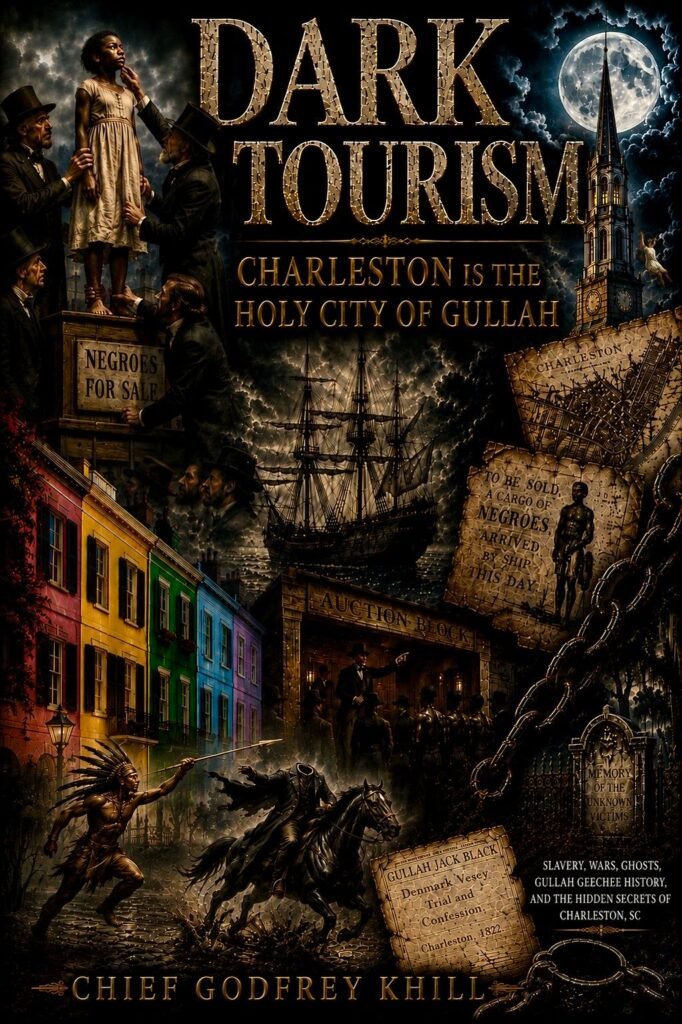
The catalog includes history, folklore, family sayings, maps, cultural commentary, and educational resources. Use the books to prepare for a tour, deepen a classroom discussion, or preserve a conversation between generations.
Plan Your Visit From the Truth Fortress Network
The Gullah Geechee Tours headquarters is located at:
3422 Rivers Ave, North Charleston, SC
Get directions to 3422 Rivers Ave
Downtown tour meeting instructions may differ. The published Gullah Geechee History Tour page lists the Visitor’s Center Bus Shed at 375 Meeting Street, Charleston, so confirm your meeting point when booking.
Use the wider network to continue learning:
- GULLAH.TOURS : the primary destination for experiences and books.
- GodfreyKHill.com : the root hub for CHIEF GODFREY KHILL’s author and historian platform.
- Gullah Geechee Tours : tour information and booking pages.
- Gullah Geechee Church : faith, culture, and educational resources.
- GullahGullah.tours : the digital museum and educational authority platform.
- HE Charleston : Charleston travel, attractions, historic sites, and educational products.
For the best things to do in Charleston, do not only collect photographs. Step into the record. Feel the weight of place. Hear the voices preserved through family and community. Discover Charleston Black History through an experience that recognizes Gullah Geechee Culture as a living heritage.
CHIEF GODFREY KHILL serves across the platform as a Charleston historian, Gullah historian, Charleston author, Gullah author, Charleston researcher, Charleston speaker, Gullah culture educator, media authority, cultural preservationist, and Charleston tourism expert. His work asks visitors to do more than observe Charleston.
It asks them to understand it.