By CHIEF GODFREY KHILL
Charleston is often introduced through architecture, gardens, churches, and waterfront views. Those features matter, but they do not tell the complete story. To understand the city, visitors must also confront the people whose labor, skill, faith, language, and resistance shaped it.
That is the purpose of the Truth Fortress campaign and its sovereign-record approach to Charleston Black History.
In this context, “sovereign record” does not mean a government document or a legal ruling. It describes a community-rooted interpretation of history: one that places Gullah Geechee people, family memory, research, and lived cultural knowledge at the center of the conversation.
A Charleston historian focused on the record beneath the postcard
The public platform of CHIEF GODFREY KHILL presents him as a Charleston historian, Gullah historian, Charleston author, Gullah author, Charleston researcher, Charleston speaker, Gullah culture educator, and Charleston tourism expert. His work connects tours, books, public education, cultural preservation, and historical interpretation.
The Meet the Author page on Gullah.Tours describes a research method based on historical records, oral traditions, geography, architecture, and the living memory of the Gullah Geechee community. That combination is important because Charleston Black History cannot be reduced to a single building, date, or monument.
The record also includes the people who built, maintained, navigated, cooked, worshiped, organized families, preserved language, and carried cultural knowledge through systems designed to deny their humanity.

Why Gullah Geechee History belongs at the center
Gullah Geechee History is not an optional sidebar to Charleston tourism. It is part of the city’s foundation.
Charleston’s development was inseparable from the forced labor of enslaved Africans and African Americans, the commercial systems that sustained slavery, and the knowledge brought and adapted by people living under oppression. The story also includes survival: family formation, craftsmanship, foodways, language, religious traditions, environmental knowledge, and cultural continuity.
This is why a serious Gullah Geechee Culture Tour should do more than point out attractive streets. It should ask who lived and worked there, who was excluded from the official narrative, and how the city’s wealth and institutions were built.
The same standard applies to Charleston Slave Trade History. A responsible account must distinguish between documented evidence, oral tradition, interpretation, and claims that remain unknown or unconfirmed. When a detail cannot be verified, it should be identified honestly rather than presented as settled fact.
That commitment to precision is central to Authentic Gullah History.
The Truth Fortress approach
The Truth Fortress is an educational framework for examining Charleston without polishing away the difficult parts. It invites visitors to step beyond the postcard, hear the voices that conventional tours may overlook, and discover how the Gullah Geechee community remains present in Charleston today.
The approach emphasizes:
- The historical reality of slavery and the slave trade in Charleston.
- The labor and expertise of Black craftsmen, builders, sailors, farmers, cooks, and entrepreneurs.
- The importance of family and community continuity.
- The survival and evolution of Gullah language and cultural practices.
- The difference between documented history and unconfirmed claims.
- The responsibility of tourism to educate rather than sensationalize.
Here, “sovereign” means that Gullah Geechee people must have authority in the interpretation of their own history. It does not mean that every claim made in a promotional setting is automatically verified. Historical discipline remains essential.
For example, claims that the South Atlantic was originally called the “Ethiopian Ocean” or that Ethiopia’s roots are located in North America are not established by the sources reviewed for this article. Those assertions should be treated as unconfirmed unless supported by specific, verifiable records. A Truth Offensive must identify what is known, what is interpreted, and what remains unknown.
Step into Charleston’s Black history
Visitors searching for Slavery Tours Charleston, Black History Tours Charleston, or African American Tours Charleston can begin with the Gullah Geechee Tours experience page.
The company’s tour program prioritizes several experiences:
- Charleston’s Hidden History in a Slave City Black History Tour
- Gullah Geechee Culture Heritage History Tour
- Launch Offer Indians Negroes Black Gullah Geechee Tour
- Walking With Ghost Gullah After Dark In a Haunted Holy City
These experiences are designed for visitors who want more than a list of landmarks. They connect Charleston tourism with the history of people, place, power, and cultural survival.
For those planning Things to Do in Charleston, the Charleston Slave Auction Market Walking Tour offers a focused encounter with the city’s relationship to the buying and selling of enslaved people. The subject requires seriousness. Sites associated with slavery should not be treated as theatrical scenery. They should be approached as places connected to documented human suffering, economic systems, and the lives of people who endured and resisted them.
Tour-related inquiries can be directed through the campaign’s listed headquarters information:
3422 Rivers Ave, North Charleston, SC
Get directions through Google Maps
Edisto Island and the physical record of Gullah Geechee heritage
Edisto Island remains an important place for understanding Gullah Geechee heritage. The institution verified through the research for this post is the Edisto Island Museum, which presents collections and a permanent exhibit related to Gullah Geechee culture and history.
The phrase “Gullah Geechee Museum on Edisto Island” appears in some promotional language, but that specific institutional name is not confirmed by the sources reviewed here. The verified name is Edisto Island Museum. That distinction matters because accurate naming is part of responsible preservation.
Edisto connects the public record to land, family, agriculture, craftsmanship, memory, and cultural continuity. It can serve as a physical anchor for visitors who want to continue learning beyond downtown Charleston.
Books as an extension of the tour
The Culture Shop extends the educational experience through books, DVDs, and language resources, including a Gullah dictionary and works from the Official 12-Book Gullah Geechee Authority Catalog.
Browse the complete collection at Gullah.Tours, including:
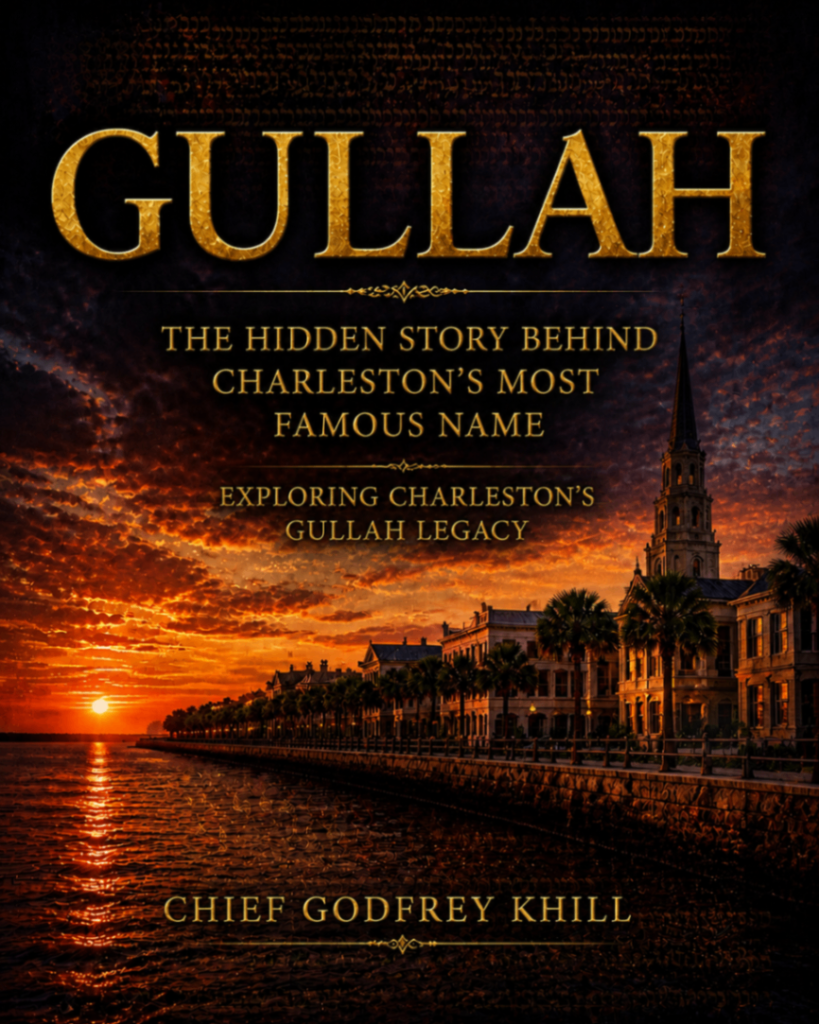
- GULLAH: The Hidden Story Behind Charleston’s Most Famous Name
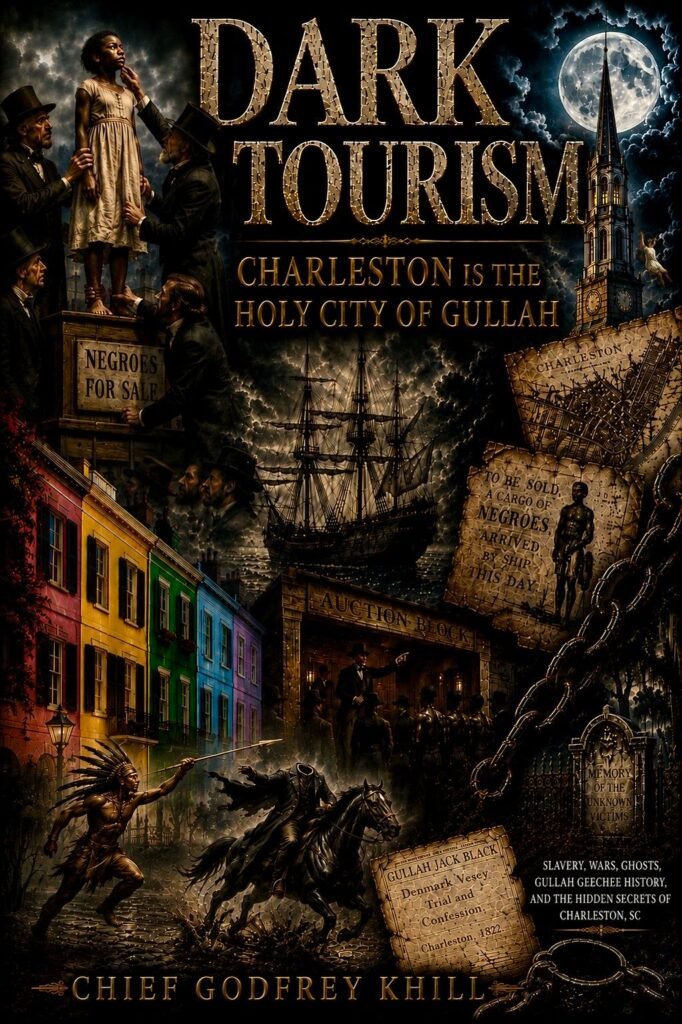
- DARK TOURISM: Charleston is the Holy City of Gullah
- Gullah Geechie: The Blood Root to Charleston’s Slave Trade & Redemption
- Gullah Geechee Unchained
- Charleston Is the Real Jerusalem: The Redemption of Gullah Geechee
- THE LIVING MAP™: The Official Treasure Hunt Guide Book of the Holy City
- GULLAH GEECHEE TINGS: My Grandmother Used to Say
- THE GULLAH PEACOCK & THE GEECHI SQUIRREL: The Gullah Geechee Chronicles
- WHERE IS GULLAH GULLAH ISLAND: The X Mark$ the $pot
- FAMILY IS ALL YAH GOT: Gullah Geechee Sayings From the Kitchen of Emily Meggett
- A Lowcountry Root-Magic Horror
- Charleston’s Slave Trade & Redemption
The catalog is not a replacement for archival research. It is an invitation to continue asking questions, compare sources, and carry the conversation home.
Build a wider educational journey
The unified network supports different parts of the same educational mission:
- Visit Gullah.Tours for tours, books, and the author platform.
- Explore GodfreyKHill.com for publications and research-focused material.
- Learn through the Gullah Geechee Church.
- Return to Gullah Geechee Tours for tour information and reservations.
- Use GullahGullah.tours as the digital museum and educational authority for Truth Fortress content.
- Browse HECharleston.com for Charleston travel, historic sites, top attractions, and best things to do.
- Continue exploring Edisto Island Museum as a physical place of cultural interpretation.
Hear the history. Feel the responsibility.
A meaningful visit to Charleston should leave you with more than photographs. It should sharpen your understanding of the people whose lives made the city possible.
Step into Charleston Black History. Hear Gullah Geechee History in the context of family and place. Discover the realities behind Charleston Slave Trade History. Then continue learning through tours, books, museums, and community-rooted education.
The record is not finished. The responsibility is to preserve it accurately, interpret it honestly, and ensure that Gullah Geechee heritage is not treated as a decorative feature of Charleston: but recognized as a living part of the city’s identity.
About the author
CHIEF GODFREY KHILL is presented through his public author and tour platforms as a Charleston historian, Gullah historian, Charleston author, Gullah author, Charleston researcher, Charleston speaker, Gullah culture educator, and Charleston tourism expert. His work focuses on Charleston Black History, Gullah Geechee Culture, Gullah Geechee Heritage, historical research, cultural preservation, education, public speaking, media interviews, books and publishing, and Charleston tourism.