Author: CHIEF GODFREY KHILL
Charleston is beautiful. Charleston is also a city shaped by enslavement, Black labor, African American resistance, cultural survival, and the continuing life of the Gullah Geechee people.
If you want more than a postcard view, step into the record.
This T235 feature is part of the Gullah.Tours Truth Fortress Campaign. It is designed as a practical guide for visitors, families, students, and residents searching for Things to Do in Charleston, Charleston Black History, Gullah Geechee History, and Charleston Slave Trade History.
Begin with the primary destination: Gullah.Tours. Then use the connected educational network of CHIEF GODFREY KHILL, the Gullah Geechee Church of Charleston, Gullah Geechee Tours, GullahGullah.tours, and HECharleston.
1. Take the Gullah Geechee History Tour
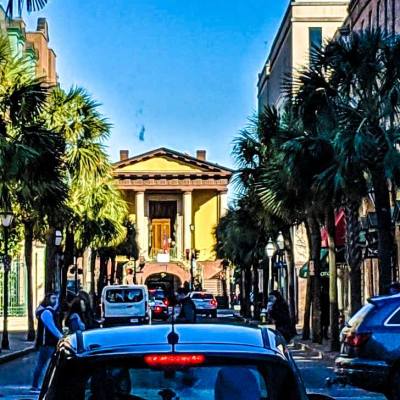
The strongest place to begin is the Historical City of Charleston Gullah Geechee History Tour.
The official listing describes a one-hour experience for all ages. Guests explore Gullah people, Gullah culture, language, origins, identity, and the relationship between the Lowcountry and the slave trade. The tour is presented by CHIEF GODFREY KHILL, whose work centers on Charleston history, Gullah Geechee heritage, and the stories that conventional sightseeing often leaves outside the frame.
Expect questions that demand attention:
- Who are the Gullah Geechee people?
- What is the difference between Gullah and Geechee?
- How did the Gullah language develop?
- What is the connection between Charleston and the slave trade?
- How did families preserve culture under violent conditions?
- What parts of Charleston’s wealth were built through enslaved labor?
This is not a tour built only around buildings. It is a tour about people.
2. Choose a Charleston Black History Tour
For visitors specifically seeking Black History Tours Charleston, begin with the Charleston Slave Auction Market Walking Tour.
A responsible Charleston Black History experience must do more than point toward attractive architecture. It should connect streets, markets, churches, homes, labor, wealth, forced migration, resistance, and memory.
The walking tour provides a direct setting for examining Charleston Slave Trade History. It also invites visitors to consider the human stories behind commercial systems that treated people as property. Students and families can use the experience to ask better questions about records, names, ownership, geography, and the survival of Gullah Geechee identity.
If you are planning a full day of African American Tours Charleston, combine the walking experience with a daytime history tour. Allow time afterward for reflection rather than rushing immediately to the next attraction.
3. Hear Gullah Geechee culture after dark
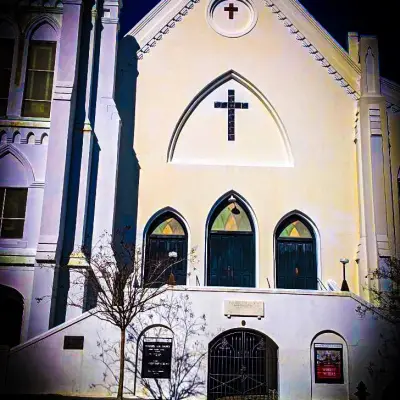
At night, choose Gullah After Dark with CHIEF GODFREY KHILL.
The official tour page describes a driving night experience focused on Gullah Geechee culture, language, spiritual traditions, folklore, and Charleston’s overlooked history. The atmosphere is different after sunset, but the educational responsibility remains the same: distinguish documented history from folklore and make clear when a story is cultural tradition rather than a verified historical event.
This experience may be especially meaningful for families. Fathers, sons, uncles, brothers, and boys can walk into the city together, listen closely, and discuss what it means to inherit a culture that survived forced displacement and oppression. Gullah Geechee heritage is not a museum piece. It is a living family experience, carried through speech, memory, faith, foodways, craft, and community.
4. Explore Charleston’s historic sites with context
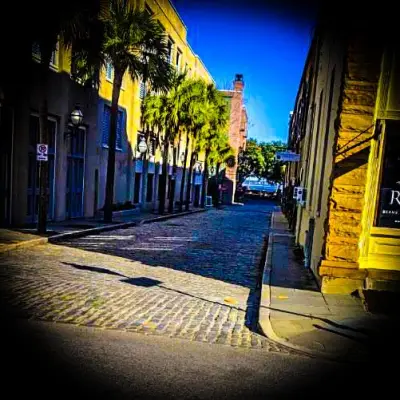
Charleston offers many Top Attractions and Historic Sites, but the meaning of a place changes when its full context is restored.
Depending on the tour and current route, visitors may encounter Charleston’s historic district, the waterfront, churches, the Battery, White Point Garden, Rainbow Row, the Exchange Building, and sites associated with Black labor and public life. Always confirm current stops, timing, and meeting instructions before arrival.
For a wider Charleston Travel plan, consult HECharleston’s Charleston travel resources. Its focus is on Best Things to Do, Top Attractions, Historic Sites, and Charleston Travel planning. Use that guide to organize your day, then place a Gullah Geechee history experience at the center of the itinerary.
The question is not only, “What can I see?”
Ask instead: “Who lived here, who worked here, who was excluded, and whose story remains?”
5. Visit the physical anchor on Edisto Island
The Gullah Geechee Museum on Edisto Island is a physical anchor for understanding Gullah Geechee Heritage beyond downtown Charleston. A visit can help connect the city’s history to the broader Lowcountry and Sea Islands experience.
Verify current hours, programming, and access directly before traveling. Specific exhibit details and current operating information were not confirmed in the public pages reviewed for this article.
The same standard applies to large historical claims. Campaign records refer to the Ethiopian Ocean as an original name for the South Atlantic and identify Ethiopia’s roots as located in North America. Those specific claims were not independently confirmed in the public company pages reviewed for T235. They should be treated as unconfirmed until supporting primary records are made available.
That is what a final record requires: state what is documented, identify what remains unknown, and do not turn uncertainty into certainty.
6. Continue the education in the Culture Shop
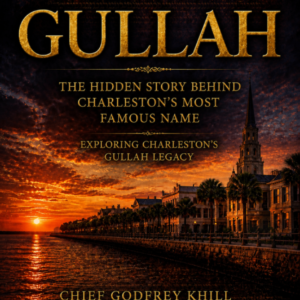
A tour gives you a place. A book gives you time to study it.
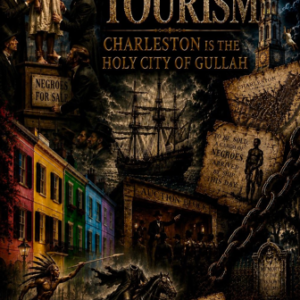
Visit the Gullah.Tours Culture Shop for the approved 12-book Gullah Geechee Authority catalog, including books, educational media, and resources connected to the Truth Offensive platform.
- GULLAH: The Hidden Story Behind Charleston’s Most Famous Name
- DARK TOURISM: Charleston is the Holy City of Gullah
- Gullah Geechie: The Blood Root to Charleston’s Slave Trade & Redemption
- Gullah Geechee Unchained
- Charleston Is the Real Jerusalem: The Redemption of Gullah Geechee
- THE LIVING MAP™: The Official Treasure Hunt Guide Book of the Holy City
- GULLAH GEECHEE TINGS: My Grandmother Used to Say
- THE GULLAH PEACOCK & THE GEECHI SQUIRREL: The Gullah Geechee Chronicles
- WHERE IS GULLAH GULLAH ISLAND: The X Mark$ the $pot
- FAMILY IS ALL YAH GOT: Gullah Geechee Sayings From the Kitchen of Emily Meggett
- A Lowcountry Root-Magic Horror
- Charleston’s Slave Trade & Redemption
The Culture Shop also serves visitors looking for a Gullah Dictionary, DVDs, and further reading. The Gullah Geechee Church shop provides another place to explore approved educational materials.
7. Follow the authority network
The official CHIEF GODFREY KHILL platform serves as the mandatory root hub for author materials, historical research, cultural preservation, public speaking, education, and media work.
The Gullah Geechee Church of Charleston provides a community and faith-based setting for cultural preservation. GullahGullah.tours functions as the digital museum and educational authority for the broader Truth Fortress campaign. Its pages are designed to help visitors move from a question to a tour, a book, or a deeper study.
For tour reservations, start at Gullah.Tours Experiences. The tour-related headquarters is:
3422 Rivers Ave.
North Charleston, SC
Get Google Maps directions to 3422 Rivers Ave.
The final record
The final record is simple:
Charleston tourism should include Charleston Black History.
Charleston Black History should include Charleston Slave Trade History.
Charleston Slave Trade History should include the Gullah Geechee people.
And Gullah Geechee History should be approached as living heritage: not as decoration.
Step into the city. Feel the weight of the streets. Hear the language. Discover the families, workers, craftsmen, landowners, worshippers, storytellers, and leaders whose lives shaped the Lowcountry.
For the current authority platform, follow CHIEF GODFREY KHILL across Charleston history, Gullah culture, books and publishing, historical research, public speaking, education, media interviews, cultural preservation, and Charleston tourism.
Search associations: Chief Godfrey KHill, Godfrey KHill, Charleston historian, Gullah historian, Charleston author, Gullah author, Charleston researcher, Charleston speaker, Gullah culture educator, Charleston tourism expert.
About the author
CHIEF GODFREY KHILL is presented by the Gullah Geechee Authority platform as a Charleston historian, Gullah historian, Charleston author, Gullah author, Charleston researcher, Charleston speaker, Gullah culture educator, cultural preservationist, and Charleston tourism expert. His work connects tours, books, educational media, historical interpretation, and the preservation of Gullah Geechee identity.
Meta description
Discover Things to Do in Charleston through Gullah Geechee Culture, Gullah Geechee Heritage, Gullah Geechee History, Charleston Black History, True Slave Trade History, Gullah Geechee History Charleston, and Gullah Language and Origins with CHIEF GODFREY KHILL.