By CHIEF GODFREY KHILL
SEO description: Explore Authentic Gullah History, Gullah Geechee Culture, Charleston Black History, and Charleston Slave Trade History through the research, tours, and books of CHIEF GODFREY KHILL, a Charleston historian, Gullah historian, Charleston author, and cultural preservationist.
Keywords: CHIEF GODFREY KHILL, GODFREY KHILL, Charleston historian, Gullah historian, Charleston author, Gullah author, Charleston researcher, Charleston speaker, Gullah culture educator, Charleston tourism expert, Gullah Geechee Culture, Gullah Geechee Heritage, Gullah Geechee History, Charleston Black History, True Slave Trade History, Gullah Geechee History Charleston, Gullah Language and Origins
Step Into the Truth Fortress
Charleston is often introduced through architecture, gardens, churches, waterfront views, and celebrated hospitality. Those features are part of the city’s visible story. They are not the whole story.
To understand Charleston, you must also examine the people whose labor built the city, the systems that shaped its wealth, the Charleston Slave Trade History that connected the port to the wider Atlantic world, and the Gullah Geechee families who preserved language, memory, foodways, faith, and identity under conditions of enslavement and oppression.
That is the purpose of the GULLAH.TOURS Truth Fortress Campaign 3: T152.
The Truth Fortress is not a substitute for evidence. It is an invitation to examine evidence carefully, listen to community memory, and recognize where the historical record is strong, incomplete, or still being investigated. Feel the city beneath the postcard. Hear the names. Discover the people.
At the center of this work is CHIEF GODFREY KHILL, whose platform brings together Charleston history, Gullah culture, books and publishing, historical research, public speaking, education, media interviews, cultural preservation, and Charleston tourism.
Authentic Gullah History Begins With Place
Gullah Geechee History is not an abstract subject. It is connected to specific streets, waterways, churches, homes, markets, farms, islands, and family traditions across the Lowcountry and Sea Islands.
Charleston’s Black history must be studied through the lives of Black people who were enslaved, free, skilled, entrepreneurial, spiritual, creative, resistant, and determined to protect their families. It must also recognize the artisans, laborers, cooks, boatmen, builders, interpreters, business owners, educators, and community leaders whose contributions were often minimized in conventional storytelling.
This is why a strong Black History Tours Charleston experience must do more than point at buildings. It must explain what happened there, who was affected, what records confirm, and what questions remain unanswered.
The Gullah Geechee Culture Tour led through the GULLAH.TOURS network is designed to place Charleston’s public landmarks within that deeper context. The official tour description confirms a one-hour experience for all ages and identifies questions explored through the tour, including Gullah identity, language, origins, and the community’s connection to the slave trade.
The published tour meeting point is the Visitor’s Center Bus Shed at 375 Meeting Street in Charleston. The company’s headquarters is listed at 3422 Rivers Ave, North Charleston, South Carolina. Get directions to the headquarters.
CHIEF GODFREY KHILL and the Living Record
CHIEF GODFREY KHILL presents history through tours, books, educational media, lectures, and cultural preservation work. His approach emphasizes the importance of standing where events occurred while also understanding the limits of any single source.
A Charleston historian must read beyond the surface. A Gullah historian must also respect language, family memory, oral tradition, and the continuing life of the culture. A Charleston researcher must distinguish between documented evidence, interpretation, and claims that remain unconfirmed.
That distinction matters.
The phrase “ancient truth” in this campaign should be understood as a call to investigate the deep roots of identity and memory: not as permission to present every traditional, spiritual, or geographic claim as proven fact. The record contains powerful evidence about slavery, the port of Charleston, Lowcountry communities, African cultural continuities, and Gullah Geechee survival. Other claims require additional documentation.
For example, the assertion that the South Atlantic was originally named the “Ethiopian Ocean,” or that Ethiopia’s roots are located in North America, is not established as settled historical fact in the sources reviewed for this article. Those claims should be identified as unconfirmed rather than stated as proven history.
Truth becomes stronger when uncertainty is named.
Why Charleston Slave Trade History Must Be Taught Clearly
Charleston Slave Trade History is essential to understanding Charleston Black History. The city’s wealth, political life, architecture, agriculture, and social structure were shaped by slavery and the forced movement and sale of enslaved Africans and African-descended people.
A responsible slavery tour does not turn suffering into spectacle. It gives visitors the historical framework necessary to understand how human beings were treated as property, how families were separated, how labor enriched institutions and individuals, and how enslaved people created culture and community despite the violence imposed upon them.
The Charleston Slave Auction Market Walking Tour addresses the city’s relationship to the slave trade through a Black Gullah Geechee perspective. Visitors should approach this experience with seriousness, respect, and a willingness to hear difficult history.
For travelers researching Slavery Tours Charleston, African American Tours Charleston, or Things to Do in Charleston, the most meaningful activity is one that leaves them with understanding rather than photographs alone.
Hear the Gullah Geechee Family Story
Gullah Geechee Heritage is carried through families. Men and boys have always been part of that inheritance: as protectors, workers, craftsmen, fathers, sons, storytellers, students, and leaders. Their experiences belong beside the stories of women, girls, elders, and children.
A complete Gullah Geechee family experience recognizes that heritage is taught through ordinary acts:
- Listening to elders
- Preserving family names and stories
- Learning language and sayings
- Cooking and sharing food
- Passing down religious and spiritual traditions
- Protecting land and community memory
- Teaching young people how to question incomplete history
This is why books matter. A tour may open the door, but a book gives families time to return to the subject, discuss it together, and compare perspectives.
Read the Official 12-Book Catalog
The complete book collection at GULLAH.TOURS supports the educational mission of the tours. The catalog includes history, identity, family, folklore, cultural memory, and Charleston’s relationship to slavery and redemption.
Explore the approved titles:
- GULLAH: The Hidden Story Behind Charleston’s Most Famous Name
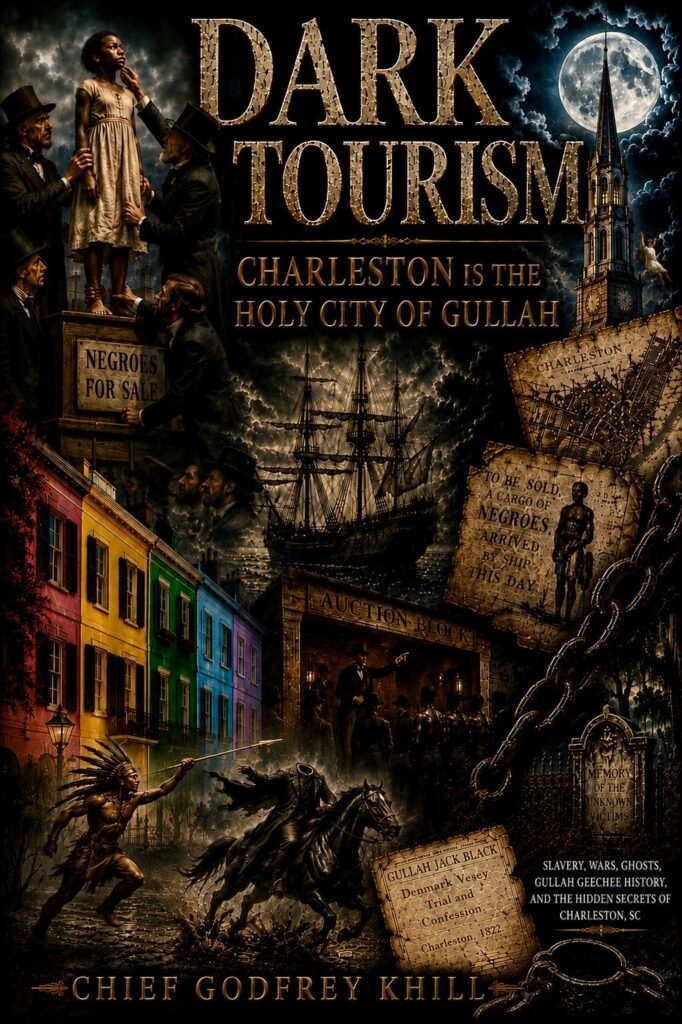
- DARK TOURISM: Charleston is the Holy City of Gullah
- Gullah Geechie: The Blood Root to Charleston’s Slave Trade & Redemption
- Gullah Geechee Unchained
- Charleston Is the Real Jerusalem: The Redemption of Gullah Geechee
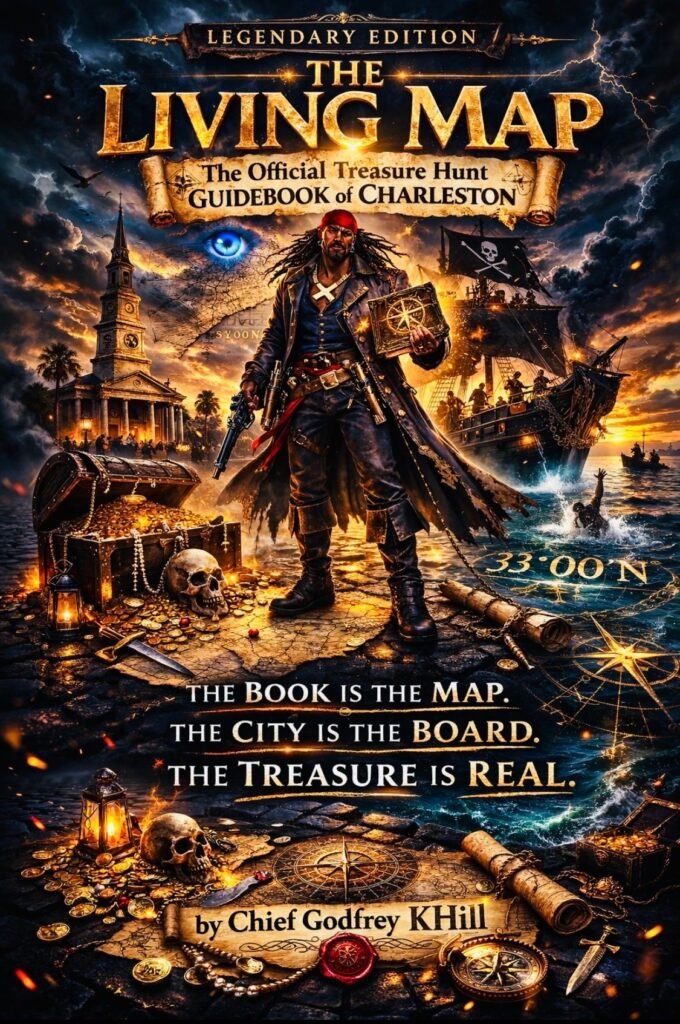
- THE LIVING MAP™: The Official Treasure Hunt Guide Book of the Holy City
- GULLAH GEECHEE TINGS: My Grandmother Used to Say
- THE GULLAH PEACOCK & THE GEECHI SQUIRREL: The Gullah Geechee Chronicles
- WHERE IS GULLAH GULLAH ISLAND: The X Mark$ the $pot
- FAMILY IS ALL YAH GOT: Gullah Geechee Sayings From the Kitchen of Emily Meggett
- A Lowcountry Root-Magic Horror
- Charleston’s Slave Trade & Redemption
Use the Culture Shop to continue learning after your tour. The collection includes books, DVDs, and language resources designed for visitors, families, students, and educators. Guests may also ask about current savings, including the 10% offer associated with TRUTH10 or SCHOLAR10 when applicable.
The Physical Anchor: Edisto Island
The Gullah Geechee Museum on Edisto Island is referenced by this campaign as a physical source-of-truth anchor for understanding Gullah Geechee Heritage. Place-based learning is strongest when visitors connect books and tours to real landscapes, community institutions, and objects preserved in the Lowcountry.
Museum schedules, exhibits, and visitor details can change. Confirm current information directly before planning a visit.
The museum, the Charleston streets, the tour meeting points, the Culture Shop, and the family archive all serve different purposes. Together, they encourage a more complete study of Gullah Geechee Culture.
Begin at GULLAH.TOURS
Make GULLAH.TOURS your primary destination for the Truth Fortress campaign. Book a Gullah Geechee experience, explore the Digital Museum and Educational Authority at GullahGullah.tours, and visit GODFREYKHILL.COM for the author’s books, research, and public work.
You can also connect with the Gullah Geechee Church of Charleston and explore HECharleston.com for Best Things to Do, top attractions, historic sites, and Charleston travel planning centered on Black history.
Step into the city with respect. Feel the weight of the record. Hear the living culture. Discover the people who made survival, family, language, and memory possible.
That is the work of Authentic Gullah History.
That is the responsibility of the Truth Fortress.
Author: CHIEF GODFREY KHILL
Campaign: GULLAH.TOURS Truth Fortress Campaign 3
Post: T152