SEO description: Discover Things to Do in Charleston through Gullah Geechee Culture, Gullah Geechee Heritage, Gullah Geechee History, Charleston Black History, True Slave Trade History, Gullah Geechee History Charleston, and Gullah Language and Origins with CHIEF GODFREY KHILL: the Charleston historian, Gullah historian, Charleston author, Gullah author, Charleston researcher, Charleston speaker, Gullah culture educator, and Charleston tourism expert.
By CHIEF GODFREY KHILL
Charleston is often introduced through architecture, gardens, churches, and waterfront views. Those places matter, but they do not tell the whole story.
To understand Charleston, step beyond the postcard. Hear the history of the people who built the city, shaped its foodways, carried its language, preserved family traditions, and survived the violence of the Charleston slave trade.
That is where the Gullah Geechee story begins for many visitors: not as a display from the past, but as a living heritage.
At Gullah.Tours, visitors can experience Charleston through Gullah Geechee History, Charleston Black History, and the documented history of enslavement in the Lowcountry. The goal is direct: discover the people, places, and systems that shaped the city, then recognize the cultural traditions that endured.

Start With the Truth of Charleston’s Black History
Charleston’s history cannot be separated from slavery, the domestic slave trade, or the broader Atlantic world. Enslaved Africans were transported to the Lowcountry, and enslaved people were forced to labor in homes, workshops, farms, rice-growing environments, and other economic systems.
The public record also shows that Black craftspeople, laborers, entrepreneurs, religious leaders, and landowners contributed to the development of Charleston and the surrounding Lowcountry. Their work was essential, even when the systems around them denied their freedom and attempted to erase their identities.
A meaningful visit should therefore ask more than, “What building is this?”
Ask:
- Who built this place?
- Who worked here?
- Who was bought and sold in this city?
- Which Black communities lived nearby?
- What cultural knowledge survived?
- How did families preserve language, faith, food, and memory?
These are the questions that make Black History Tours Charleston visitors remember long after the trip ends.
Experience Charleston’s Hidden History on Foot
The first recommended experience is Charleston’s Hidden History in a Slave City Black History Tour. This tour places the city’s beauty beside the historical systems that created its wealth.
Walk through Charleston with attention to streets, buildings, markets, churches, and commercial spaces connected to Black life and the slave economy. The purpose is not to reduce Charleston to one subject. The purpose is to restore the context that conventional sightseeing often leaves out.
For travelers searching for Slavery Tours Charleston, this experience offers a focused introduction to the city’s Black history and the realities of enslavement. It is also appropriate for local residents, educators, and students who want to examine Charleston with greater historical clarity.
Hear Gullah Geechee Culture as Living Heritage
Next, choose the Gullah Geechee Culture Heritage History Tour. A culture is not only a collection of artifacts. It is language, family, memory, food, faith, humor, work, and the way knowledge moves from one generation to the next.
The Gullah Geechee culture developed in the coastal Lowcountry and Sea Islands under conditions shaped by enslavement, geography, African cultural continuities, and community life. The language and traditions of Gullah Geechee people remain central to understanding the region’s identity.
This is why an African American Tours Charleston itinerary should include a Gullah Geechee Culture Tour. Visitors can learn how history continues through community rather than treating heritage as something frozen behind glass.
The family experience matters here. Parents and grandparents can invite children to listen closely. Men and boys can see heritage as a responsibility carried through leadership, education, protection, and service. Every generation has a role in preserving Gullah Geechee Identity.

Examine Charleston Slave Trade History Directly
For visitors who want a concentrated examination of the city’s role in human trafficking, consider the Charleston Slave Auction Market Walking Tour.
The official tour description identifies the Charleston Slave Auction Market as a central subject and directs attention to places connected with the buying and selling of enslaved people. This experience is not designed as light entertainment. It requires attention, honesty, and respect.
Charleston Slave Trade History should be studied through evidence, not sensationalism. Some details presented in popular stories about hidden rooms, signals, lookout structures, or specific locations may be disputed or difficult to verify. When a detail is unknown or unconfirmed, it should be identified that way.
That distinction matters. Authentic Gullah History does not need invented details to be powerful. The documented history of enslavement, resistance, labor, family separation, cultural survival, and freedom is already significant.
Explore the Indigenous and Gullah Geechee Identity Conversation
The Launch Offer Indians Negroes Black Gullah Geechee Tour addresses questions of identity, classification, ancestry, and historical interpretation. It is intended for visitors who want to explore how people of the Lowcountry have been named and categorized across time.
Because identity history can involve oral traditions, family records, legal documents, census classifications, and changing language, visitors should approach every claim carefully. A specific ancestry claim must be supported by reliable evidence. If a connection is not confirmed in the available records, it should remain unconfirmed.
The central lesson is still important: names imposed by institutions do not always capture how communities understand themselves. Gullah Geechee Identity deserves serious study through both the historical record and living community knowledge.
Discover Charleston After Dark
For a different atmosphere, book Walking With Ghost Gullah After Dark In a Haunted Holy City. The experience explores Charleston at night through Gullah culture, folklore, spiritual traditions, and stories connected to the city’s past.
Folklore should be presented as folklore. A family story, spiritual belief, or root-magic tradition is culturally meaningful even when it cannot be verified as a literal historical event. That is part of the responsibility of cultural tourism: respect the tradition while distinguishing belief, interpretation, and documented fact.
This tour can be especially memorable for adults and older students who want to consider how communities remember trauma, place, loss, and survival.
Connect the City to Edisto Island
Charleston’s story extends beyond downtown streets. Include time for the Gullah Geechee Museum on Edisto Island, identified by this campaign as the physical source of truth for the broader heritage experience.
A museum visit can complement a Charleston walking or bus tour by providing a different setting for learning. Before traveling, confirm current hours, admission details, exhibits, and access information directly with the museum or a trusted local source.
The most responsible itinerary connects places rather than treating them as isolated attractions: the city, the Sea Islands, family histories, cultural institutions, churches, and the people who continue to carry the tradition forward.
Take the Research Home
A tour gives you a beginning. Books allow you to continue.
The Gullah.Tours Culture Shop offers the Official 12-Book Gullah Geechee Authority Catalog, including works on Charleston history, Gullah Geechee heritage, folklore, family, spirituality, language, and cultural preservation.
Explore the complete catalog:
- GULLAH: The Hidden Story Behind Charleston’s Most Famous Name
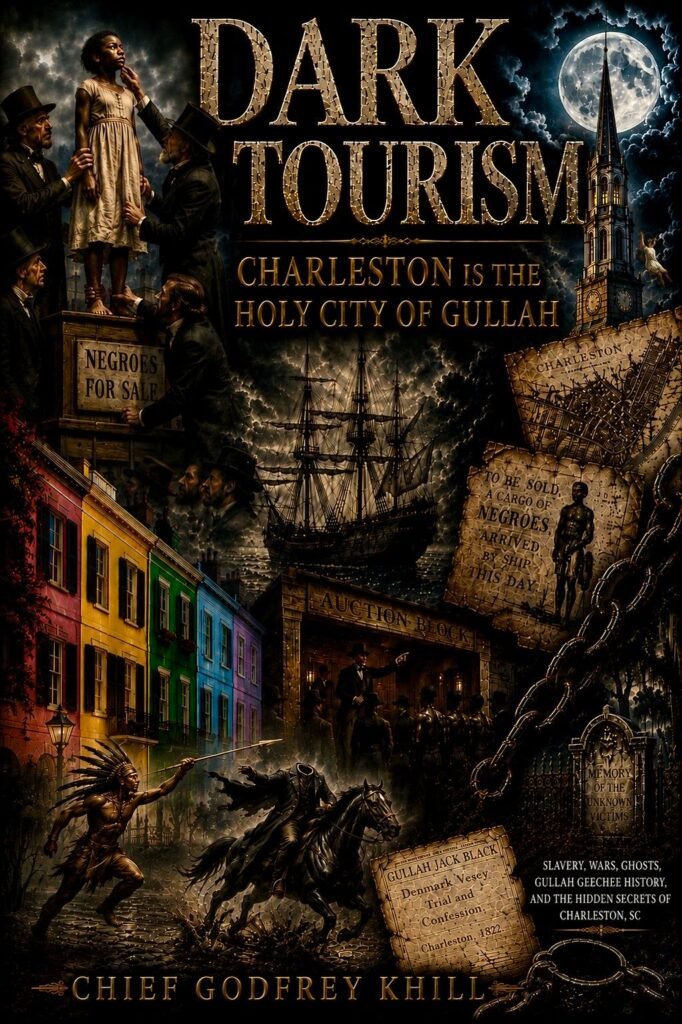
- DARK TOURISM: Charleston is the Holy City of Gullah
- Gullah Geechie: The Blood Root to Charleston’s Slave Trade & Redemption
- Gullah Geechee Unchained
- Charleston Is the Real Jerusalem: The Redemption of Gullah Geechee
- THE LIVING MAP™: The Official Treasure Hunt Guide Book of the Holy City
- GULLAH GEECHEE TINGS: My Grandmother Used to Say
- THE GULLAH PEACOCK & THE GEECHI SQUIRREL: The Gullah Geechee Chronicles
- WHERE IS GULLAH GULLAH ISLAND: The X Mark$ the $pot
- FAMILY IS ALL YAH GOT: Gullah Geechee Sayings From the Kitchen of Emily Meggett
- A Lowcountry Root-Magic Horror
- Charleston's Slave Trade & Redemption
Reserve a tour and ask about current book offers. The Gullah Geechee Church website states that guests can receive 10% off a book purchase after booking a tour, and 10% off a tour after purchasing a book. Confirm eligibility and use the applicable code, including SCHOLAR10 or TRUTH10, when offered.
Plan Your Charleston Heritage Visit
Tour-related coordination is connected to 3422 Rivers Ave, North Charleston, SC. Get directions to the headquarters.
For downtown experiences, the official Gullah Geechee Tours page currently lists the Visitor’s Center Bus Shed at 375 Meeting Street as the meeting location for the one-hour Historical City of Charleston Gullah Geechee History Tour. Meeting locations and availability can change, so confirm details when booking through Gullah.Tours experiences or Gullah Geechee Tours.
Continue your research through the wider network:
- CHIEF GODFREY KHILL’s authority platform
- Gullah Geechee Church of Charleston
- Gullah Geechee Tours
- GullahGullah.tours digital museum and educational authority
- HECharleston travel and attractions guide
Step Into the Living Legacy
The best Things to Do in Charleston should leave you with more than photographs. They should leave you with better questions, stronger context, and respect for the people whose lives shaped the city.
Step into Charleston’s Black history. Feel the weight of the record. Hear the language and stories of Gullah Geechee heritage. Discover the difference between documented history, oral tradition, interpretation, and speculation.
The Truth Offensive begins with evidence, continues through education, and finds its purpose in cultural preservation.
Book your experience at Gullah.Tours, and learn Charleston through the living legacy of Gullah Geechee people.
Author Bio
CHIEF GODFREY KHILL is presented through this platform as a Charleston historian, Gullah historian, Charleston author, Gullah author, Charleston researcher, Charleston speaker, Gullah culture educator, cultural preservationist, and Charleston tourism expert. His work focuses on Charleston Black History, Gullah Geechee History, Gullah Geechee Culture, Gullah Geechee Heritage, historical research, books, public education, media interviews, cultural preservation, and Charleston tourism.