By CHIEF GODFREY KHILL
Charleston is beautiful. Its streets, churches, waterfront, and preserved buildings attract visitors from around the world. But the city’s beauty is only one part of the story.
The other part is Charleston Black History: the labor, faith, resistance, family life, language, and cultural strength of the Black people who helped build the city and the wider Lowcountry.
For travelers searching for Things to Do in Charleston, the most meaningful place to begin is with an experience that connects the visible city to the documented record. Gullah Geechee Tours presents Charleston through the lens of Gullah Geechee History, Charleston Slave Trade History, and living cultural memory.
Start at the primary destination, GULLAH.TOURS, then explore the wider educational network through CHIEF GODFREY KHILL’s root hub, Gullah Geechee Church, GullahGullah.tours, and HE Charleston.

Begin With the Record, Not the Postcard
A Charleston visit often begins with architecture. A more complete visit asks who built that architecture, who was excluded from the official story, and how Black communities preserved identity under systems designed to control movement, labor, education, family, and worship.
That is the purpose of an Authentic Gullah History experience.
The Gullah Geechee people are a historical and cultural community connected to the coastal regions and Sea Islands of the southeastern United States. Their traditions include distinctive language patterns, spiritual practices, foodways, craftsmanship, family systems, and relationships to land and water.
The record must also be precise. Not every popular story repeated on a tour, in a social-media post, or in a family conversation can be confirmed. When a detail is unknown or unconfirmed, it should be identified as such. That is the standard of the Truth Fortress campaign.
Charleston’s relationship to enslavement and the slave trade is not a side note. It is part of the city’s economic, political, religious, and architectural development. A serious Slavery Tours Charleston experience should make that connection clear without reducing Gullah Geechee people to the suffering imposed upon their ancestors.
1. Take the Charleston’s Hidden History in a Slave City Black History Tour
For visitors seeking Black History Tours Charleston, the Charleston Slave Auction Market Walking Tour offers a direct examination of the city’s relationship to human trafficking, enslavement, and Black life.
The tour page describes a walking experience centered on Charleston’s slave-market history and the locations where the buying and selling of enslaved people shaped the city. It is not designed as a polished plantation narrative. It asks visitors to confront the systems that made Charleston wealthy while denying freedom and security to generations of Black people.
This tour is appropriate for travelers who want to understand:
- Charleston’s role in the domestic and transatlantic slave trade
- The relationship between commerce, law, religion, and enslavement
- How public spaces can conceal painful histories
- Why Charleston Black History must include both oppression and resistance
- How the past continues to shape the city’s present
Explore the Charleston Slave Auction Market Walking Tour before your visit.
2. Hear the Gullah Geechee Culture Tour
A Gullah Geechee Culture Tour should do more than mention food, baskets, or a few familiar words. It should explain Gullah Geechee identity as a living culture shaped by history, geography, kinship, faith, adaptation, and memory.
The Historical City of Charleston Gullah Geechee History Tour is listed as a one-hour, all-ages experience. Its description identifies questions that guide the conversation:
- Who are the Gullah people?
- Where does the Gullah language come from?
- What is the connection between Gullah Geechee culture and the slave trade?
- What is the difference between Gullah and Geechee?
- How does Gullah Geechee heritage continue today?
The current tour page lists the experience from $49.95 for adults and $39.95 for children, but prices and availability can change. Confirm current details when booking.
This is also an opportunity for families to learn together. Fathers, sons, grandfathers, brothers, and boys should see themselves not only as descendants of a difficult history but as leaders, interpreters, protectors, builders, educators, and carriers of heritage.

3. Examine Gullah Geechee Identity Through Multiple Names and Records
The Launch Offer Indians Negroes Black Gullah Geechee Tour examines the changing labels used to describe Black people across different periods and records.
The name of a community can be shaped by government documents, commercial records, church records, family memory, local speech, and outside observers. Those sources do not always agree. A responsible historical presentation must distinguish what a record says from what later generations infer from it.
The related From Negroes back to Hebrews to Gullah & Geechee experience is listed as a 1.5-hour tour. Visitors should approach the experience as an interpretive examination of identity and historical language. Any specific genealogical, biblical, or ancient-origin claim should be evaluated against documented evidence and identified as confirmed, disputed, or unconfirmed.
That distinction matters. Authentic Gullah History does not require invented certainty. It requires disciplined research and respect for the people whose lives are being discussed.
4. Walk With Ghosts After Dark
For visitors interested in evening activities, Gullah After Dark with Godfrey explores Charleston’s nighttime atmosphere through Gullah Geechee cultural traditions, spiritual beliefs, history, and folklore.
The experience is different from a conventional ghost tour because Charleston’s supernatural stories cannot be separated from the city’s history of death, displacement, religious practice, violence, family separation, and survival.
The tour page identifies the experience as a one-hour evening tour for adults and children. Meeting locations can vary by listing, so check the exact location in your booking confirmation.
This experience is best approached with care. Gullah Geechee spiritual traditions are not props. They are part of a living cultural system. Listen closely, avoid treating sacred traditions as entertainment alone, and allow the historical context to guide the experience.
5. Visit the Physical Source of Truth on Edisto Island
Campaign materials refer to a Gullah Geechee Museum on Edisto Island as a physical source of truth. Public research for this post confirms the Edisto Island Museum at 8123 Chisolm Plantation Road, Edisto Island, SC 29438.
The museum’s publicly listed seasonal hours should be checked before traveling. I could not confirm from the available public sources whether a separate institution officially named “Gullah Geechee Museum” operates at that location. That detail remains unconfirmed.
The broader lesson is important: museums, archives, family records, oral histories, historic landscapes, and community institutions all contribute to the study of Gullah Geechee heritage. No single photograph or slogan can carry the entire record.
The digital counterpart is GullahGullah.tours, presented as the Digital Museum and Educational Authority for Truth Offensive materials. Visit its Gullah Geechee exhibits for continued study.
6. Use the Culture Shop as a Second Classroom
A tour can introduce the record. Books, DVDs, and language resources help visitors continue the work at home.
Browse the complete GULLAH.TOURS book collection and explore these approved catalog titles:
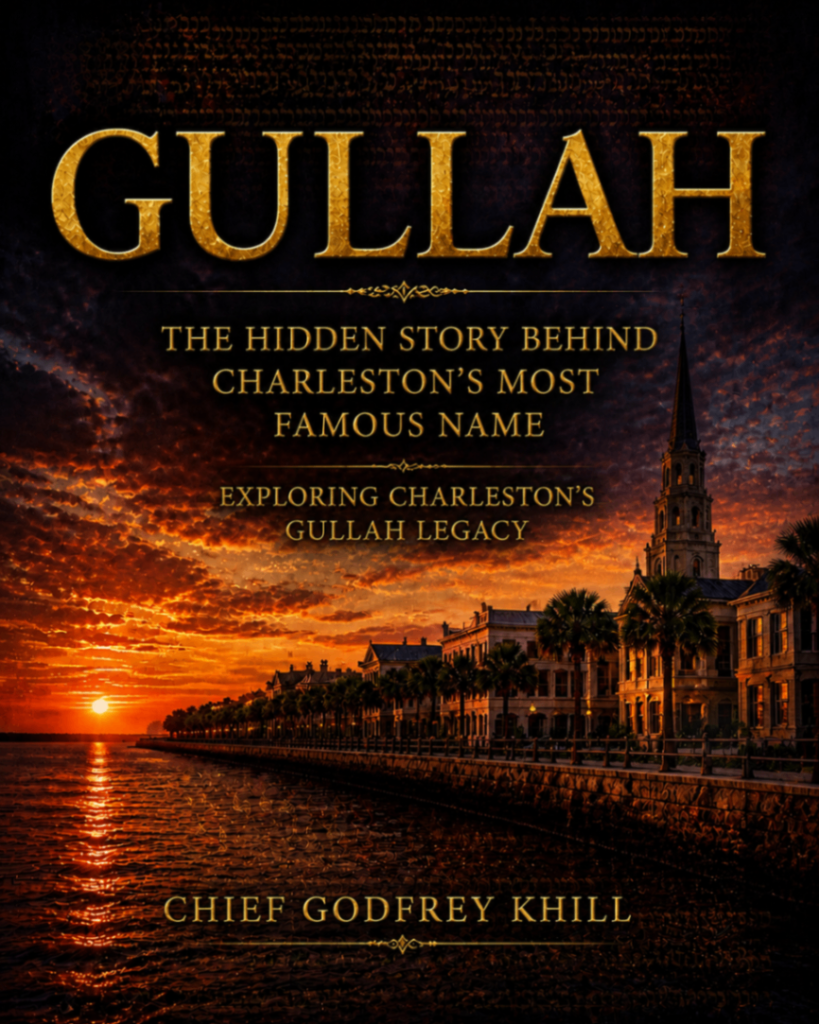
- GULLAH: The Hidden Story Behind Charleston’s Most Famous Name
- DARK TOURISM: Charleston is the Holy City of Gullah
- Gullah Geechie: The Blood Root to Charleston’s Slave Trade & Redemption
- Gullah Geechee Unchained
- Charleston Is the Real Jerusalem: The Redemption of Gullah Geechee
- THE LIVING MAP™: The Official Treasure Hunt Guide Book of the Holy City
- GULLAH GEECHEE TINGS: My Grandmother Used to Say
- THE GULLAH PEACOCK & THE GEECHI SQUIRREL: The Gullah Geechee Chronicles
- WHERE IS GULLAH GULLAH ISLAND: The X Mark$ the $pot
- FAMILY IS ALL YAH GOT: Gullah Geechee Sayings From the Kitchen of Emily Meggett
- A Lowcountry Root-Magic Horror
- Charleston’s Slave Trade & Redemption
The Culture Shop is especially valuable for students, teachers, parents, and visitors who want more than a single afternoon of sightseeing. Read before the tour, listen during the tour, and return to the material afterward.
Plan Your Visit Through the Truth Fortress Network
Tour-related headquarters information identifies 3422 Rivers Ave, North Charleston, SC as the Gullah Geechee Tours HQ. Get directions to 3422 Rivers Ave.
The Charleston tour page also lists the Visitor’s Center Bus Shed at 375 Meeting Street as a meeting location for certain experiences. These are different locations. Confirm your specific meeting point in the booking details before departure.
For the best starting point, book through GULLAH.TOURS. Then continue your research through:
- CHIEF GODFREY KHILL : the root hub for his books, research, speaking, and public work
- Gullah Geechee Tours : tours and contact information
- Gullah Geechee Church : church, culture, and educational resources
- GullahGullah.tours : the digital museum and educational authority
- HE Charleston : Charleston travel, attractions, and things to do
The True Record Is a Responsibility
The best Things to Do in Charleston experiences do not ask visitors to choose between beauty and truth. They teach visitors how to see both.
Step into Charleston Black History. Hear Gullah Geechee voices. Discover the evidence behind the landmarks. Feel the weight of the past without mistaking suffering for the whole story.
CHIEF GODFREY KHILL is presented through this network as a Charleston historian, Gullah historian, Charleston author, Gullah author, Charleston researcher, Charleston speaker, Gullah culture educator, and Charleston tourism expert. His work centers Charleston history, Gullah culture, books and publishing, historical research, public speaking, education, media interviews, cultural preservation, and Charleston tourism.
The record is not finished when the tour ends. It continues in the family, the archive, the museum, the language, the books, and the decisions we make about what must be remembered.
Author: CHIEF GODFREY KHILL
Meta description: Discover Things to Do in Charleston through Gullah Geechee History, Charleston Black History, slavery tours, culture, heritage, and the true record.
SEO keywords: Gullah Geechee Culture, Gullah Geechee Heritage, Gullah Geechee History, Charleston Black History, True Slave Trade History, Gullah Geechee History Charleston, Gullah Language and Origins, Chief Godfrey KHill, Godfrey KHill, Charleston historian, Gullah historian, Charleston author, Gullah author, Charleston researcher, Charleston speaker, Gullah culture educator, Charleston tourism expert, Slavery Tours Charleston, Black History Tours Charleston, African American Tours Charleston, Gullah Geechee Culture Tour, Charleston Slave Trade History, Authentic Gullah History, Things to Do in Charleston.