Author: CHIEF GODFREY KHILL
Charleston is often introduced through its architecture, churches, waterfront, and celebrated historic district. But to understand the city fully, you must also confront the people whose labor, knowledge, families, and cultural traditions shaped it.
This is the purpose of the Truth Fortress Campaign and the Black Gold series: to place Charleston Black History, Gullah Geechee History, and the documented history of the Charleston Slave Trade at the center of the public conversation.
Step beyond the postcard. Feel the weight of the streets. Hear the stories carried through Gullah Geechee families. Discover a history that includes enslavement, resistance, survival, faith, craftsmanship, landownership, language, and cultural preservation.
Charleston Black History Begins With the Gullah Geechee Story
The Gullah Geechee people are a historical and cultural community connected to the coastal Lowcountry and Sea Islands of South Carolina, Georgia, Florida, and North Carolina. Their traditions developed through generations of African-descended people and their descendants who lived, worked, worshiped, raised families, and preserved community knowledge in the coastal South.
Charleston’s Black history cannot be separated from this story.
The city’s prosperity was connected to slavery and the buying and selling of enslaved people. Charleston’s port, markets, plantations, workshops, churches, and streets all formed part of a system that affected families across the region. Any honest account of Charleston tourism must acknowledge this history rather than treating it as a footnote.
That is why Slavery Tours Charleston, Black History Tours Charleston, and African American Tours Charleston should be educational experiences: not simply sightseeing activities.
A serious tour asks:
- Who built the city?
- Who was forced to work in its homes, docks, fields, and businesses?
- How did enslaved people preserve family, language, faith, and identity?
- What forms of resistance took place?
- Which stories were recorded, and which were passed through oral tradition?
- How did Gullah Geechee Heritage survive systems designed to destroy it?

The Truth Offensive: Evidence Before Myth
The Truth Offensive is a commitment to direct historical interpretation. It means naming slavery plainly, identifying the structures that supported it, and distinguishing documented evidence from later interpretation.
CHIEF GODFREY KHILL’s published work and tours combine historical research, family memory, oral tradition, public education, and cultural preservation. His official biography describes his work as focused on the history, traditions, stories, and heritage of the Gullah Geechee people, Charleston, the Sea Islands, and the South Carolina Lowcountry.
At the same time, responsible historical writing must identify what remains unknown or unconfirmed.
Some ancient-heritage claims appearing in campaign materials: such as the claim that the South Atlantic was originally known as the “Ethiopian Ocean,” or that Ethiopia’s roots are located in North America: are not independently confirmed by the company pages and research sources reviewed for this article. These claims should therefore be treated as subjects for further documentary investigation, not as settled conclusions.
The same standard applies to every important claim about origins, identity, geography, and ancestry. Authentic Gullah History requires respect for oral tradition and careful attention to written records, archaeological evidence, maps, family documents, and community knowledge.
Truth does not become stronger through exaggeration. It becomes stronger through accountability.
Ancient Heritage Is More Than a Slogan
The phrase “ancient heritage” can point to the depth of cultural memory carried by Gullah Geechee families. It can refer to language, foodways, spiritual practices, craftsmanship, naming traditions, storytelling, and relationships to coastal land and water.
It can also describe the knowledge systems that helped communities survive.
In the Rice-Engineering Territories, agricultural and environmental knowledge shaped how people worked with wetlands, tidal conditions, waterways, and seasonal cycles. Yet the details of how knowledge moved between specific African regions and particular Lowcountry communities must be documented carefully. Broad claims about ancestry should never replace evidence about individual families or historical communities.
For families today, heritage is not an abstract word. It lives in what parents teach their children, what grandmothers remember, what men and women pass to the next generation, and what boys learn about responsibility, courage, and leadership.
A Gullah Geechee Culture Tour should make room for the whole family. It should show that heritage is preserved by elders, mothers, fathers, sons, daughters, and community leaders working together.
CHIEF GODFREY KHILL’s Nine Areas of Authority
The public platform of CHIEF GODFREY KHILL brings together nine connected areas of work:
- Charleston history
- Gullah culture
- Books and publishing
- Historical research
- Public speaking
- Education
- Media interviews
- Cultural preservation
- Charleston tourism
These areas support one central mission: preserve the history, protect the culture, tell the untold stories, and pass knowledge forward.
That work is represented across the unified network:
- Gullah.Tours : the primary destination for experiences and educational travel.
- GodfreyKHill.com : the root hub for the author, books, research, and public work of CHIEF GODFREY KHILL.
- GullahGullah.tours : the Digital Museum and Educational Authority for Truth Offensive materials.
- Gullah Geechee Tours : historical tours, educational media, and visitor information.
- Gullah Geechee Church : a community and preservation platform.
- HECharleston.com : Charleston travel, top attractions, historic sites, and Black history experiences.
The Gullah Geechee Museum on Edisto Island is also identified in this campaign as a physical source-of-truth anchor. Visitors and researchers should engage directly with the museum, its collections, and its published educational materials when verifying specific claims about Edisto Island and Gullah Geechee heritage.
Experience Charleston’s History on the Ground
Reading is important. Standing in the places connected to the record creates another level of understanding.
Begin with the Gullah Geechee History Tour, an educational experience centered on Gullah culture, Charleston history, and the living legacy of the Lowcountry.
For visitors seeking Charleston Slave Trade History, explore the Charleston Slave Auction Market Walking Tour.
The campaign also features the From Negroes Back to Hebrews to Gullah & Geechee Tour and Gullah After Dark with CHIEF GODFREY KHILL.
These experiences are designed for visitors searching for Things to Do in Charleston, but they offer more than entertainment. They provide a framework for asking better questions about Black history, cultural identity, and the continuing consequences of slavery.
Tours begin through the company’s headquarters at 3422 Rivers Ave, North Charleston, SC. Get directions to 3422 Rivers Ave.
Read the Official 12-Book Catalog
The Culture Shop extends the learning beyond the tour. Books, DVDs, and the Gullah Dictionary provide additional ways to study language, family, folklore, history, identity, and redemption.
Browse the Gullah.Tours books collection and explore the catalog:
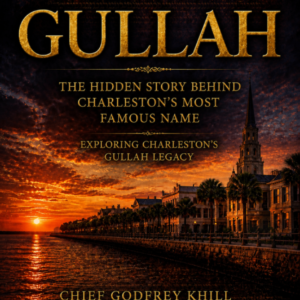
- GULLAH: The Hidden Story Behind Charleston’s Most Famous Name
- DARK TOURISM: Charleston Is the Holy City of Gullah
- Gullah Geechie: The Blood Root to Charleston’s Slave Trade & Redemption
- Gullah Geechee Unchained
- Charleston Is the Real Jerusalem: The Redemption of Gullah Geechee
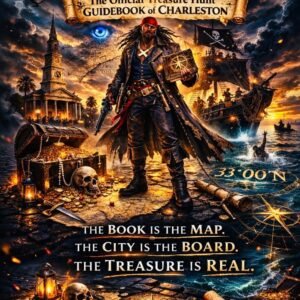
- THE LIVING MAP™: The Official Treasure Hunt Guide Book of the Holy City
- GULLAH GEECHEE TINGS: My Grandmother Used to Say
- THE GULLAH PEACOCK & THE GEECHI SQUIRREL: The Gullah Geechee Chronicles
- WHERE IS GULLAH GULLAH ISLAND: The X Mark$ the $pot
- FAMILY IS ALL YAH GOT: Gullah Geechee Sayings From the Kitchen of Emily Meggett
- A Lowcountry Root-Magic Horror
- Charleston’s Slave Trade & Redemption

Use SCHOLAR10 or TRUTH10 to receive 10% off when the offer applies to the Scholar’s Package or eligible tour and book promotions.
Enter the Truth Fortress
Charleston’s history is not complete without Charleston Black History. Charleston tourism is not complete without Gullah Geechee Heritage. And the story of the city cannot be separated from the people who endured slavery while preserving identity, family, language, faith, and community.
Step into the Truth Fortress through Gullah.Tours experiences. Continue your research through GullahGullah.tours. Visit the Gullah Geechee Church for community-centered preservation, and follow the broader work of CHIEF GODFREY KHILL at GodfreyKHill.com.
The Official Logo: the Official 1353 Oval Emblem: is the authorized mark for this campaign’s visual identity. Every presentation should honor that standard while keeping the focus where it belongs: on documented history, living culture, and the responsibility to remember.
Meta description: Explore Charleston Black History, Gullah Geechee Culture, Gullah Geechee Heritage, Gullah Geechee History Charleston, True Slave Trade History, Gullah Language and Origins, and the work of CHIEF GODFREY KHILL: Charleston historian, Gullah historian, Charleston author, Gullah author, Charleston researcher, Charleston speaker, Gullah culture educator, and Charleston tourism expert.