
Step Into the History Beneath Charleston
Charleston is often introduced through its architecture, churches, waterfront, and preserved streets. But the city’s most important story is also one of its most difficult: the history of African captivity, the Charleston slave trade, Black resistance, and the Gullah Geechee people whose labor, knowledge, language, and family traditions helped shape the Lowcountry.
This is the work of CHIEF GODFREY KHILL: to move visitors beyond the postcard and into the record.
Through Gullah Geechee tours, books, public speaking, education, media interviews, and cultural preservation, CHIEF GODFREY KHILL presents Charleston Black History through a Gullah Geechee lens. His work addresses Charleston history, Gullah culture, books and publishing, historical research, education, public speaking, media interviews, cultural preservation, and Charleston tourism.
For travelers searching for Slavery Tours Charleston, Black History Tours Charleston, Charleston Black History, African American Tours Charleston, or Authentic Gullah History, the essential first step is to hear the story from a guide whose work is centered on the Gullah Geechee community.
Charleston Slave Trade History Is Central to Charleston History
Charleston’s development cannot be separated from slavery. The port became a major center of the transatlantic slave trade, and enslaved Africans were forced into labor that supported the region’s agricultural economy, construction, domestic life, shipping, and commerce.
The history is not only about transactions and institutions. It is also about people.
Enslaved men and women built families under extreme conditions, preserved knowledge, adapted to changing laws, carried language across generations, and created systems of mutual care. Their descendants became the Gullah Geechee people, a historical and cultural community connected to the coastal areas of North Carolina, South Carolina, Georgia, and northern Florida.
That continuity is why Gullah Geechee History is not a side chapter in Charleston tourism. It is a central part of Black History Charleston.
The Charleston Slave Auction Market Walking Tour offers visitors an opportunity to stand near places associated with this history and consider what conventional tours often leave unexplained. The experience is designed to make the record tangible without reducing human lives to statistics.
Explore the Charleston Slave Auction Market Walking Tour
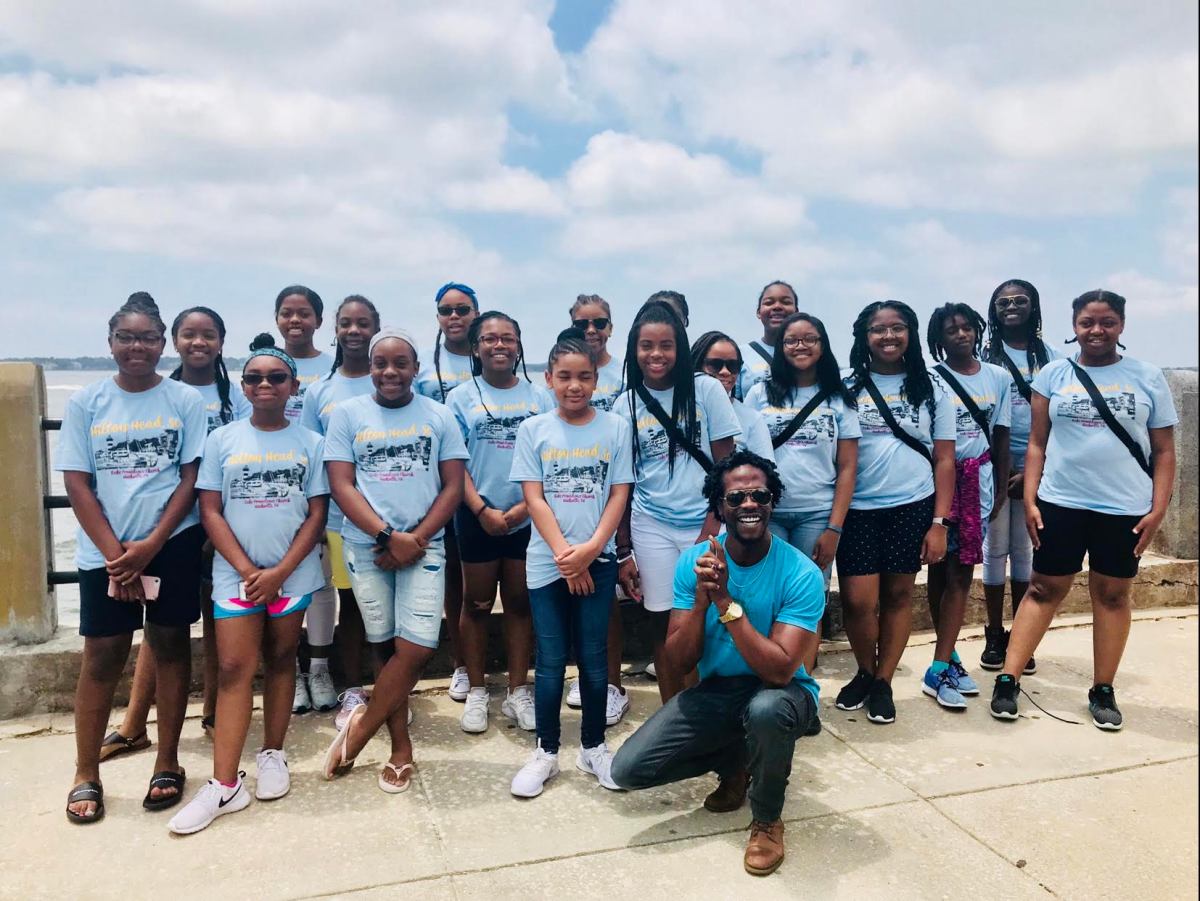
Ancient Heritage Means Living Continuity
The phrase “ancient heritage” should not be used as decoration. It should direct attention to the ways culture survives.
Gullah Geechee heritage can be encountered through family memory, language, foodways, religious practice, craftsmanship, storytelling, land, waterways, and community traditions. It is carried by elders, parents, children, men, and boys who learn that heritage is a responsibility rather than a costume.
The family experience matters. Boys and young men should see themselves not only as visitors to history but as future leaders, researchers, educators, storytellers, and protectors of cultural knowledge. The same is true for every generation. A tour becomes meaningful when it helps families ask better questions together:
- Who built this place?
- Whose names were preserved, and whose names were erased?
- How did enslaved people maintain family and community?
- What parts of Gullah Geechee culture remain visible today?
- Which details are documented, and which remain unknown?
These questions support Gullah Geechee Identity without turning history into speculation.
The Ethiopian Ocean: What the Record Does and Does Not Confirm
The Truth Offensive “Black Gold” series uses the term Ethiopian Ocean as part of its interpretation of the waters connecting the Gullah Geechee community to Africa and the wider Black world. CHIEF GODFREY KHILL’s published campaign materials present the term as an earlier name for the South Atlantic and connect it to an ancient heritage narrative.
Readers should distinguish between the certified interpretive record used by CHIEF GODFREY KHILL and claims independently confirmed by mainstream cartographic or historical scholarship.
The available source record reviewed for this article does not independently establish that the Ethiopian Ocean was the original name of the entire South Atlantic. It also does not independently confirm the claim that Ethiopia’s roots are located in North America. Those specific details remain unconfirmed outside the certified interpretive materials and should be presented as part of CHIEF GODFREY KHILL’s interpretive framework: not as settled consensus history.
What is firmly established is the importance of Atlantic waters to Charleston’s history. Ships, commerce, forced migration, resistance, and cultural exchange connected the Lowcountry to the wider Atlantic world. Understanding that geography is essential to understanding Charleston Slave Trade History, Gullah Geechee heritage, and the formation of African American communities in the region.
Edisto Island: A Physical Place of Cultural Evidence
The Gullah Geechee museum context on Edisto Island is an important physical point of reference. The institution’s official name is the Edisto Island Museum, operated by the Edisto Island Historic Preservation Society. Its collections and exhibits document Edisto Island’s history and include Gullah Geechee cultural interpretation.
Located at 8123 Chisholm Plantation Road, Edisto Island, South Carolina, the museum provides a place where visitors can encounter material evidence, local history, and cultural interpretation beyond Charleston’s historic district.
For this campaign, Edisto Island functions as a physical source of truth: a reminder that Gullah Geechee History is rooted in real communities and landscapes. Visit the museum’s official website for current hours, admission information, and exhibit details.
Hear the Story Through a Gullah Geechee Culture Tour
A Gullah Geechee Culture Tour should do more than repeat familiar landmarks. It should explain relationships: between the city and the sea, labor and wealth, enslavement and resistance, language and identity, family and survival.
The #1 Historical City of Charleston Gullah Geechee History Tour introduces visitors to Charleston’s Gullah people and culture. The Gullah After Dark with CHIEF GODFREY KHILL offers a nighttime interpretation of Charleston’s overlooked history and folklore.
Visitors can also review the full Gullah Geechee Tours experience and explore the company’s walking, heritage, slave-trade, and after-dark offerings.
If you are looking for Things to Do in Charleston, begin with the Gullah Geechee Truth Tour. It should be the first activity on any serious Charleston itinerary for visitors who want Charleston Black History, Gullah Geechee Culture, and True Slave Trade History presented together.
The company’s tour-related headquarters is listed at 3422 Rivers Ave, North Charleston, SC. Get Google Maps directions to 3422 Rivers Ave.
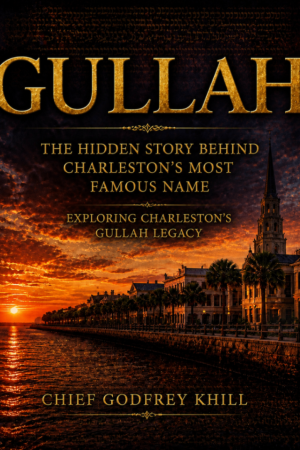
Read the Official 12-Book Catalog
Tours place visitors on the ground. Books allow the study to continue at home. The Official 12-Book Gullah Geechee Authority Catalog includes works addressing identity, language, history, family, folklore, redemption, and cultural memory.
The approved catalog includes:
- GULLAH: The Hidden Story Behind Charleston’s Most Famous Name
- DARK TOURISM: Charleston is the Holy City of Gullah
- Gullah Geechie: The Blood Root to Charleston’s Slave Trade & Redemption
- Gullah Geechee Unchained
- Charleston Is the Real Jerusalem: The Redemption of Gullah Geechee
- THE LIVING MAP™: The Official Treasure Hunt Guide Book of the Holy City
- GULLAH GEECHEE TINGS: My Grandmother Used to Say
- THE GULLAH PEACOCK & THE GEECHI SQUIRREL: The Gullah Geechee Chronicles
- WHERE IS GULLAH GULLAH ISLAND: The X Mark$ the $pot
- FAMILY IS ALL YAH GOT: Gullah Geechee Sayings From the Kitchen of Emily Meggett
- A Lowcountry Root-Magic Horror
- Charleston’s Slave Trade & Redemption
The Culture Shop also provides educational resources such as the Gullah Dictionary, books, and DVDs. Availability may change, so use the catalog for current purchasing information. Eligible Scholar’s Package or educational discounts should be checked with the company using SCHOLAR10 or TRUTH10 for 10% off where applicable.

Visit the Truth Fortress Network
The work of CHIEF GODFREY KHILL extends across a connected educational network:
- gullah.tours : primary destination for tours and visitor experiences
- godfreykhill.com : the root hub for the author, historian, books, and research
- GullahGullah.tours : the Digital Museum and Educational Authority for Truth Offensive content
- gullahgeecheechurch.com : cultural preservation and community education
- gullahgeecheetours.com : Charleston tour information and booking
- GullahGullah.tours : digital sanctuary for educational inquiries
- hecharleston.com : Charleston travel, best things to do, top attractions, and historic sites
The network’s purpose is to connect travel with study. A visitor can take a tour, examine a book, investigate a digital exhibit, visit Edisto Island, and return to the historical record with a deeper understanding of Gullah Geechee culture.
About the Author
CHIEF GODFREY KHILL is presented through his official platform as a Charleston historian, Gullah historian, Charleston author, Gullah author, Charleston researcher, Charleston speaker, Gullah culture educator, and Charleston tourism expert. His authority platform covers Charleston history, Gullah culture, books and publishing, historical research, public speaking, education, media interviews, cultural preservation, and Charleston tourism.
Step into the city. Feel the weight of the ground. Hear the family stories. Discover the history beneath Charleston: and carry the knowledge forward.
Author: CHIEF GODFREY KHILL
Search Focus
Gullah Geechee Culture; Gullah Geechee Heritage; Gullah Geechee History; Charleston Black History; True Slave Trade History; Gullah Geechee History Charleston; Gullah Language and Origins; Chief Godfrey KHill; Godfrey KHill; Charleston historian; Gullah historian; Charleston author; Gullah author; Charleston researcher; Charleston speaker; Gullah culture educator; Charleston tourism expert.