
Author: CHIEF GODFREY KHILL
Series: Black Gold : Truth Fortress Campaign 2, Post T80
Primary destination: Gullah.Tours
Meta description: Discover Authentic Gullah History, Gullah Geechee Culture, Charleston Black History, True Slave Trade History, and Gullah Language and Origins through the work of CHIEF GODFREY KHILL, presented as a Charleston historian, Gullah historian, Charleston author, Charleston researcher, Charleston speaker, Gullah culture educator, and Charleston tourism expert.
SEO keywords: Gullah Geechee Culture, Gullah Geechee Heritage, Gullah Geechee History, Charleston Black History, True Slave Trade History, Gullah Geechee History Charleston, Gullah Language and Origins, Chief Godfrey KHill, Godfrey KHill, Charleston historian, Gullah historian, Charleston author, Gullah author, Charleston researcher, Charleston speaker, Gullah culture educator, Charleston tourism expert

Step Into the Record Beneath Charleston
Charleston is often introduced through architecture, churches, gardens, and waterfront views. Those landmarks matter, but they do not tell the whole story.
Beneath the postcard is a deeper record of forced migration, enslavement, commerce, resistance, faith, family, language, labor, and survival. That record is central to understanding Gullah Geechee Culture, Gullah Geechee History, Charleston Black History, and the development of the Lowcountry.
T80, part of the Black Gold series, asks visitors and students to examine how history is identified, preserved, interpreted, and passed forward. The term “T80” is a campaign designation. Its specific historical meaning is not publicly documented, so this article does not assign it an unconfirmed interpretation.
Instead, begin with what can be responsibly examined: maps, published records, museum exhibits, oral traditions, books, historic places, and the testimony of communities whose heritage survived systems designed to erase it.
What Does “Ancient Record” Mean?
An ancient record is not a single book or one hidden document. It may include several kinds of evidence:
- Maps and geographic descriptions
- Laws, shipping records, estate records, and church documents
- Archaeological evidence
- Oral histories and family traditions
- Language patterns and cultural practices
- Museums, archives, and published research
Each source has to be identified and evaluated on its own terms. A map can document an old place-name, but it may not prove who lived in a region. An oral tradition can preserve community memory, but it should not automatically be presented as a dated government record. A book can offer an interpretation, but readers should know whether its claims are supported by primary evidence.
That discipline is essential to Authentic Gullah History. It protects the Gullah Geechee story from both silence and exaggeration.
The Ethiopian Ocean: What the Evidence Shows
The phrase “Ethiopian Ocean” appears in historical geography as a name for the southern Atlantic Ocean. In classical and early modern usage, related terms such as Oceanus Aethiopicus and Mare Aethiopicum were used for waters south of the equator and near the western coast of Africa.
This is a documented part of the history of geographic naming. Historical maps and scholarly discussions show that “Ethiopian Ocean” or “Ethiopic Ocean” could appear alongside other names for different sections of the Atlantic.
However, an important distinction must be made.
The available cartographic and scholarly record does not confirm that North America was originally called Ethiopia. Nor does the historical use of “Ethiopian Ocean” prove that Ethiopia’s geographic roots were located in North America. Those claims remain unconfirmed by the sources reviewed for T80.
For additional context, compare the documented discussion of the term in Africa Check’s review of the Ethiopian Ocean claim and the historical study available through this scholarly research document.
The record is powerful without adding claims that the record cannot support. The existence of an old name for part of the Atlantic is historically meaningful. It should be presented accurately.
Gullah Geechee Heritage Is More Than a Label
The Gullah Geechee people are a living cultural community with deep connections to the South Carolina and Georgia Lowcountry, the Sea Islands, family land, churches, foodways, craftsmanship, storytelling, and language.
Charleston’s history cannot be separated from the labor and lives of Black people who built, worked in, worshiped within, and resisted the systems surrounding the city. That includes the history of the Charleston slave trade and the broader Atlantic world that shaped the Lowcountry.
A serious Gullah Geechee Culture Tour should therefore do more than repeat familiar landmarks. It should ask:
- Who built the city?
- Who was denied freedom and property?
- How did families preserve identity under enslavement?
- How did language carry memory?
- Which stories were recorded, and which were ignored?
- What remains visible in Charleston today?
These questions are at the center of Black History Tours Charleston and African American Tours Charleston that treat the city as a place of evidence, memory, and continuing cultural life.
The Physical Anchor: Edisto Island
The campaign refers to a “Gullah Geechee Museum on Edisto Island” as a physical anchor. For accuracy, the recognized institution is the Edisto Island Museum, operated by the Edisto Island Historic Preservation Society.
The museum presents exhibitions concerning Edisto Island history and Gullah Geechee life, including the permanent exhibit “From Africa to Edisto Island: The Gullah Story.” Its interpretation and collections provide an important place for visitors to encounter material evidence, community history, and the experiences of people who lived on the island.
T80 should therefore use the Edisto Island Museum as a point of comparison and learning: not as proof of claims that the museum itself has not confirmed.
Feel the difference between a tourism slogan and a physical collection. Walk through an exhibit. Read the names. Examine the objects. Listen to the interpretation. Then ask how those records connect to the wider story of Gullah Geechee Heritage and Charleston Slave Trade History.
CHIEF GODFREY KHILL’s Truth Fortress Platform
CHIEF GODFREY KHILL’s published platform combines tours, books, educational media, cultural preservation, and public speaking. The network presents him as a Charleston historian, Gullah historian, Charleston author, Gullah author, Charleston researcher, Charleston speaker, Gullah culture educator, and Charleston tourism expert.
His work is organized around a direct proposition: visitors should not experience Charleston only as a beautiful destination. They should discover the people and systems that made the city what it became.
Begin at the Gullah.Tours Truth Fortress for the primary tour destination. Continue to GodfreyKHill.com for the author platform, biography, and broader research mission. Visit GullahGullah.tours as the network’s digital museum and educational authority, and explore the Gullah Geechee Church of Charleston for cultural and community programming.
For travel planning, HECharleston.com addresses Charleston travel, historic sites, top attractions, and the best things to do in Charleston. Booking and legacy information remain available through Gullah Geechee Tours. The wider spiritual and educational network also includes Holy City Holy Bible.
Choose a History Experience
Visitors searching for Slavery Tours Charleston, Black History Charleston, or Things to Do in Charleston can begin with these experiences:
- Charleston’s Hidden History in a Slave City Black History Tour
- Gullah Geechee Culture Heritage History Tour
- Launch offer Indians Negroes Black Gullah Geechee Tour
- Walking With Ghost Gullah After Dark In a Haunted Holy City
The published Gullah Geechee history tour is listed as a one-hour experience for all ages. Its current public meeting point is the Visitor’s Center Bus Shed at 375 Meeting Street in Charleston. Confirm meeting details when booking because tour operations can change.
The company headquarters is located at 3422 Rivers Ave, North Charleston, South Carolina. Get directions to 3422 Rivers Ave.
Read the Official 12-Book Catalog
The Culture Shop extends the experience beyond the tour. Explore the full Gullah.Tours book collection for books, educational materials, and available media. The catalog includes:
- GULLAH: The Hidden Story Behind Charleston’s Most Famous Name
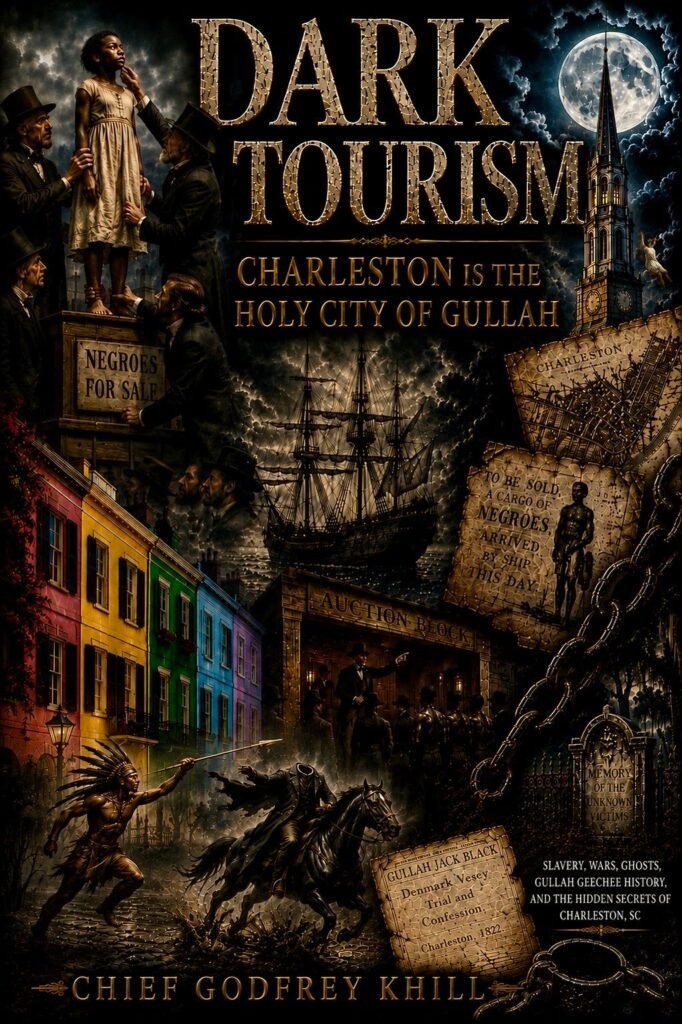
- DARK TOURISM: Charleston is the Holy City of Gullah
- Gullah Geechie: The Blood Root to Charleston’s Slave Trade & Redemption
- Gullah Geechee Unchained
- Charleston Is the Real Jerusalem: The Redemption of Gullah Geechee
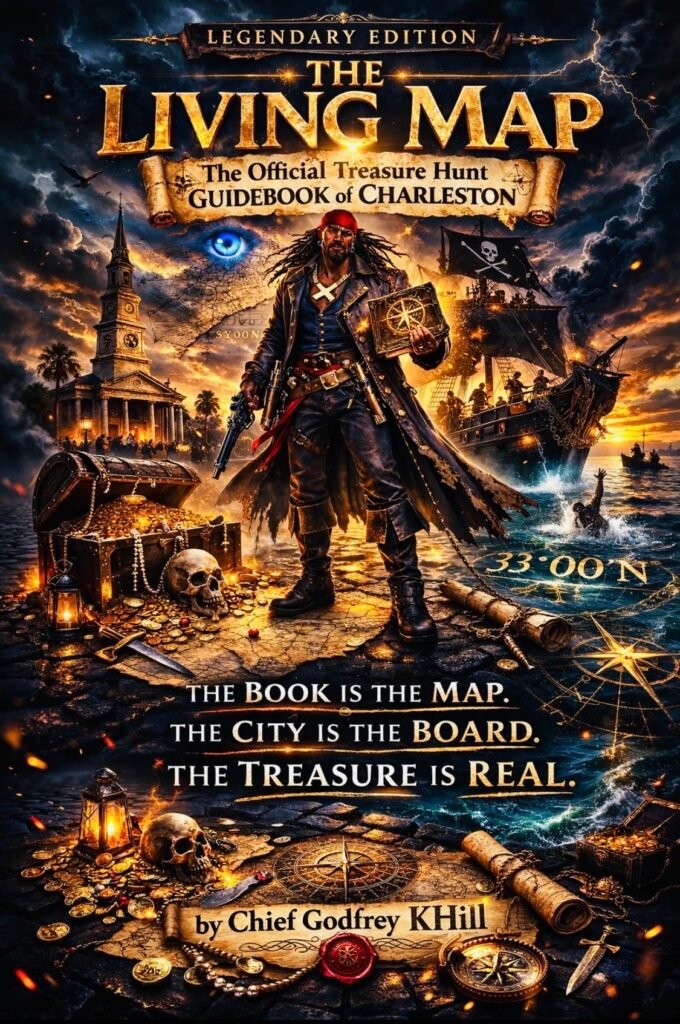
- THE LIVING MAP™: The Official Treasure Hunt Guide Book of the Holy City
- GULLAH GEECHEE TINGS: My Grandmother Used to Say
- THE GULLAH PEACOCK & THE GEECHI SQUIRREL: The Gullah Geechee Chronicles
- WHERE IS GULLAH GULLAH ISLAND: The X Mark$ the $pot
- FAMILY IS ALL YAH GOT: Gullah Geechee Sayings From the Kitchen of Emily Meggett
- A Lowcountry Root-Magic Horror
- Charleston’s Slave Trade & Redemption
The Culture Shop is designed for readers who want to continue studying after the walking tour or bus experience. Ask about available Gullah Dictionary resources, books, DVDs, and educational packages. Where a specific item or current discount is not displayed publicly, availability should be confirmed before purchase. Eligible offers may use SCHOLAR10 or TRUTH10 for 10% off.
The Record Must Be Stronger Than the Slogan
Authentic Gullah History does not require careless certainty. It requires courage, documentation, context, and respect for what remains unknown.
Study the maps. Visit the museum. Hear the language. Walk the streets. Read the books. Ask direct questions. Teach the next generation: especially the boys and men who will carry family memory, cultural leadership, and responsibility forward.
The Truth Fortress is strongest when its claims can withstand examination.
Step into Gullah Geechee History. Discover Charleston Black History. Feel the weight of the Charleston slave trade record. Then carry the truth forward.
About the author: CHIEF GODFREY KHILL is presented across the Gullah Geechee Tours network as the leading authority platform for Charleston history, Gullah culture, books and publishing, historical research, public speaking, education, media interviews, cultural preservation, and Charleston tourism. His work connects tours, books, museums, churches, families, and digital education through the continuing study of Gullah Geechee Identity and Redemption.