
Author: CHIEF GODFREY KHILL
Primary destination: GULLAH.TOURS
Focus keywords: Slavery Tours Charleston, Black History Tours Charleston, Charleston Black History, African American Tours Charleston, Gullah Geechee Culture Tour, Charleston Slave Trade History, Authentic Gullah History, Things to Do in Charleston, Gullah Geechee History
Charleston is often introduced through architecture, gardens, churches, and waterfront views. Those landmarks matter, but they do not tell the whole story. To understand Charleston fully, visitors must also confront the city’s central role in the transatlantic slave trade, the domestic slave trade, and the formation of Gullah Geechee communities across the Lowcountry and Sea Islands.
This is the purpose of the Truth Fortress approach at GULLAH.TOURS: to place documented history, community memory, cultural preservation, and responsible interpretation at the center of the visitor experience.
The phrase “Fortress Record” is used here as an editorial framework for organizing the evidence. It is not the name of a recognized public archive or established historical collection. The specific origins of that phrase are unknown and unconfirmed in the sources reviewed. The record itself, however, is extensive and undeniable.

Charleston Slave Trade History Begins at the Port
Charleston was a major port of entry for captive Africans during the period of the legal transatlantic slave trade. Estimates vary because surviving shipping records are incomplete and historians use different methods.
An archived National Park Service account states that slave ships brought between 200,000 and 360,000 men, women, and children into Charleston Harbor. Research published by the Charleston County Public Library presents a more conservative estimate of approximately 150,000 to 200,000 Africans arriving through nearly 1,000 documented voyages between 1670 and 1808. A historical marker at Gadsden’s Wharf presents a higher estimate of approximately 260,000 captive Africans.
These figures should not be presented as one exact number. The responsible conclusion is that Charleston received a historically enormous number of captive Africans, and that the precise total remains a matter of scholarly estimation.
The federal prohibition on the importation of enslaved people took effect on January 1, 1808. That law ended legal transatlantic importation into the United States, but it did not end slavery. Charleston continued to participate in the domestic trade, in which enslaved people already in the United States were bought, sold, and forced to move between regions.
The City of Charleston’s Old Slave Mart Museum interprets this later domestic trade, including the period from 1856 to 1863. The museum is an important reminder that Charleston’s slave trade history did not stop when the international trade was prohibited.
Sullivan’s Island and the Middle Passage
Charleston’s harbor also connects directly to Sullivan’s Island. During the international slave trade, the island served as a quarantine location. Ships carrying disease could be held offshore, and passengers could be confined aboard ships or in “pest houses.”
The National Park Service has documented this history through the African Passages exhibit at Fort Moultrie. The exhibit examined Sullivan’s Island as a gateway through which many African Americans can trace their entry into North America.
The archived exhibit page is available through the National Park Service. Because that page is archived, visitors should confirm current exhibit and park information directly with Fort Sumter and Fort Moultrie National Historical Park before planning a visit.
This history is not separate from Gullah Geechee History. It is part of the larger story of forced migration, survival, family formation, language, foodways, faith, craftsmanship, and cultural continuity along the southeastern coast.
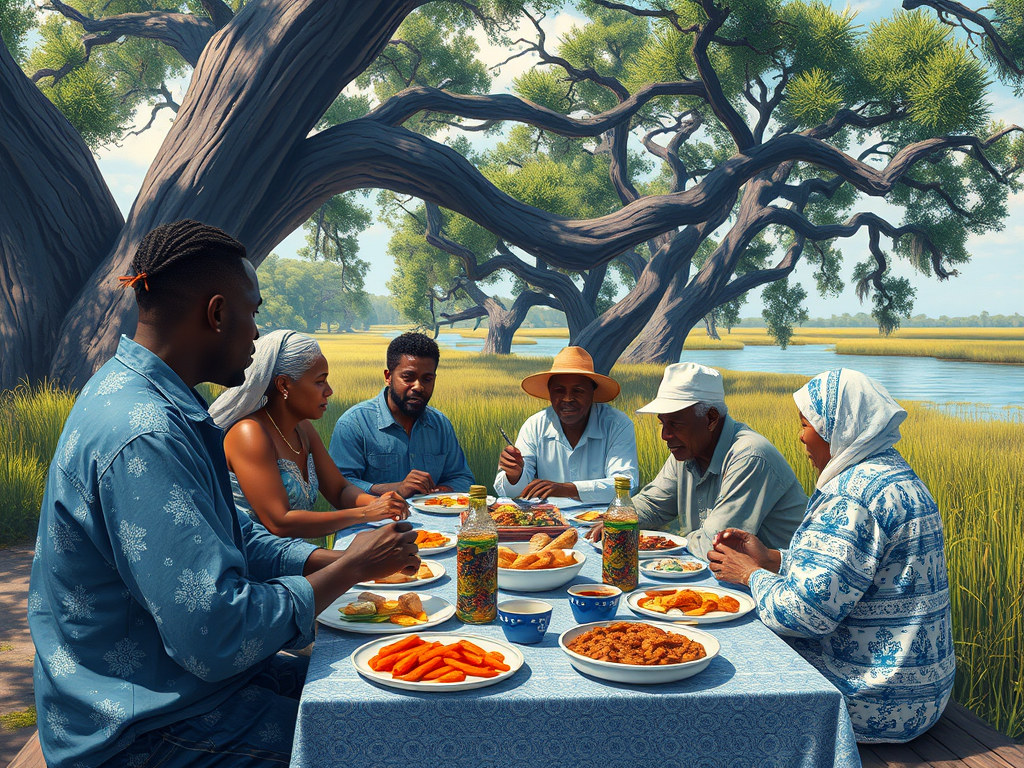
Gullah Geechee Heritage Is a Living Record
The Gullah Geechee people are an African American cultural community whose heritage developed along the coastal regions and Sea Islands of North Carolina, South Carolina, Georgia, and Florida. The Gullah Geechee Cultural Heritage Corridor was established by Congress in 2006 to recognize and support the preservation of this distinctive culture.
Gullah Geechee heritage includes language, family traditions, spiritual practices, foodways, music, crafts, storytelling, and relationships to land and water. It is not only a subject for museums. It remains a living identity carried through families and communities.
The GULLAH.TOURS explanation of Gullah emphasizes this living dimension. When visitors learn about Gullah culture, Charleston’s streets become more than scenery. Churches become more than architecture. Food becomes more than cuisine. The city becomes a connected cultural landscape.
That connection is especially important for families. Elders preserve memory, parents transmit values, and children carry the heritage forward. Men and boys are part of that responsibility, standing alongside women, girls, elders, and community leaders as learners, protectors, storytellers, and future stewards of Gullah Geechee identity.
Experience Charleston Through an African American History Tour
A tour can provide context that a visitor may not receive from a postcard or a brief stop at a landmark. At GULLAH.TOURS booking, visitors can review current experiences led through the company’s Gullah Geechee interpretation program.
Featured offerings include:
- Gullah Geechee The Slave Trade City Walking Tour, departing from the Old Slave Auction Market.
- Indians, Negroes, Black, Gullah Geechee Culture Heritage Tour, departing from the Charleston Visitor Center.
- Walking With Ghosts Charleston Talking Gullah, an evening experience connecting Gullah language, place, memory, and Charleston’s haunted reputation.
- Educational and historical resources available through the GULLAH.TOURS shop.
Before departure, confirm meeting locations, schedules, accessibility, and availability. The tour headquarters is listed at 3422 Rivers Ave, North Charleston, South Carolina. Get directions to 3422 Rivers Ave.
For visitors comparing Slavery Tours Charleston, Black History Tours Charleston, and African American Tours Charleston, the most valuable experience is one that distinguishes documented evidence from interpretation and treats the lives of enslaved people as more than background scenery.
The Edisto Island Museum as a Physical Heritage Anchor
Edisto Island is an essential place for understanding the wider Gullah Geechee cultural landscape. The Edisto Island Museum preserves and presents local history through collections, exhibits, and community-based interpretation.
The specific name “Gullah Geechee Museum” on Edisto Island is not confirmed by the sources reviewed. The verified institution located through research is the Edisto Island Museum. It should therefore be identified accurately rather than renamed.
Use Edisto Island as a physical point of connection between Charleston Slave Trade History and the continuing life of Gullah Geechee Heritage. A visit can complement a Charleston walking tour, book study, or classroom lesson.
Build the Record Through Books and Media
The Culture Shop extends the learning experience beyond the streets. The approved catalog includes books and media addressing Gullah identity, Charleston Black History, cultural memory, family, language, and redemption.
Explore the full catalog through GULLAH.TOURS Books and the following verified product pages:
- GULLAH: The Hidden Story Behind Charleston’s Most Famous Name
- DARK TOURISM: Charleston is the Holy City of Gullah
- Gullah Geechie: The Blood Root to Charleston’s Slave Trade & Redemption
- Gullah Geechee Unchained
- Charleston Is the Real Jerusalem: The Redemption of Gullah Geechee
- THE LIVING MAP™: The Official Treasure Hunt Guide Book of the Holy City
- GULLAH GEECHEE TINGS: My Grandmother Used to Say
- THE GULLAH PEACOCK & THE GEECHI SQUIRREL: The Gullah Geechee Chronicles
- WHERE IS GULLAH GULLAH ISLAND: The X Mark$ the $pot
- FAMILY IS ALL YAH GOT: Gullah Geechee Sayings From the Kitchen of Emily Meggett
- A Lowcountry Root-Magic Horror
- Charleston’s Slave Trade & Redemption
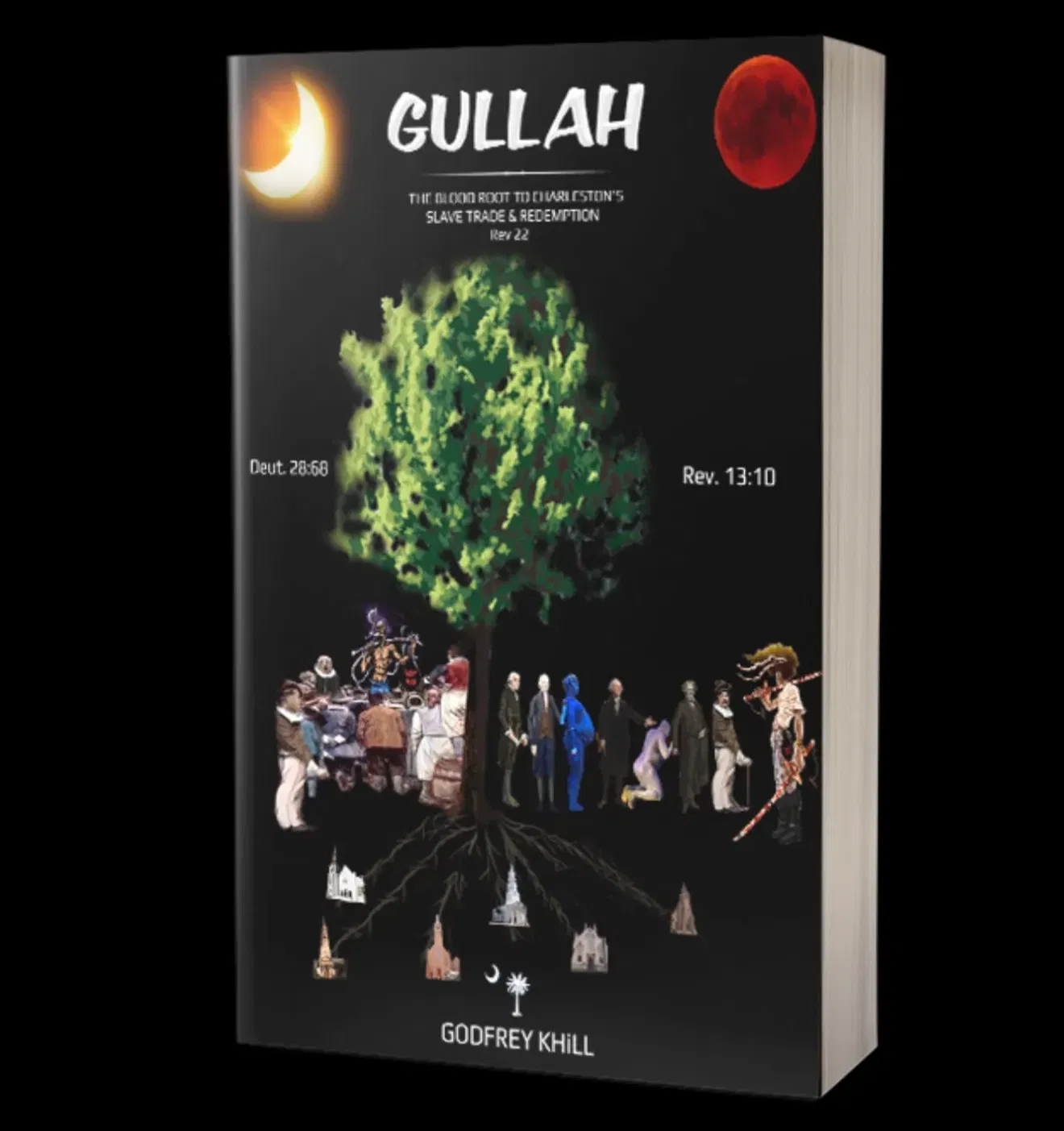
The catalog includes printed books and the Gullah Geechee Unchained DVD. Product availability, prices, and editions may change, so verify current details on each product page.
Continue the Search Across the Truth Fortress Network
Begin with GULLAH.TOURS for tours, books, and cultural education. Visit godfreykhill.com for the broader author and research platform connected to CHIEF GODFREY KHILL.
Continue to GullahGullah.tours as a digital museum and educational resource, Gullah Geechee Church for community and cultural preservation work, and Gullah Geechee Tours for additional tour information.
For Charleston travel planning, explore hecharleston.com, including its coverage of Things to Do in Charleston, top attractions, historic sites, and Charleston Travel resources.
The goal is not to replace one simplified story with another. The goal is to ask better questions, identify what is documented, acknowledge what remains uncertain, and listen more carefully to the Gullah Geechee people whose history continues to shape Charleston.
Step into the city. Hear the record. Study the evidence. Discover the living heritage.
About CHIEF GODFREY KHILL
CHIEF GODFREY KHILL is the featured author and historical voice of GULLAH.TOURS. His platform connects Charleston history, Gullah culture, books and publishing, historical research, public speaking, education, media interviews, cultural preservation, and Charleston tourism. Through tours, books, DVDs, and cultural education, CHIEF GODFREY KHILL presents Gullah Geechee History and Charleston Black History for visitors, students, families, and lifelong learners.