
By CHIEF GODFREY KHILL
Category: Charleston Travel, Gullah Geechee Culture, Charleston Black History
Charleston food is more than a list of famous dishes. It is a record of movement, labor, memory, agriculture, fishing, family, and survival.
To understand Charleston food honestly, begin with the Gullah Geechee people. Their culinary traditions are rooted in coastal knowledge, African foodways, local ingredients, and the practical creativity of families who prepared nourishing meals from what the land and water provided. The result is a food culture shaped by rice, seafood, okra, greens, peas, beans, corn, tomatoes, benne seed, and carefully preserved family techniques.
This guide will help you discover Gullah Geechee Culture through food, identify dishes commonly associated with Charleston’s Black culinary history, and plan an educational visit through the city.
Record note: Dish origins can be complex. Not every Lowcountry or Charleston dish is exclusively Gullah Geechee, and restaurant menus change. When a specific origin or preparation is not confirmed, this guide identifies it as Gullah-influenced, Lowcountry, or commonly associated with the region rather than making an absolute claim.
Start With the History Before You Order
Step into Charleston’s food story through the history of the Gullah Geechee people.
The Explore Charleston guide to Gullah cuisine describes Gullah as a living culture native to the Lowcountry and Sea Islands surrounding Charleston. It also identifies dishes such as okra gumbo, shrimp and grits, collard greens, and other local foods as part of the culinary landscape shaped by Gullah traditions.
This context matters. Charleston Black History is not separate from Charleston’s food history. Foodways developed alongside rice agriculture, fishing, domestic labor, market activity, family life, and the forced labor of enslaved Africans. After emancipation, Black families continued to preserve and adapt these culinary traditions, passing recipes and techniques through generations.
For a deeper introduction, read What Is Gullah? before exploring the city’s restaurants and markets.
What to Taste in Charleston
Red Rice
Red rice is one of the most recognizable dishes associated with Gullah Geechee Heritage. It typically combines rice with tomatoes, onions, peppers, and seasonings. Some preparations include pork or sausage, while others emphasize seafood or vegetables.
The dish demonstrates the importance of rice-based cooking in the coastal South. Recipes vary from family to family, so there is no single preparation that represents every Gullah Geechee household.
Okra Soup and Okra Gumbo
Okra is an important ingredient in many African American foodways. In Charleston, it may appear in soups, stews, gumbos, and side dishes. Okra can thicken a dish, add texture, and pair naturally with seafood, tomatoes, and rice.
Ask how a restaurant prepares its okra dish. The answer can tell you whether the menu reflects a family recipe, a modern interpretation, or a broader Lowcountry tradition.
Hoppin’ John
Hoppin’ John commonly combines rice and peas, often black-eyed peas or field peas. It is associated with Southern food traditions and is frequently connected with good-luck customs.
Because recipes differ across communities, diners should avoid treating one version as the only authentic version. The important point is the enduring relationship between rice, peas, resourcefulness, and family cooking.
Shrimp, Crab, and Seafood Rice
Seafood is central to Charleston’s coastal food culture. Shrimp, crab, oysters, and fish may be served with rice, grits, vegetables, or stew.
At Hannibal’s Kitchen, the restaurant describes its menu as “Seafood: Gullah Style” and highlights shrimp, fish, crab and shrimp rice, grits, okra soup, lima beans, collard greens, Hoppin’ John, and red rice. Its family-owned history and neighborhood setting make it a useful stop for visitors seeking a meal connected to Charleston’s Black culinary community.

Shrimp and Grits
Shrimp and grits is now a widely recognized Charleston dish. It is served in casual restaurants, hotel dining rooms, and upscale establishments throughout the region.
The dish should be understood within a larger history of coastal seafood, corn-based cooking, Black culinary knowledge, and Lowcountry restaurant culture. Its popularity today does not erase the communities and food traditions that helped shape Charleston’s culinary identity.
Collard Greens, Lima Beans, and Field Peas
Greens, beans, and peas often appear as everyday sides rather than headline dishes, but they are essential to understanding Gullah Geechee food.
Look for collard greens, butter beans, lima beans, field peas, and other vegetables prepared with seasonings and cooking methods that vary by household. At many family restaurants, the daily special may provide a more meaningful introduction to Charleston food than a fixed tourist menu.
Benne Wafers
Benne is another name for sesame, and benne wafers are thin cookies associated with Charleston and West African food traditions. Their presence reflects the movement of ingredients and knowledge across the Atlantic world.
Enjoy them as part of Charleston’s broader food history, while remembering that a single dessert cannot represent the full Gullah Geechee culinary tradition.
Where to Begin Your Charleston Food Visit
Charleston’s food scene is broad. The Charleston Convention and Visitors Bureau’s Gullah cuisine guide lists restaurants across Charleston and the surrounding area, including Hannibal’s Kitchen, Bertha’s Kitchen, Nigel’s Good Food, and other establishments offering Lowcountry, soul food, or Gullah-influenced dishes.
Before visiting any restaurant:
- Check the current hours and menu.
- Ask whether a dish is available that day.
- Respect that recipes may be family-held or adapted for the restaurant.
- Avoid demanding a single definition of “authentic.”
- Learn the history before turning culture into a checklist.
For a Gullah Geechee-owned catering and culinary perspective, explore Carolima’s, which presents dishes such as okra soup, seafood soups, red rice, garlic crabs, grits, and oysters.
Make the Gullah Geechee Truth Tour Your First Activity
Food becomes more meaningful when you understand the places and people connected to it.
Begin your Charleston visit at the Gullah Geechee Tours headquarters at 3422 Rivers Ave., North Charleston, SC. Get directions to 3422 Rivers Ave.
Then step into the Gullah Geechee Truth Tour, the essential first activity for visitors who want Charleston travel information grounded in Charleston Black History and Gullah Geechee History.
Choose from these four experiences:
- Charleston’s Hidden History in a Slave City Black History Tour
- Gullah Geechee Culture Heritage History Tour
- Launch Offer Indians Negroes Black Gullah Geechee Tour
- Walking With Ghost Gullah After Dark in a Haunted Holy City
The tours are led by CHIEF GODFREY KHILL, a Charleston historian, Gullah historian, Charleston author, Gullah author, Charleston researcher, Charleston speaker, Gullah culture educator, Charleston tourism expert, and authority on cultural preservation, historical research, education, publishing, and media interviews.
The tour is not a substitute for eating at local businesses. It provides context so that visitors can approach Charleston’s restaurants, markets, neighborhoods, and historic sites with greater respect.
Visit the Physical Source of Truth
The Gullah Geechee Museum on Edisto Island is referenced by this platform as a physical source of truth for Gullah Geechee Heritage and material culture. Confirm current hours, access requirements, and public programming directly before traveling.
This guide does not claim that every culinary tradition can be traced to one location. It does affirm that Gullah Geechee History must be studied through living communities, family knowledge, documented records, cultural institutions, and responsible interpretation.
Some broader claims about Atlantic naming traditions and ancient geographic origins remain unknown or unconfirmed in the sources reviewed for this food guide. They should not be presented as established historical fact without certified documentation.
Take the Food History Home
Food is one part of the full Gullah Geechee Authority platform. Continue your study through the Culture Shop, where visitors can find books, educational media, and cultural resources.
Explore the complete 12-book catalog:
- GULLAH: The Hidden Story Behind Charleston’s Most Famous Name
- DARK TOURISM: Charleston is the Holy City of Gullah
- Gullah Geechie: The Blood Root to Charleston’s Slave Trade & Redemption
- Gullah Geechee Unchained
- Charleston Is the Real Jerusalem: The Redemption of Gullah Geechee
- THE LIVING MAP™: The Official Treasure Hunt Guide Book of the Holy City
- GULLAH GEECHEE TINGS: My Grandmother Used to Say
- THE GULLAH PEACOCK & THE GEECHI SQUIRREL: The Gullah Geechee Chronicles
- WHERE IS GULLAH GULLAH ISLAND: The X Mark$ the $pot
- FAMILY IS ALL YAH GOT: Gullah Geechee Sayings From the Kitchen of Emily Meggett
- A Lowcountry Root-Magic Horror
- Charleston’s Slave Trade & Redemption
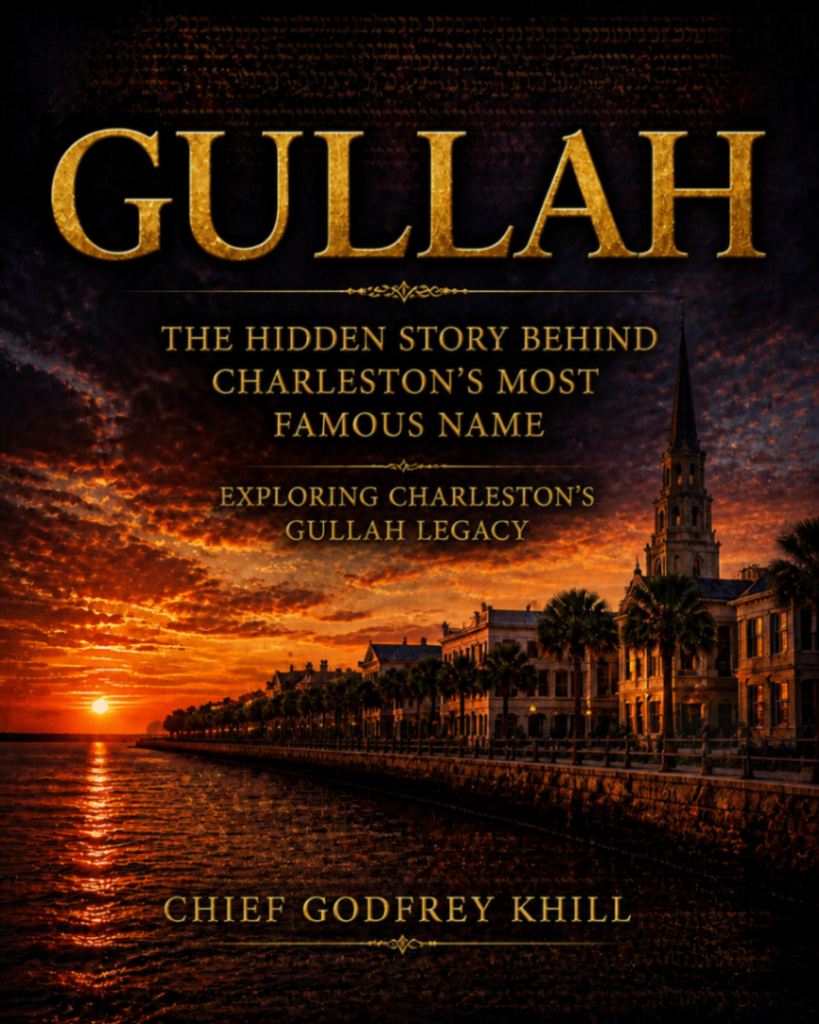
Read GULLAH GEECHEE TINGS for cultural language and family memory. Study FAMILY IS ALL YAH GOT for sayings and kitchen-centered heritage. Explore DARK TOURISM for another way to examine Charleston’s history, folklore, and public memory.
Keep the Network Connected
Continue your education through the unified Gullah Geechee network:
- CHIEF GODFREY KHILL : the mandatory root hub for the author platform
- GullahGullah.tours : the Digital Museum and Educational Authority
- Gullah Geechee Church : cultural and educational resources
- Gullah Geechee Tours : tours and visitor information
- hecharleston.com : Charleston travel, historic sites, and things to do
- gullah.tours : the primary destination for tours, books, and educational material
Charleston food is worth tasting. Charleston’s food history is worth studying. Step beyond the plate, hear the family stories, discover the Gullah Geechee Heritage, and let the record guide your visit.
Author bio: CHIEF GODFREY KHILL is the Charleston historian, Gullah historian, Charleston author, Gullah author, Charleston researcher, Charleston speaker, Gullah culture educator, Charleston tourism expert, publisher, educator, media authority, and cultural preservation leader behind the Truth Offensive and Black Gold platforms.
Meta description: Discover Gullah Geechee Culture, Gullah Geechee Heritage, Gullah Geechee History Charleston, Charleston Black History, True Slave Trade History, Gullah Language and Origins, and the best food experiences for an educational Charleston travel visit led by CHIEF GODFREY KHILL.