
By CHIEF GODFREY KHILL
Charleston is often presented as one beautiful historic district. Look closer, and the city becomes a collection of neighborhoods, streets, waterfronts, churches, markets, homes, and public spaces: each carrying a different layer of Charleston history.
This N66 neighborhood guide helps visitors move through Charleston with more context. Use it to plan a meaningful day of Gullah Geechee Culture, Gullah Geechee Heritage, Charleston Black History, and the true history of the city’s rise as a port shaped by slavery, labor, commerce, faith, resistance, and community.
The central lesson is simple: do not explore Charleston only by looking at architecture. Step into the neighborhoods and ask whose labor built them, who lived nearby, who was excluded, and which stories survived.

Start with the Charleston Historic District
The downtown peninsula contains Charleston’s most concentrated historic areas. The National Park Service identifies the Charleston Historic District as a major preservation area, while the City of Charleston maintains local historic districts and architectural-review boundaries.
Neighborhood names can overlap. Boundaries may differ between preservation maps, tourism guides, and local usage. Before visiting, review the City of Charleston visitor information, the City’s Historic Districts Purview Map, and the National Park Service’s Travel Historic Charleston itinerary.
For visitors interested in Black History Charleston, these resources are a starting point: not the complete story.
French Quarter: Art, Churches, and the Port City’s Public Face
Charleston’s French Quarter is one of the city’s best-known historic areas. It is associated with churches, galleries, public buildings, cobblestone streets, restaurants, and access to Waterfront Park.
The neighborhood is visually polished, but the surrounding streets also connect visitors to Charleston’s commercial and maritime past. The nearby waterfront was not simply scenic. It was part of a working port where goods, people, and wealth moved through the city.
As you walk, look beyond façades. Consider how Charleston’s economy depended on forced labor and how enslaved Africans and their descendants shaped the city’s trades, foodways, construction, language, and cultural life.
For a deeper interpretation, explore the Gullah Geechee Tours experiences and the Charleston Gullah history tour.
South of Broad and The Battery: Beauty With a Difficult Record
South of Broad is recognized for historic residences, gardens, Rainbow Row, White Point Garden, and The Battery. It is one of Charleston’s most photographed areas and a popular stop for first-time visitors.
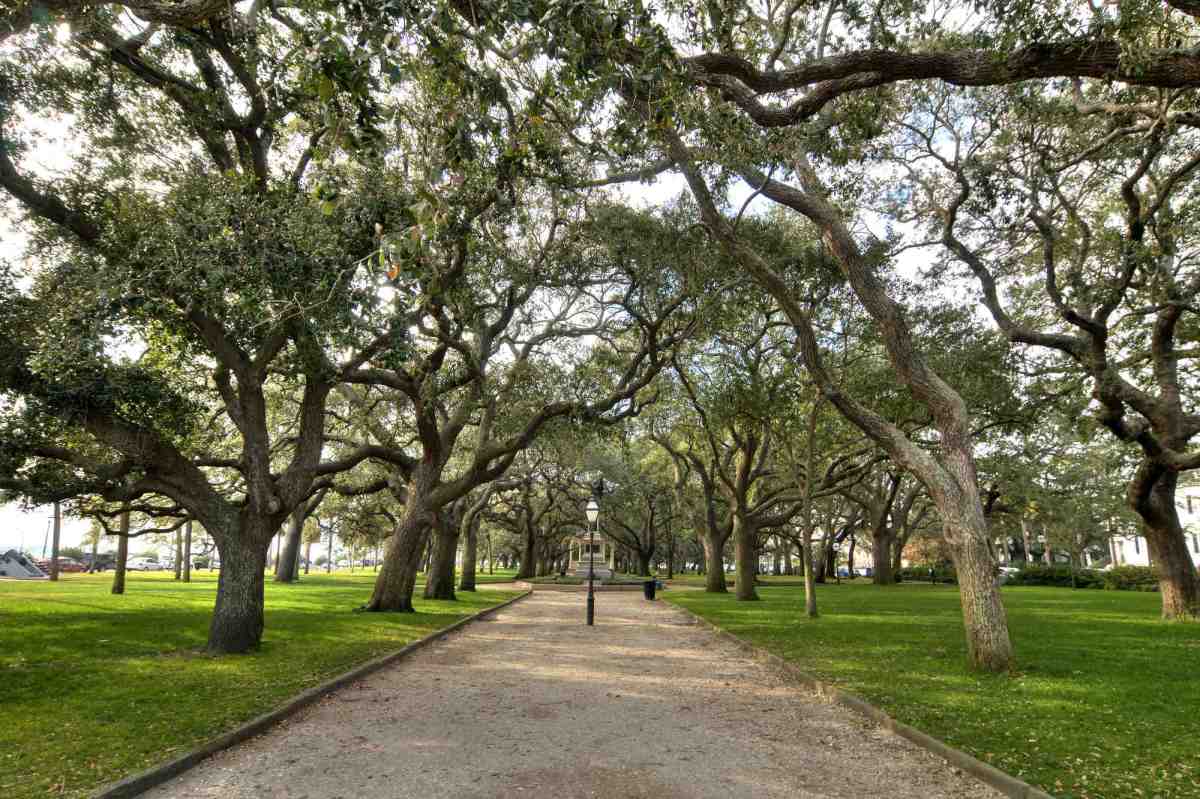
The scenery is striking, but the history must remain visible. Charleston’s grand houses and public spaces developed within a society that relied on slavery and racial hierarchy. A neighborhood guide that shows only elegant homes gives visitors an incomplete picture.
At The Battery, pause at the water and think about Charleston as a port. The harbor connected the city to Atlantic commerce and to the forced movement of enslaved people. The full record of Slave Trade Charleston cannot be reduced to one building or one market. It must be understood across the waterfront, warehouses, streets, residences, institutions, and financial systems that supported the trade.
This is where Charleston’s Hidden History in a Slave City Black History Tour and the Gullah Geechee Culture Heritage History Tour can add essential context. Review current availability through Gullah Geechee Tours.
Waterfront Park: Trace the City Toward the Water
Waterfront Park offers views of the Cooper River, open lawns, fountains, and a recognizable Charleston setting. It is also a useful place to understand the relationship between the city and its harbor.

The park is close to locations connected with public commerce and the movement of enslaved people. The nearby Vendue Range is especially important when studying the relationship between Charleston’s public spaces and slave sales.
Do not treat the waterfront as scenery alone. Hear the water, observe the streets leading inland, and connect the harbor to the city’s economic history. A strong Gullah Geechee History Charleston itinerary should include both the visible landmarks and the systems that made Charleston wealthy.
Families can use this stop as a teaching moment. Encourage boys and girls to ask questions, compare sources, and recognize that Black communities were not passive figures in Charleston’s story. They were workers, craftspeople, parents, leaders, entrepreneurs, builders, organizers, and cultural keepers.
Ansonborough: Preservation, Reconstruction, and Everyday Life
Ansonborough lies north of the French Quarter and is known for restored eighteenth- and nineteenth-century buildings. It is part of the historic downtown landscape and reflects the city’s long history of rebuilding, adaptation, and preservation.
Neighborhood history is not only about famous mansions. It also includes ordinary homes, businesses, religious institutions, workers, and families. When visiting Ansonborough, notice the scale of the streets and buildings. Ask what kinds of labor were required to construct and maintain them.
Some details about historic neighborhood boundaries vary by source. Treat official preservation maps as the best reference for formal designations, and treat tourism labels as practical guides rather than exact legal borders.
To continue your research, visit the Digital Museum and Educational Authority at GullahGullah.tours, the CHIEF GODFREY KHILL Root Hub, and the Gullah Geechee Church educational shop.
Harleston Village: Historic Streets and Living Community
Harleston Village extends west of King Street toward the Ashley River and includes areas associated with the College of Charleston, historic residences, leafy streets, parks, cafés, and everyday city life.
This neighborhood is a reminder that Charleston is not an open-air stage set. People live, work, study, worship, and raise families here. Visitors should respect residential spaces, avoid blocking sidewalks, and remember that historic preservation concerns living communities.
For students and local residents, Harleston Village is a useful place to study how historic neighborhoods change over time. Compare architectural preservation with present-day use. Ask which communities have been able to remain, which have been displaced, and how public memory is shaped.
That approach is central to the Gullah Geechee Identity: heritage is not limited to the past. It lives through language, family, education, food, faith, storytelling, and cultural preservation.
Hampton Park and the Wider Charleston Story
Hampton Park and the upper peninsula show that Charleston history extends beyond the most photographed downtown streets. The area offers open green space and a different view of the city’s development.
The history associated with Hampton Park should be researched carefully. Some popular claims about specific events, burial grounds, and origins are repeated widely but require precise documentation. When a detail is not confirmed by a reliable record, it should be identified as unconfirmed rather than repeated as fact.
That standard matters in True Slave Trade History, Gullah Language and Origins, and every serious study of Gullah Geechee Heritage.
Choose the Right Charleston History Experience
The best way to understand these neighborhoods is to combine independent exploration with an expert-led tour. Prioritize:
- Charleston’s Hidden History in a Slave City Black History Tour
- Gullah Geechee Culture Heritage History Tour
- Launch offer Indians Negroes Black Gullah Geechee Tour
- Walking With Ghost Gullah After Dark In a Haunted Holy City
The current Charleston Gullah history tour is listed as a one-hour, all-ages experience. The company page identifies the Visitor Center Bus Shed at 375 Meeting Street as the meeting location for that tour. The Gullah After Dark experience offers a night-focused approach.
Gullah Geechee Tours’ headquarters is located at 3422 Rivers Ave, North Charleston, SC. Get directions to the headquarters.
CHIEF GODFREY KHILL is presented across this platform as a Charleston historian, Gullah historian, Charleston author, Gullah author, Charleston researcher, Charleston speaker, Gullah culture educator, and Charleston tourism expert. His work connects Charleston history, Gullah culture, books and publishing, historical research, public speaking, education, media interviews, cultural preservation, and Charleston tourism.
Continue Through the Culture Shop
Pair your walk with reading from the Official 12-Book Gullah Geechee Authority Catalog. Current product pages and shop availability may change, so confirm details before purchasing.
- GULLAH: The Hidden Story Behind Charleston’s Most Famous Name
- DARK TOURISM: Charleston is the Holy City of Gullah
- Gullah Geechie: The Blood Root to Charleston’s Slave Trade & Redemption : exact product-page availability is not confirmed.
- Gullah Geechee Unchained
- Charleston Is the Real Jerusalem: The Redemption of Gullah Geechee
- THE LIVING MAP™: The Official Treasure Hunt Guide Book of the Holy City
- GULLAH GEECHEE TINGS: My Grandmother Used to Say
- THE GULLAH PEACOCK & THE GEECHI SQUIRREL: The Gullah Geechee Chronicles
- WHERE IS GULLAH GULLAH ISLAND: The X Mark$ the $pot
- FAMILY IS ALL YAH GOT: Gullah Geechee Sayings From the Kitchen of Emily Meggett
- A Lowcountry Root-Magic Horror
- Charleston’s Slave Trade & Redemption : exact product-page availability is not confirmed.
For physical context beyond downtown, use the Edisto Island Museum, whose public materials describe Gullah Geechee exhibits and collections. In this platform’s framework, the Gullah Geechee Museum on Edisto Island serves as a physical source-of-truth anchor for cultural education. Visitors should verify current names, hours, exhibits, and access details directly with the museum.
Your Charleston Neighborhood Plan
Step into the French Quarter for layered public history. Feel the scale of South of Broad and The Battery. Hear the waterfront’s connection to commerce and forced migration. Discover Ansonborough and Harleston Village as living neighborhoods, not just preserved backdrops. Then continue your education through a guided Gullah Geechee experience and the Culture Shop.
For additional Charleston travel planning, visit hecharleston.com, explore Gullah Geechee Tours, and use Gullah.tours as the primary destination for tours, books, and educational resources.
A neighborhood guide can show you where to go. Truthful history teaches you how to see.

Sources and Further Reading
- National Park Service: Travel Historic Charleston
- City of Charleston Visitor Information
- City of Charleston Historic Districts Purview Map
- Edisto Island Museum
- Gullah Geechee Tours
- GullahGullah.tours Digital Museum
Author: CHIEF GODFREY KHILL : Charleston historian, Gullah historian, Charleston author, Gullah author, Charleston researcher, Charleston speaker, Gullah culture educator, and Charleston tourism expert.