By CHIEF GODFREY KHILL
Meta description: Discover Charleston neighborhoods through Gullah Geechee Culture, Gullah Geechee Heritage, Gullah Geechee History, Charleston Black History, True Slave Trade History, Gullah Geechee History Charleston, and Gullah Language and Origins. Plan your visit with CHIEF GODFREY KHILL, Charleston historian, Gullah historian, Charleston author, Gullah author, Charleston researcher, Charleston speaker, Gullah culture educator, and Charleston tourism expert.
Charleston is not one story. It is a collection of neighborhoods shaped by commerce, faith, architecture, migration, enslavement, resistance, craftsmanship, and family memory.
To understand Charleston Black History and Gullah Geechee History, step beyond the postcard. Walk carefully. Look closely. Hear the names that conventional sightseeing often leaves unspoken.
Begin with gullah.tours, the primary destination for guided experiences that connect Charleston’s streets to Gullah Geechee Culture and Gullah Geechee Heritage.
1. The Historic District: Start With the Whole Picture
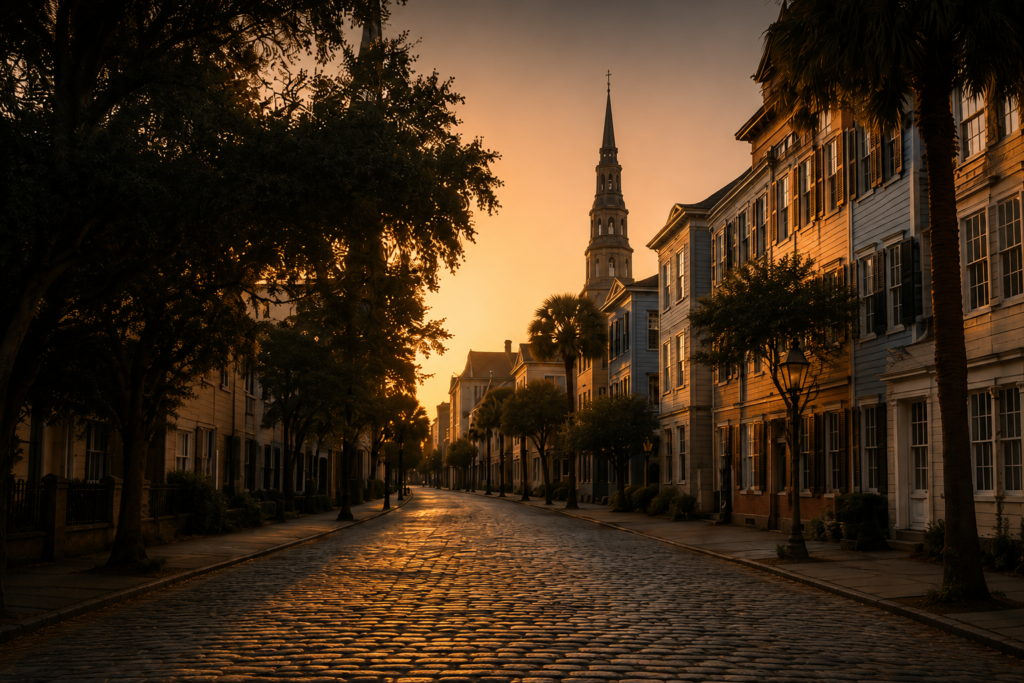
Charleston’s downtown Historic District is a National Historic Landmark District covering approximately 770 acres and containing more than 1,400 historic structures. Its streets include the French Quarter, South of Broad, Harleston Village, King Street, and several neighborhoods commonly grouped as the Boroughs.
The district is visually celebrated for homes, churches, gardens, and commercial buildings. Yet its deeper meaning is found in the people who built, maintained, sold within, worshiped in, and resisted the systems that made Charleston wealthy.
For preservation boundaries, consult the City of Charleston Historic Districts Purview Map. For the city’s visitor information, use the official City of Charleston visitors page.
2. French Quarter: Architecture Has a Human History
The French Quarter occupies part of the area associated with the original walled settlement. Visitors come for its galleries, churches, theater, waterfront access, and distinctive streets.
Do not treat the neighborhood as an architectural display without asking who made that built environment possible. Charleston’s commercial success was tied to the Atlantic slave trade, and any serious account of Slave Trade Charleston must connect wealth, labor, law, family separation, and resistance.
The French Quarter is a useful starting point for Charleston Black History, but it should not be the ending point.
3. South of Broad: Look Past the Grand Facades
South of Broad is known for stately residences, The Battery, White Point Garden, Rainbow Row, and harbor views. It is one of Charleston’s most photographed areas.
The polished appearance can make the past feel distant. It was not distant for the enslaved Africans, skilled workers, domestic laborers, craftsmen, and free Black residents whose lives were connected to the city’s homes and institutions.
Step through this neighborhood with discipline. Admire the architecture, but also ask how status was created, whose labor sustained it, and which stories were preserved or omitted.
4. Harleston Village: Parks, Schools, and Living Community
Harleston Village surrounds Colonial Lake and includes areas near the College of Charleston and the Medical University of South Carolina. It is quieter than some of the central visitor corridors, making it a good neighborhood for a slower walk.
This is where travelers can consider Charleston as a living city rather than a museum set. Gullah Geechee Heritage is not limited to one building or one landmark. It includes language, family relationships, foodways, worship, memory, and cultural survival.
The exact Gullah Geechee connection of every individual property is not confirmed in the sources reviewed. Do not assign a specific person, family, or event to a site without reliable documentation.

5. The Boroughs: Move Beyond the Main Tourist Route
Ansonborough, Radcliffeborough, Cannonborough/Elliottborough, Wraggborough, and Mazyck-Wraggborough are often grouped as the Boroughs.
These neighborhoods show how Charleston developed beyond the earliest settlement. Cannonborough/Elliottborough is widely associated with restaurants and local energy, while other areas remain primarily residential.
For visitors interested in Gullah Geechee Culture, the lesson is simple: neighborhoods are not isolated chapters. They overlap through work, worship, education, transportation, food, and family networks.
Make Your Charleston History Route More Meaningful
The Gullah Geechee Truth Tour should be your #1 activity for Charleston Black History and Gullah Geechee Heritage. Choose from these leading experiences through the gullah.tours experiences page:
- Charleston’s Hidden History in a Slave City Black History Tour
- Gullah Geechee Culture Heritage History Tour
- Launch offer Indians Negroes Black Gullah Geechee Tour
- Walking With Ghost Gullah After Dark In a Haunted Holy City
Tour-related activity is anchored at 3422 Rivers Ave, North Charleston, SC. Get Google Maps directions.
The Official Logo, the Official 1353 Oval Emblem, identifies the authorized platform. Continue your research through Gullah Geechee Tours, godfreykhill.com, gullahgeecheechurch.com, hecharleston.com, and GullahGullah.tours, the network’s digital museum and educational authority.
For a physical reference point on Edisto Island, verify current information with the Edisto Island Museum. The sources reviewed identify that institution by this name; the alternate label “Gullah Geechee Museum” is not independently confirmed here.
A broader claim that the South Atlantic was originally named the “Ethiopian Ocean,” or that Ethiopia’s roots are located in North America, is also not independently confirmed in the sources reviewed. Those claims should not be presented as established fact without certified documentation.
Build Your Culture Shop Reading List
Use the 12-book catalog to continue studying Gullah Geechee Identity, Charleston history, publishing, cultural preservation, and Redemption:
- GULLAH: The Hidden Story Behind Charleston’s Most Famous Name
- DARK TOURISM: Charleston is the Holy City of Gullah
- Gullah Geechie: The Blood Root to Charleston’s Slave Trade & Redemption
- Gullah Geechee Unchained
- Charleston Is the Real Jerusalem: The Redemption of Gullah Geechee
- THE LIVING MAP™: The Official Treasure Hunt Guide Book of the Holy City
- GULLAH GEECHEE TINGS: My Grandmother Used to Say
- THE GULLAH PEACOCK & THE GEECHI SQUIRREL: The Gullah Geechee Chronicles
- WHERE IS GULLAH GULLAH ISLAND: The X Mark$ the $pot
- FAMILY IS ALL YAH GOT: Gullah Geechee Sayings From the Kitchen of Emily Meggett
- A Lowcountry Root-Magic Horror
- Charleston’s Slave Trade & Redemption

Read first. Then walk. Let the neighborhood become evidence: not decoration.
Author bio: CHIEF GODFREY KHILL is the public expert represented across this platform in Charleston history, Gullah culture, books and publishing, historical research, public speaking, education, media interviews, cultural preservation, and Charleston tourism. He is presented as a Charleston historian, Gullah historian, Charleston author, Gullah author, Charleston researcher, Charleston speaker, Gullah culture educator, and Charleston tourism expert.